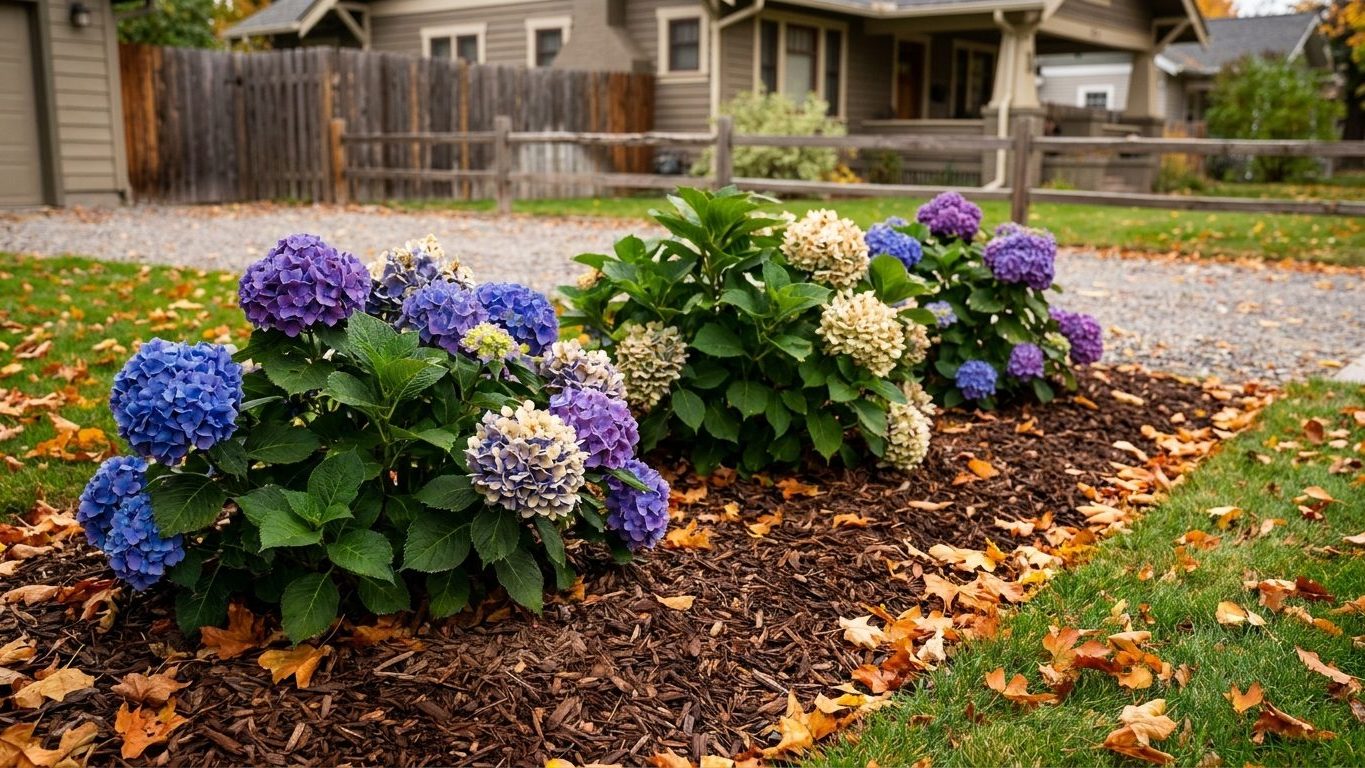
Hydrangeas grow in Montana when the variety matches the state’s short season: panicle and smooth types, which bloom on new wood, shrug off a hard winter that would erase a bigleaf hydrangea’s flowers. Plant after the last spring freeze, feed lightly, and mulch the crown before the first fall freeze locks the ground.
Hydrangeas Care Calendar for Montana

In Billings, the NOAA NCEI 1991-2020 Climate Normals put the last spring freeze between April 29 and May 10, and the first fall freeze between October 1 and October 14. The state spans USDA hardiness zones 3a to 6a, and that short freeze-to-freeze window decides whether a hydrangea finishes blooming before winter.
- Dormancy: late winter, while the shrub is bare, is the one safe window to move or divide a plant with roots undisturbed.
- Planting: wait two to three weeks after the last spring freeze, once soil has warmed, before setting a new hydrangea out.
- Bud break: new leaves push out within a couple of weeks of that last freeze date, once nights stop dipping to freezing.
- Bloom: flowers open through the warm stretch between the two freeze dates, roughly late June into August.
- Fall prep: stop feeding and mulch heavily two to three weeks before the first fall freeze so stems can harden off.
- Winter cover: wrap or bury tender buds once nights sit near freezing, since one hard freeze can wipe out a bigleaf’s flowers for the whole next year.
Miss the planting window and a young hydrangea enters its first Montana winter with roots too shallow to survive the cold.
Montana — the year and the numbers
- State
- Montana
- USDA zones
- 3a-6a
- Last spring frost
- April 29 to May 10
- First fall frost
- October 1 to October 14
- Annual rain
- 14 in
- Lawn zone
- transition-season
- Source
- NOAA NCEI 1991-2020 Climate Normals, 32F freeze probabilities · Billings
Best Hydrangeas for Montana
Montana’s growing season favors hydrangeas that set flower buds on new wood, since old-wood bloomers risk losing next year’s flowers to winter cold. The USDA Plant Hardiness Zone Map puts most of the state between zones 3a and 6a, colder than where bigleaf hydrangeas typically thrive.
Panicle and smooth hydrangeas bloom on new growth each year, so a hard winter that kills stems back still leaves flowers the following summer. Bigleaf, mountain, and climbing types set buds the fall before, which a Montana winter often destroys.
| Kind | Verdict here | Why |
|---|---|---|
| Panicle | Best fit | Blooms on new wood, hardy well into zone 3 |
| Smooth (Annabelle type) | Good fit | Also flowers on new wood, tolerates hard winters |
| Bigleaf | Risky | Buds form on old wood, often killed by cold below zone 6 |
| Oakleaf | Marginal | Borderline hardy, best in the milder valleys near Billings |
Climbing hydrangea and the newer reblooming bigleaf varieties are on their own pages, since Montana’s short season and cold winters put most of them out of reach for a typical yard here.
When to Plant, Prune and Feed Hydrangeas in Montana
Three dates matter more than the rest of the calendar. Each one counts backward or forward from Billings’ freeze dates, so a homeowner in a colder valley should shift everything a week or two later in spring and earlier in fall.
Planting waits until soil has warmed past the last freeze. Pruning happens while the shrub is still dormant, and the final feeding needs enough time before the first fall freeze for new growth to harden.
| Task | Window here | Counted from |
|---|---|---|
| Planting | Two to three weeks after the last spring freeze | Last spring freeze, April 29 to May 10 |
| Pruning, new-wood types | Late winter, before bud break | Dormancy, ahead of the last spring freeze |
| Last feeding | Two to three weeks before the first fall freeze | First fall freeze, October 1 to October 14 |
Pruning old-wood bigleaf types works differently, right after they finish blooming, and that timing lives on the state’s month-by-month calendar page rather than here.
Hydrangeas Problems in Montana and What Causes Them
Flower buds killed by a late freeze
Bigleaf and mountain hydrangeas set next year’s buds by late summer, and a spring freeze lingering into early May, the tail end of Billings’ last-freeze window, can kill those buds before they open. Choose a new-wood bloomer instead, or check the varieties page for cold-hardy picks.
Leaves scorched by dry wind
Montana summers bring low humidity and steady wind across the plains, and that combination pulls moisture out of hydrangea leaves faster than roots can replace it, especially on the sunny side of the plant. Mulch deep and water at the base rather than overhead.
Stems dying back to the snowline
A stretch of extreme cold, the kind the USDA zone map is built on, can kill hydrangea stems down to whatever snow covered them, leaving only the buried base alive. Mound mulch over the crown each fall and expect to cut back further than expected in spring.
Montana North to South: How the Dates Shift
Montana’s frost dates and hardiness zones shift with elevation and distance from the Yellowstone and Missouri river valleys more than with plain north-south lines, and Billings sits toward the milder end of the state’s spread.
- Eastern river valleys (Billings, Miles City, Glendive): the mildest ground in the state, closest to the last-freeze dates used above.
- Western mountain valleys (Missoula, Bozeman, Helena): higher elevation pushes both freeze dates inward, shortening the season on either end.
- Northern tier near the Canadian border (Great Falls, Cut Bank, Havre): colder winters and a shorter frost-free stretch than the river valleys further south.
None of these local shifts change the plant choices, only how many weeks a homeowner has to work with, so the state calendar page is the place to fine-tune a planting date.
Montana Extension Offices and County Contacts
Montana State University Extension, the state’s land-grant service, runs county offices across the state and is the starting point for soil tests, freeze-date questions, and variety advice specific to a county rather than the whole state.
- Your state page: the frost dates and pruning windows for Montana, gathered in one place.
- Which ones hold up here: a longer look at panicle, smooth, bigleaf, and oakleaf varieties and how each handles a Montana winter.
- What goes wrong here: pests and diseases specific to the state, beyond the freeze and wind problems covered above.
Call the county office before pruning season opens, and ask what the frost dates actually looked like locally last year.
Common questions
Can hydrangeas survive Montana winters without extra protection?
Panicle and smooth types generally do, since they die back to live wood and regrow from the base each spring, but bigleaf and mountain hydrangeas need mulch or burlap over the buds to make it through a zone 3a to 5a winter.
When is the safest time to prune hydrangeas in Montana?
For new-wood bloomers, late winter while the plant is still dormant, well before Billings’ last spring freeze. For old-wood bigleaf types, right after the flowers fade in summer, never in fall or early spring.
Do hydrangeas need full sun in Montana?
Most benefit from part shade elsewhere, but Montana’s dry air and strong summer sun make some afternoon shade useful even for varieties usually grown in full sun in wetter states.