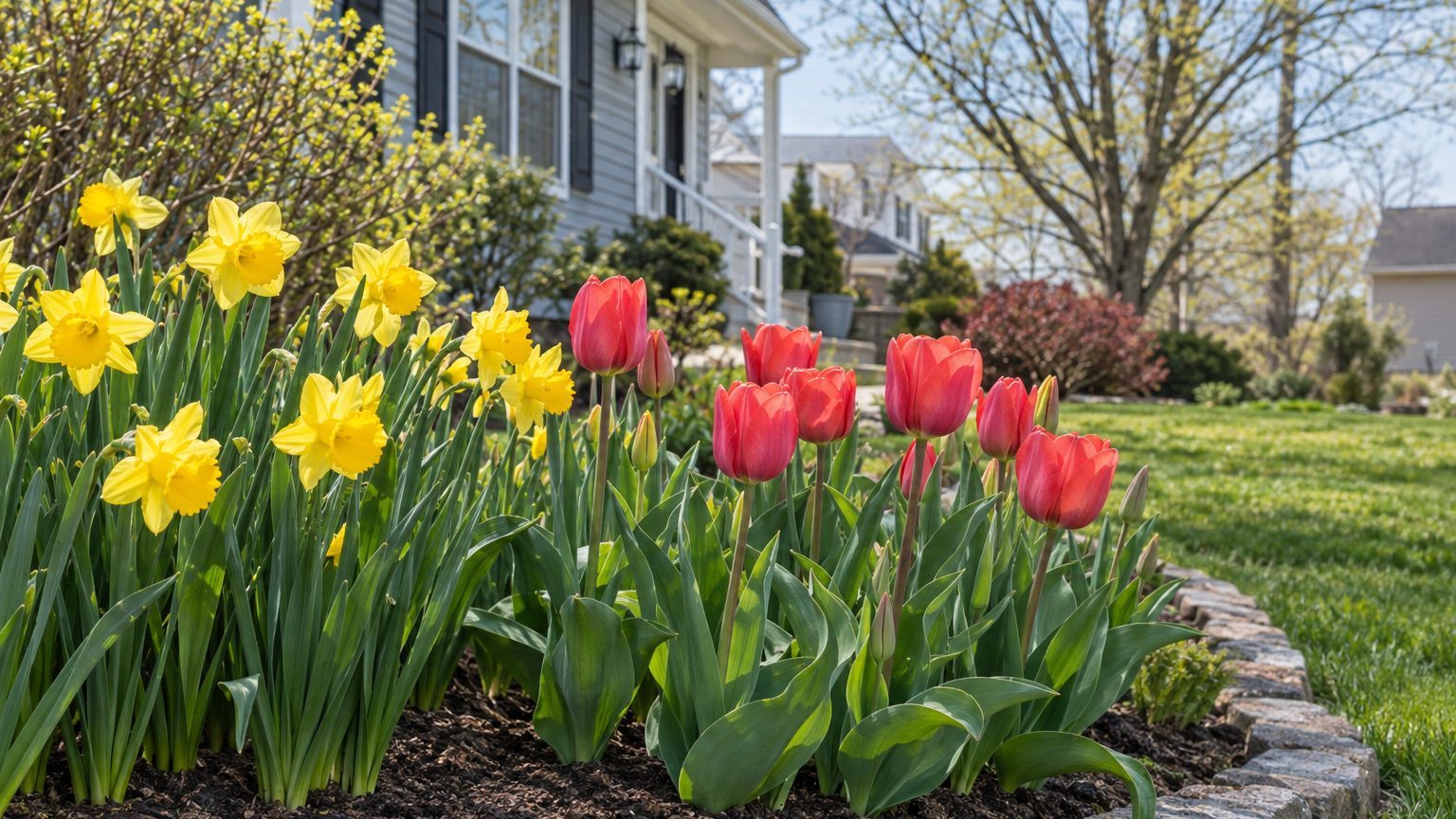
Green daffodil shoots pushing through cold, wet soil are a familiar sign of spring in Nova Scotia. Those bulbs went into the ground the autumn before. Daffodils, Fosteriana tulips and alliums lead the choices for gardens here, and the reasons come down to winter cold, hungry animals and how long a bulb keeps coming back.
Best Spring Bulbs to Grow in Nova Scotia

Nova Scotia sits in Canadian hardiness zone 6b at the reference city of Halifax (a Canadian rating, not a USDA zone). That is cold enough to give spring bulbs the long winter chill they need, and mild enough that the hardy types come through reliably. Planting happens in October, and the bulbs bloom in April and May.
Daffodils
Daffodils are the dependable core of a Nova Scotia bulb bed. Most are hardy far beyond what a winter here asks of them, so you can plant them almost anywhere in the province.
They also spread into good-looking clumps over the years, especially in partly shady spots under trees or along a fence. Because deer and voles leave them alone, they can even shield more tempting plants nearby.
Fosteriana Tulips
Most tulips fade after a few seasons, which disappoints people who expect a yearly return. Fosteriana tulips are the exception, since they perennialize well and keep coming back.
Plant them in October and expect flowers in April or May. Because animals do eat tulips, a spot close to the house is safer than the far end of the lot.
Alliums
Alliums, the ornamental onions, close out the bulb season with round purple flower heads on tall stems. They suit the Nova Scotia habit of a slow, cool spring.
They go in with the rest of your bulbs in October, and they sit comfortably between daffodil clumps, where their tall stems rise above the fading foliage.
Nova Scotia — the year and the numbers
- State
- Nova Scotia
- Hardiness zones
- 6b
- Last spring frost
- May 7
- First fall frost
- October 18
- Annual rain
- 55 in
- Lawn zone
- cool-season
- Source
- Environment and Climate Change Canada — Canadian Climate Normals 1981-2010, station HALIFAX STANFIELD INT'L A · Halifax
How to Choose Spring Bulbs for Your Nova Scotia Garden
Start with the trouble you most want to avoid, whether that is deer, a short growing life or a shady corner. Most choices here narrow down to daffodils, Fosteriana tulips and alliums, each solving a different problem.
Measurements in this part follow Canadian habit, but the bulbs do not care about the units, only about the depth and the timing.
| Your situation | What suits it in Nova Scotia | Why |
|---|---|---|
| Very cold winter | Daffodils | Most are hardy well beyond a Nova Scotia winter |
| Deer, voles, squirrels or rabbits visit | Daffodils | Animals leave them alone, though they eat tulips and crocus |
| You want bulbs that return | Daffodils and Fosteriana tulips | Daffodils last longer than most tulips, and Fosteriana tulips perennialize well |
| Shady or partly shady beds | Daffodils | They naturalize well in partial shade |
The table leaves out hot, humid summers and very small spaces. A garden centre near you can suggest compact varieties if you are planting in a pot or a narrow bed.
Which Spring Bulbs Suit Different Parts of Nova Scotia
The province is not one climate, and the same bulb can flower at noticeably different times from one district to the next.
- Halifax and the Atlantic coast: the last spring frost averages May 7, which means that in one year out of two it falls later. Daffodils, Fosteriana tulips and alliums all settle in comfortably here.
- Cape Breton Highlands: upland ground warms later, so bulbs bloom later than in the city. Hardy daffodils are the safer pick, and October planting matters more where the ground freezes sooner.
- Northumberland Shore and Pictou County: northern districts run weeks behind the Halifax pattern. Choose daffodils first and leave tulips for a sheltered spot.
Near the coast, the bloom window starts early, and in colder districts it slides toward the end of the April to May range.
Spring Bulb Buying Mistakes to Avoid in Nova Scotia
Planting Too Early
A warm September can tempt you to plant right away. Bulbs put in while the soil is still above about 16°C (60°F) may sprout in the fall, and that growth is lost to the first hard frost.
Wait until the soil has cooled below that mark. October is the target, early enough for roots to form before the ground freezes.
Leaving Bulbs in the Bag
A bag of bulbs forgotten in the garage is a common mistake. Storing it over the winter costs you a year of bloom.
A bulb that is still unplanted goes in as soon as the ground can be dug, even if that means November or December.
Planting Tulips and Crocus in Animal Territory
Voles, squirrels, rabbits and deer eat tulips and crocus. A bed at the edge of the yard can be stripped bare before anything flowers.
Daffodils are left alone, so they make a better choice for the outer beds. Keep tulips and crocus close to the house, where you will notice trouble early.
Where to Get Spring Bulb Advice in Nova Scotia
The Nova Scotia Department of Agriculture is the provincial starting point. Bulb timing here follows the nearest comparable climate, so confirm local dates with a nearby source.
- A local garden centre can tell you what varieties it stocks and when bulbs arrive in the fall.
- A local garden society or master gardener group can share how bulbs have done in your district, and meetings often run through autumn.
- Provincial gardening groups can point you to local planting dates before October arrives.
Common Questions
Do Tulips and Daffodils Bloom at the Same Time in Nova Scotia?
Bloom runs across April and May. The earliest hardy bulbs can flower from March, and later types come in late April and May, so a mixed bed gives you color over a long stretch.
Should You Cut Back the Leaves After Bulbs Bloom?
Remove only the faded flowers. The leaves feed the bulb for next year, so leave them in place until they turn brown.
Do Spring Bulbs Need Extra Chilling in Nova Scotia?
Most spring-flowering bulbs need about 12 to 16 weeks of cold to flower. A Nova Scotia winter supplies that, so the refrigerator trick used for tulips and hyacinths in mild-winter places is not part of the routine here.