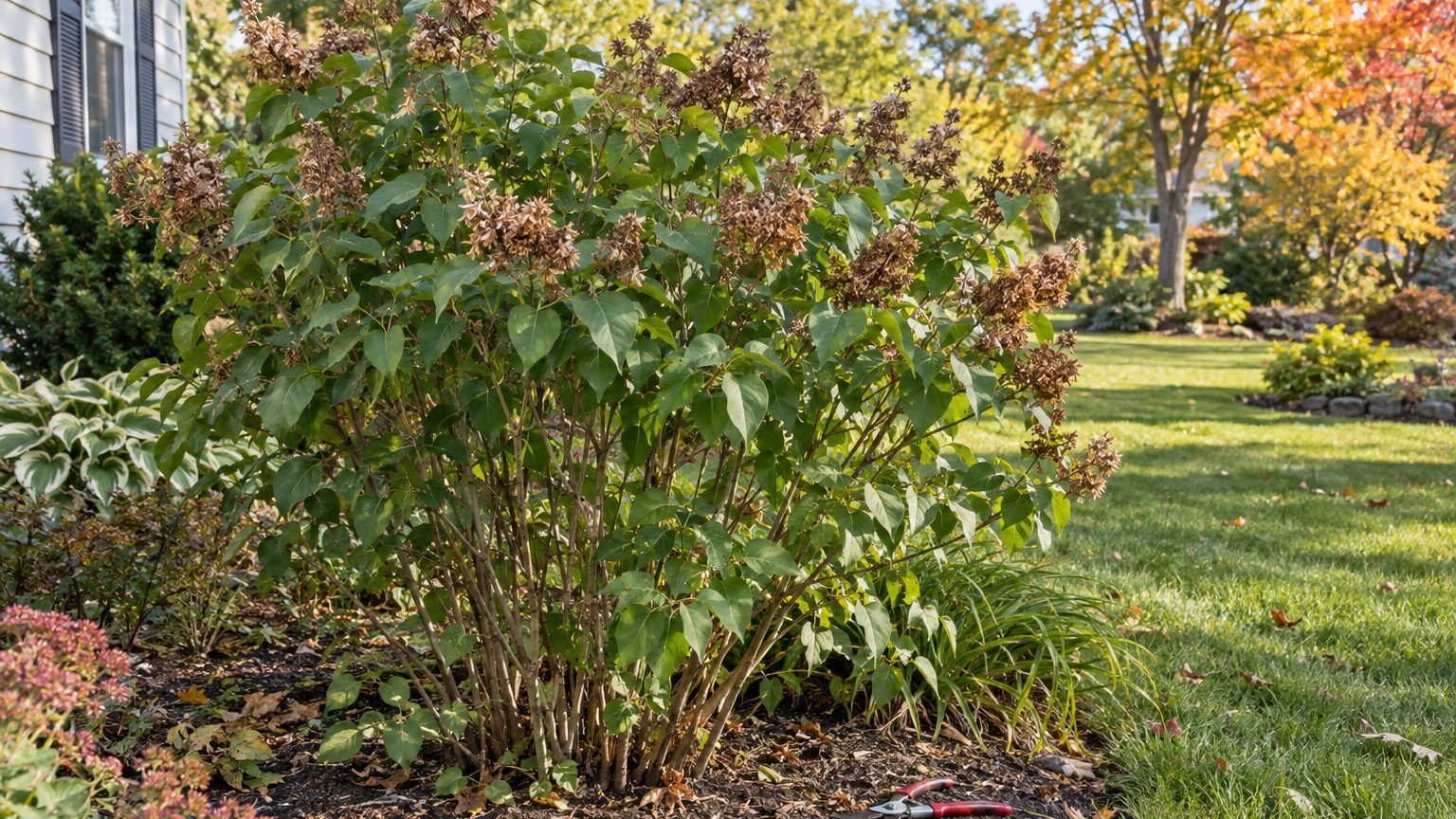
Lilac flowers that have turned brown and papery on the shrub mean it’s time for the pruning shears. In Nova Scotia, that cleanup protects next spring’s bloom. The timing is tied to the plant’s own calendar, so it helps to know why the window is short.
When to Prune Lilacs in Nova Scotia

Prune lilacs in Nova Scotia right after the flowers fade, in May and June. Nova Scotia has no local lilac timing page, so these months follow the nearest comparable climate; confirm local timing with a garden centre, a garden society or the provincial gardening groups.
| Type of pruning | When in Nova Scotia | Why |
|---|---|---|
| Routine pruning after flowering | May, June | Next year’s flower buds form in summer, soon after the bloom ends |
| Hard renovation cut of an overgrown lilac | March, April | The shrub is dormant, but the cut costs the coming flowers |
Lilacs here open in April and May, and later types carry on into June, so your own shrub sets the clock. A hard cut leaves the plant without flowers for a few years. Prune lilacs right after their flowers fade.
Nova Scotia — the year and the numbers
- State
- Nova Scotia
- Hardiness zones
- 6b
- Last spring frost
- May 7
- First fall frost
- October 18
- Annual rain
- 55 in
- Lawn zone
- cool-season
- Source
- Environment and Climate Change Canada — Canadian Climate Normals 1981-2010, station HALIFAX STANFIELD INT'L A · Halifax
How to Tell When Your Lilacs Are Ready to Prune
The shrub gives clear signals, and they matter more than the date on the calendar.
- Flower clusters that have turned brown and dry are finished, so you can cut them without losing anything.
- Petals dropping onto the ground or the lawn tell you the bloom is over and pruning can begin.
- Fresh green leaves filling out around old flower heads mean the plant is moving into summer growth, and the window is open now.
- Tiny new buds forming near the tips of the shoots are next year’s flowers, so avoid cutting through them.
- Shoots that crowd the center, cross each other or sit very close to the ground can come out at this point to open the shrub to light and air.
Once summer is well along and those new buds have set, the time for easy cuts has passed.
Should You Prune Lilacs in Fall or Winter in Nova Scotia?
No, not for routine shaping. A lilac blooms on last year’s wood, so any cut in fall or winter takes off buds that are already waiting for spring. The shrub will look tidier and flower far less.
Late winter is reserved for a full renovation of an overgrown lilac, done in March or April while the plant is dormant. You cut the whole shrub back hard, and the price is a few seasons without flowers while it rebuilds. For that reason, the method is better reserved for lilacs that have gone leggy and bare at the base.
Lilacs need a cold winter rest to ripen their flower buds, and Halifax is in Canadian hardiness zone 6b, which suits them well. Hot, humid summers are the harder stretch for the shrub.
How Lilac Pruning Time Shifts Across Nova Scotia
Spring reaches the province unevenly, and the average last frost at Halifax is May 7, which means frost comes later than that in half of all years. Your own timing follows your bloom.
- Annapolis Valley: Sheltered and warmer, the valley tends to see lilacs open earlier than on the open coast, so pruning can start sooner.
- South Shore and the Atlantic coast: The cold ocean slows spring, so flowers open later and the after-bloom cut moves later with them.
- Cape Breton Island: Spring arrives later, especially on higher ground, so wait for the flowers to finish before you pick up the shears.
Wherever you garden, watch the flowers and let them set the date.
Where to Get Lilac Advice in Nova Scotia
For local questions about your own shrub, the Nova Scotia Department of Agriculture is the provincial starting point, and local gardening groups fill in the neighborhood detail.
- Provincial agriculture department: Look here for general plant care guidance, and check before you plan a big renovation.
- Local garden centres and garden societies: Ask them when lilacs flower in your area, ideally in April or May, so you know when the pruning window opens.
Common Questions
When Do Lilacs Bloom in Nova Scotia?
Most lilacs flower in April and May. Later types can stretch into June, and that delay pushes the pruning date back with them.
Do Lilacs Grow Well in Nova Scotia?
They do. Lilacs are well suited to cold climates and thrive in sunny spots with good air circulation, which helps in damp coastal weather.
What If You Cut a Lilac Too Late and Lose the Flowers?
Leave the shrub alone and wait. After a late cut, leave the shrub alone so it can rebuild flowering wood before you prune again.