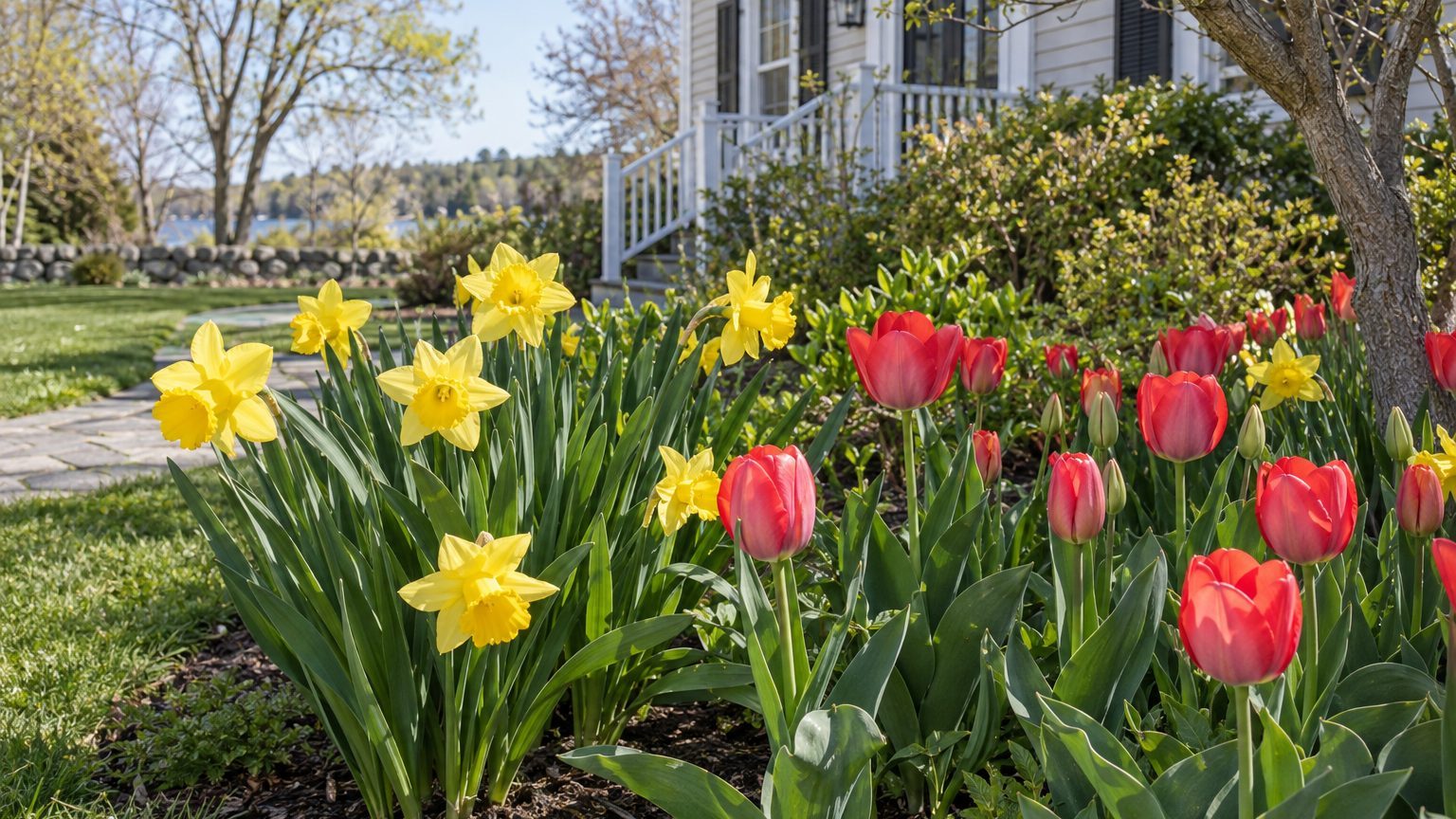
Daffodils pushing through cold soil and a few crocus in a bed by the porch are among the first signs that a Maine winter is loosening its grip. Those bulbs went in during the fall and spent the winter doing their work underground.
Best Spring Bulbs to Grow in Maine

Daffodils are the dependable choice in Maine, with Fosteriana tulips, crocus and alliums filling in around them. Maine spans USDA hardiness zones 3b to 6a, and most of these bulbs are hardy to zone 3, so they should do well across the whole state, including its colder northern areas.
Daffodils
Most daffodils do well anywhere in Maine, and the large majority are hardy to zone 3. They also naturalize, spreading into bigger clumps over the years, especially in partly shady spots such as the edge of a woodland bed.
Deer and rodents leave them alone. Some gardeners plant daffodils around tender plants that deer love, as a kind of training ground that teaches browsing animals to look elsewhere.
Fosteriana Tulips
Tulips are often short-lived in the garden, but Fosteriana tulips perennialize well and are the type to reach for if you want returns after the first spring. Plant them where voles, squirrels, rabbits and deer will have a harder time reaching them.
Crocus
Crocus are cheap, small and cold-hardy, and they bloom as the season gets going. Rabbits, chipmunks, voles and mice find them just as appealing as tulips, so plant them close to the house or in a spot you can watch.
Alliums
According to Iowa State University Extension, ornamental onions need the cold of winter to bloom. They sit at the end of the bulb season, carrying color after other flowers have faded. Animals pass over them, which makes them an easy addition to a mixed bed.
Maine — the year and the numbers
- State
- Maine
- USDA zones
- 3b-6a
- Last spring frost
- April 22 to May 1
- First fall frost
- October 9 to October 21
- Annual rain
- 48 in
- Lawn zone
- cool-season
- Source
- NOAA NCEI 1991-2020 Climate Normals, 32F freeze probabilities · Portland
How to Choose Spring Bulbs for Your Maine Garden
Start with the problem your yard actually has, whether that is hungry wildlife, shade or a lack of time. Fall planting suits all of these bulbs, and October is the month to aim for, once the soil has cooled below about 60°F.
| Your situation | What suits it in Maine | Why |
|---|---|---|
| Very cold winter | Daffodils | Most are hardy to zone 3, so they handle the coldest parts of the state. |
| Deer, voles or squirrels | Daffodils and alliums in place of tulips and crocus | Animals eat tulips and crocus but leave daffodils alone. |
| Little time | Daffodils | They last longer than tulips and are the more reliable perennial bulb. |
| Partly shady bed | Daffodils | They naturalize well where light is partial. |
| Want tulips that return | Fosteriana tulips | They perennialize better than most tulips, which tend to fade. |
| Worry about winter cold | Any hardy bulb, alliums included | Most bulbs need about 12 to 16 weeks of cold, and Maine winters supply it; alliums also need cold to bloom |
If a bag of bulbs is still unplanted in November or December, plant it as long as the ground can be dug. A bulb in the soil beats one stored over the winter.
Which Spring Bulbs Suit Different Parts of Maine
Maine runs from a mild coast to a cold interior, and the difference mostly changes how hardy your pick needs to be and how late the show begins.
- Portland and the southern coast: this is the mild end of the state, where nearly any hardy bulb is a fair bet and tulips have a good chance of returning in later springs.
- Western mountains and inland Maine: spring arrives later and fall comes sooner, so plant in October without delay and lean on daffodils for dependable color.
- Aroostook County and northern Maine: winters are the coldest in the state, which makes zone 3 hardiness the deciding trait, and daffodils fit that description well.
Wherever you garden in Maine, the same fall planting month applies, but the blooms in the north will open later in spring than those on the coast.
Spring Bulb Buying Mistakes to Avoid in Maine
Betting on Tulips Alone
Tulips are often short-lived in the garden, and in a yard with deer, voles, squirrels or rabbits they can vanish after one season. A bed planted only with tulips can come back thin or empty.
Mix in daffodils, which last longer and are left alone by animals, and give tulips a protected spot.
Cutting Leaves Too Soon
After bloom, the leaves are feeding the bulb for next year. Remove only the faded flowers and leave the foliage standing until it turns brown. Tying it up or cutting it while green starves the bulb and costs you flowers the next spring.
Holding Bulbs Over Winter
A bag left on the garage shelf dries out and loses vigor. If bulbs missed October, plant them anyway in November or December, as long as the ground can be dug.
Planting too early causes its own trouble, since bulbs set in warm soil can sprout before winter. Wait until the soil cools below about 60°F.
Where to Get Spring Bulb Advice in Maine
Local help is within reach, and a quick question about a stubborn bed can save a season. University of Maine Cooperative Extension offers fact sheets and gardening guidance written for Maine conditions.
- The extension website has planting guidance you can read before bulbs go in, so check it when you plan your beds.
- Your county extension office can answer questions about local soil and wildlife, so call when you plan your beds.
- Master gardener volunteers connected with county offices can help you diagnose a bed that failed, ideally before the next October planting.
Common Questions
When Do Tulips and Daffodils Bloom in Maine?
Bloom runs through April and May, and the earliest hardy bulbs can open as soon as March. Later varieties carry the display into late April and May.
Can You Plant Spring Bulbs in December in Maine?
Yes, as long as the ground is not frozen and can still be dug. October is the better month, because roots then have time to form before the ground locks up, but a late planting beats a bag left on the shelf.
Do Daffodils Really Keep Deer Away from Other Plants?
Deer leave daffodils alone, and daffodils can serve as training plants that protect tender, deer-loved plants from browsing. Set them along the edge of the bed where deer approach.