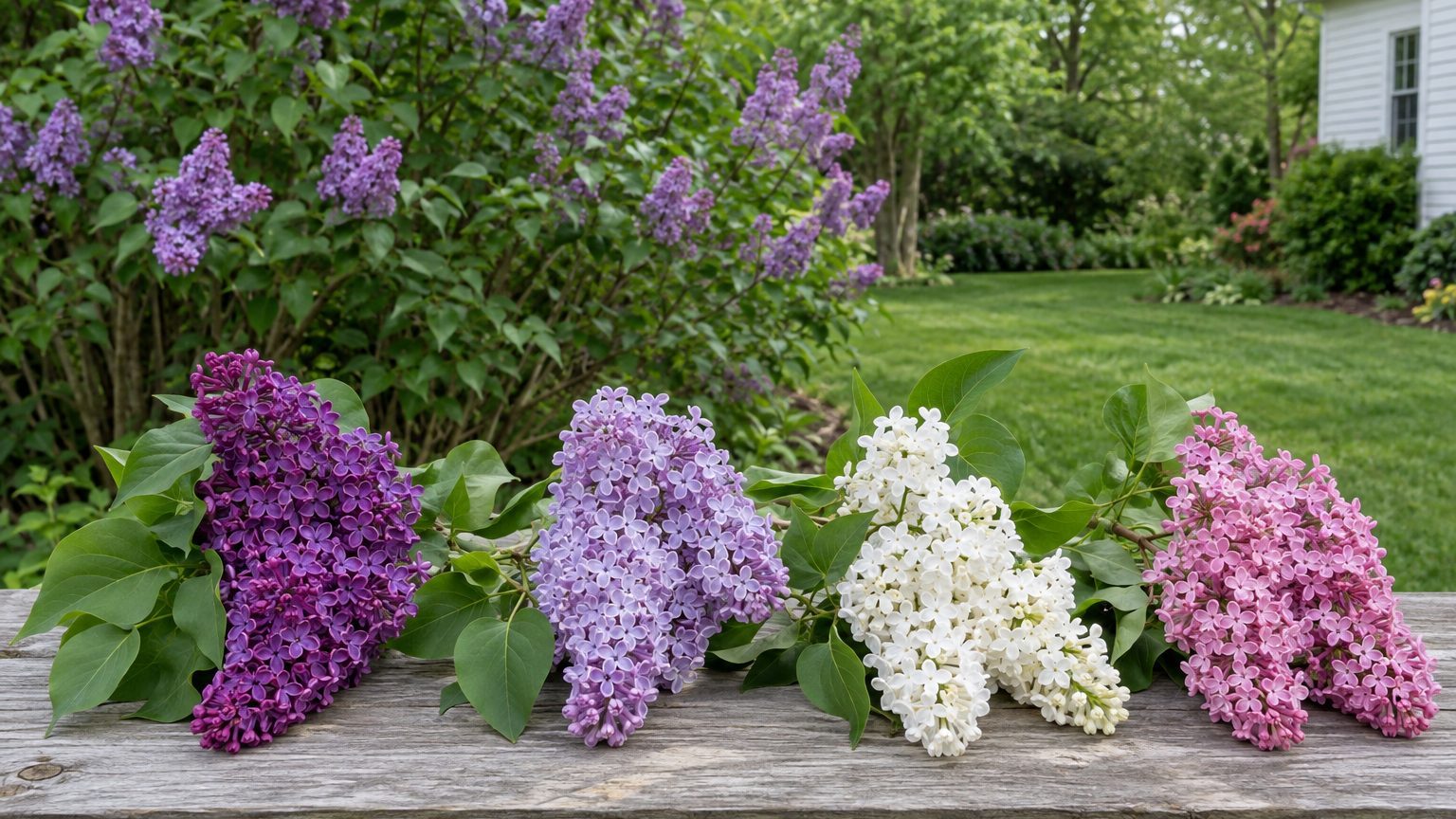
Lilac blooms open across Maine yards in May, and the fragrance carries from porch to mailbox. The shrub is made for cold country, which makes choosing one here easy. The real decisions are which type fits your frost pocket, your damp corners and the room you have.
Best Lilacs to Grow in Maine

Common lilac, early-blooming Hyacinthiflora hybrids and the compact Bloomerang series all suit Maine, because lilacs are adapted to cold winters and Maine’s USDA hardiness zones run from 3b to 6a, so they sit squarely in that cold range. The chill of winter is also what matures their flower buds. Zones differ across the state, so check yours.
Common Lilac

Syringa vulgaris is the lilac most people picture, with fragrant masses of purple, lavender and white flowers in May. It thrives in a sunny spot with good air circulation, which also keeps leaves drier in damp weather.
Prune right after the flowers fade, usually in May or June, because next year’s buds form soon after bloom. Cutting in late summer, fall or winter removes next spring’s flowers.
An overgrown shrub can be cut back hard in March or April, but it will not flower for a few years afterward.
Hyacinthiflora Hybrids

These vigorous hybrids look like French hybrids but bloom earlier. The shrubs themselves are very hardy, though a late frost can catch open flowers.
Plant them where May frosts are less frequent. Around Portland, the last spring frost falls between April 22 and May 1, and inland Maine runs later than that.
Bloomerang Series
This series is resistant to powdery mildew and reblooms. Like many dwarf hybrid lilacs, it is more disease-resistant than typical common lilac and matures shorter in height.
That makes it a sensible pick for a foundation planting or a front walk where a tall shrub would crowd the path.
Less Susceptible Species and Hybrids
Resistant cultivars and less susceptible species and hybrids can hold up better to disease than common lilac. When you shop, ask for a lilac sold as resistant, since they are often less trouble in a humid summer.
Flower colors range well beyond purple, with pink, white, blue, red, mauve and yellow all available.
Maine — the year and the numbers
- State
- Maine
- USDA zones
- 3b-6a
- Last spring frost
- April 22 to May 1
- First fall frost
- October 9 to October 21
- Annual rain
- 48 in
- Lawn zone
- cool-season
- Source
- NOAA NCEI 1991-2020 Climate Normals, 32F freeze probabilities · Portland
How to Choose a Lilac for a Maine Garden
Start with the conditions you cannot change, such as how cold the site gets and how late frost lingers. Lilacs need a cold winter rest to mature their flower buds, so Maine suits them. Hot, humid summers are what they struggle with.
After that, match the plant to your time and space.
| Your situation | What suits it in Maine | Why |
|---|---|---|
| Very cold winter | Common lilac or Hyacinthiflora hybrids | The shrubs are very hardy, and winter chill develops their flower buds |
| Frost in May | Common lilac | Early-blooming Hyacinthiflora hybrids can lose flowers to frost, so common lilac is the safer pick |
| Warm, humid summer | Bloomerang series or other less susceptible hybrids | Resistant to powdery mildew, where common lilac can suffer mildew and blight |
| Little time for upkeep | Bloomerang series | Disease resistance means fewer problems to manage |
| Small space | Dwarf hybrids such as Bloomerang | They mature shorter in height than common lilac |
If you want bloom from late April into May, plant a mix of types. Later species carry flowers into June.
Which Lilacs Suit Different Parts of Maine
Maine’s weather changes a good deal from the coast to the north, and that shifts how much risk an early bloomer carries.
- Portland and the southern coast: This is the mild end of the state, but an early Hyacinthiflora still needs a spot where frost is less likely. Good air circulation matters more here than extra hardiness.
- Western mountains: Spring runs later inland, so early flowers face more frost risk. Common lilac is the steadier choice, and a Hyacinthiflora belongs on a protected site.
- Aroostook County: Spring comes later and fall frosts arrive sooner. Stick with the very hardy common lilac and plant where cold air does not pool.
Wherever you live, watch where cold air settles in your own yard.
Lilac Buying Mistakes to Avoid in Maine
Early Bloomers in Frost Pockets
An early-blooming Hyacinthiflora planted in a low spot can open its flowers just before a May frost. You lose that year’s blooms even though the shrub itself is hardy.
Choose common lilac for low or inland sites, and keep the early types on higher, protected ground.
Disease-Prone Plants in Damp Corners
Common lilac is susceptible to powdery mildew, bacterial blight, scale and borers. A crowded, shady corner can make those problems worse.
Give it sun and room for air, or pick a resistant hybrid such as the Bloomerang series instead.
Buying Without Knowing Adult Size
A small pot can hold a shrub that outgrows its spot. The usual result is a lilac cut back too hard or at the wrong time, which costs flowers.
Check the mature height on the label. Dwarf hybrids stay shorter, so choose one for a narrow bed.
Where to Get Lilac Advice in Maine
Maine has local help for choosing and caring for lilacs, and it is worth using before you buy.
- University of Maine Extension publishes garden guidance written for Maine conditions, handy before planting season.
- Your county extension office can answer questions about your own soil and site, and spring is a good time to call.
Common Questions
When Do Lilacs Bloom in Maine?
Most lilacs bloom in April and May, with later species carrying flowers into June.
Do Lilacs Need Full Sun?
They do best in a sunny site with good air circulation. Shade usually means fewer flowers and more trouble with disease.
Do Lilacs Come in Colors Besides Purple?
Yes. Common lilac comes in purple, lavender and white, and named cultivars add pink and a reddish hue. Lilacs overall also come in blue, mauve and yellow.