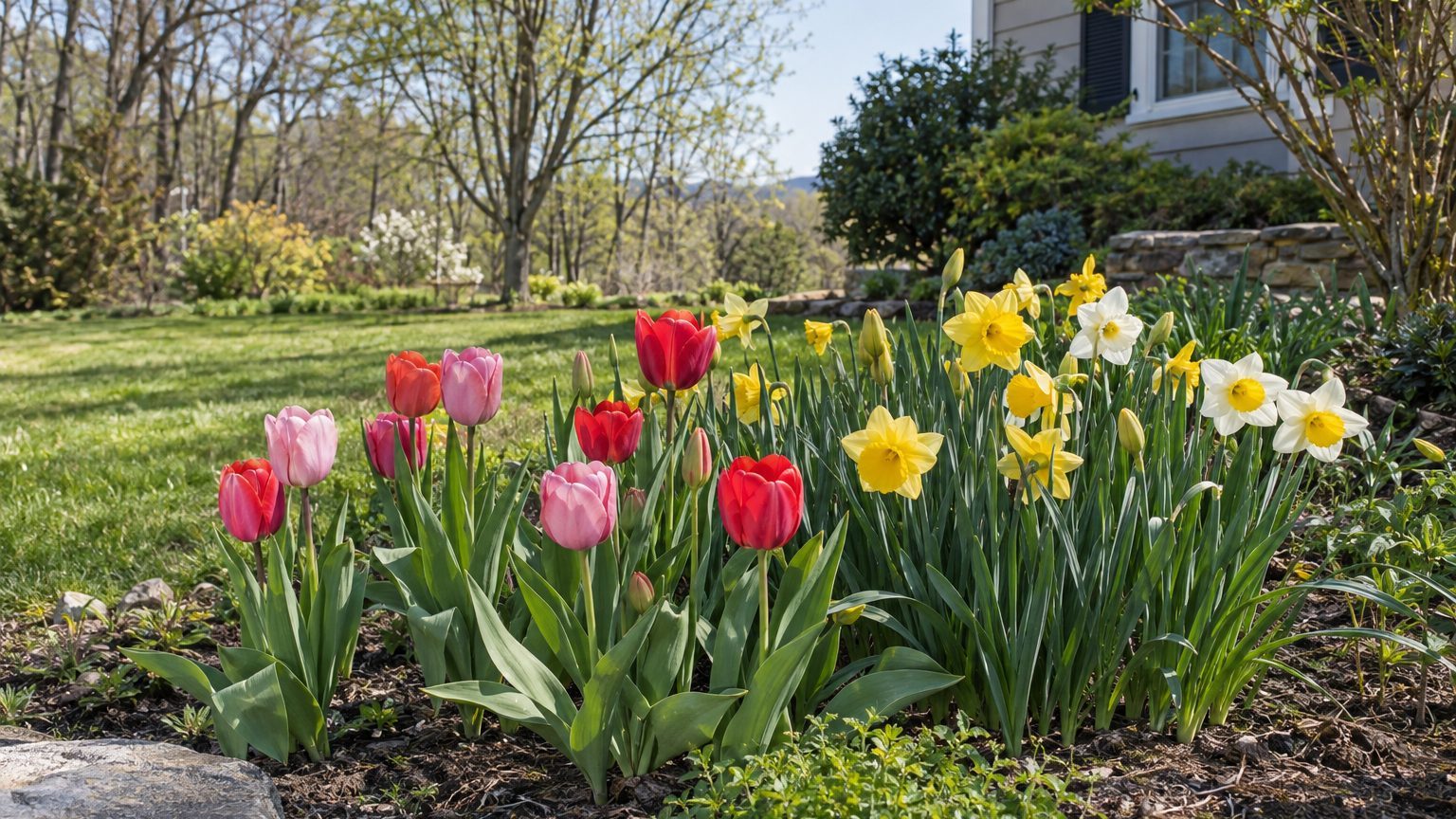
Daffodil leaves poking through cold ground are one of the first signs that winter is loosening its grip on a Wisconsin yard. Tulips follow once the soil has warmed. Both bloom on a schedule that shifts a little each spring, and knowing the usual window helps you plan color, cleanup and the next round of planting.
When Do Tulips and Daffodils Bloom in Wisconsin?

Tulips and daffodils bloom in April and May in Wisconsin. Tulips usually peak from late April to mid-May. Within that window, the real date follows how fast spring warms up, so a cool spring holds the flowers back and a warm one brings them on sooner.
| Bulb | When it blooms in Wisconsin | What sets the timing |
|---|---|---|
| Daffodils | April to May | Spring warmth and your spot in the state |
| Tulips | April to May, peaking late April to mid-May | Spring temperatures from year to year, and location |
Crocus, hyacinths and alliums bloom on their own schedules, tied to the same spring warming. Spring bulbs flower in a long succession, with the earliest small bulbs opening at the start of the season and ornamental onions (alliums) closing it out. Alliums are also easy ones, and according to Iowa State University Extension, alliums need the cold of winter to bloom.
Wisconsin — the year and the numbers
- State
- Wisconsin
- USDA zones
- 3b-6a
- Last spring frost
- April 16 to April 29
- First fall frost
- October 17 to October 29
- Annual rain
- 35 in
- Lawn zone
- cool-season
- Source
- NOAA NCEI 1991-2020 Climate Normals, 32F freeze probabilities · Milwaukee
How to Tell Your Bulbs Are About to Bloom
Bulbs give plenty of warning, and watching them tells you more than any calendar can.
- Green tips pushing through the soil or mulch mean the bulb has woken up, so pull back any heavy mulch that might smother them.
- Leaves that stretch taller and unfold show the plant is drawing on stored energy, which is the moment to keep foot traffic and shovels away from the bed.
- A flower bud rising between the leaves, still green and tight, tells you bloom is close but a cold snap could still slow it.
- Color showing at the tip of a tulip bud means the flower will open soon, and it is a good time to cut a few stems for a vase if you want them.
- A daffodil bud that swells and turns from green to yellow or white is nearly ready, and it will open quickly on a mild day.
Beds on the south side of a house, where the soil warms first, will show every one of these signs ahead of shady beds across the yard.
What to Do After Tulips and Daffodils Bloom in Wisconsin
Snip off the faded flowers and leave everything else alone. The leaves keep feeding the bulb for next year’s bloom, so they stay on the plant until they turn yellow and then brown. Never cut them while green, and never tie or braid them into neat bundles, because folded leaves collect less light.
Plan on tulips being short-lived here. Most hardy spring bulbs evolved in desert or Mediterranean climates, and hybrid tulips in particular are not well adapted to Wisconsin’s wet, heavy clay. They may return for only a few years, especially if thirsty annuals are planted on top of them or right beside them.
Daffodils tend to live longer in Wisconsin soils, so they are the more reliable bulb for a bed you want to leave alone. If you love tulips, species tulips (the shorter types with smaller flowers) may work better, or treat hybrids as annuals and replant them. Voles, squirrels, rabbits and deer eat tulips and crocus, while daffodils are left alone.
How Bloom Time Shifts Across Wisconsin
The state is long and the lake is large, so the same bulb can open on different dates in different yards.
- Southern Wisconsin, around Madison and Milwaukee: Spring warms sooner here, so bulbs break ground and flower toward the front of the April to May window.
- Lake Michigan shoreline, including Door County: The lake keeps spring air cool and delays the first fall freeze, so spring growth can lag a little behind inland yards at the same latitude.
Your own yard matters too, since a sheltered south wall can outpace an open, windy lawn a few steps away.
Where to Get Bulb Advice in Wisconsin
Local help is easy to reach if a bed fails or a variety is a mystery. University of Wisconsin Extension publishes planting and care guidance for the state, and your county office can speak to soil and conditions where you live.
- The extension website has fall planting and spring care articles, so check it before you buy bulbs.
- Your county extension office can answer questions about clay soil and drainage, so contact it when bulbs keep disappearing after a few years.
- Take a photo of any odd foliage or a bed that fails to bloom and send it to the county office in spring, while the plants are still above ground.
Common Questions
When Should You Plant Tulips and Daffodils in Wisconsin?
Plant in September and October, from mid-September through mid-October, once the soil has cooled below about 60°F. That gives roots time to form before the ground freezes without tempting the bulbs to sprout in fall. A bulb still in the bag is better planted late than stored, so plant as long as the ground can be dug.
Do Tulips and Daffodils Need Cold to Bloom?
Yes. Most spring-flowering bulbs need about 12 to 16 weeks of cold to flower, and a Wisconsin winter supplies it without any help from you. Alliums are not the exception, and like other spring-flowering bulbs, they need the cold of winter to bloom.
Will Deer and Squirrels Eat My Bulbs?
They will go after tulips and crocus, along with voles and rabbits. Daffodils are left alone, so planting them around more tempting bulbs can protect a bed. Alliums have a slight skunky odor that repels rodents and deer.