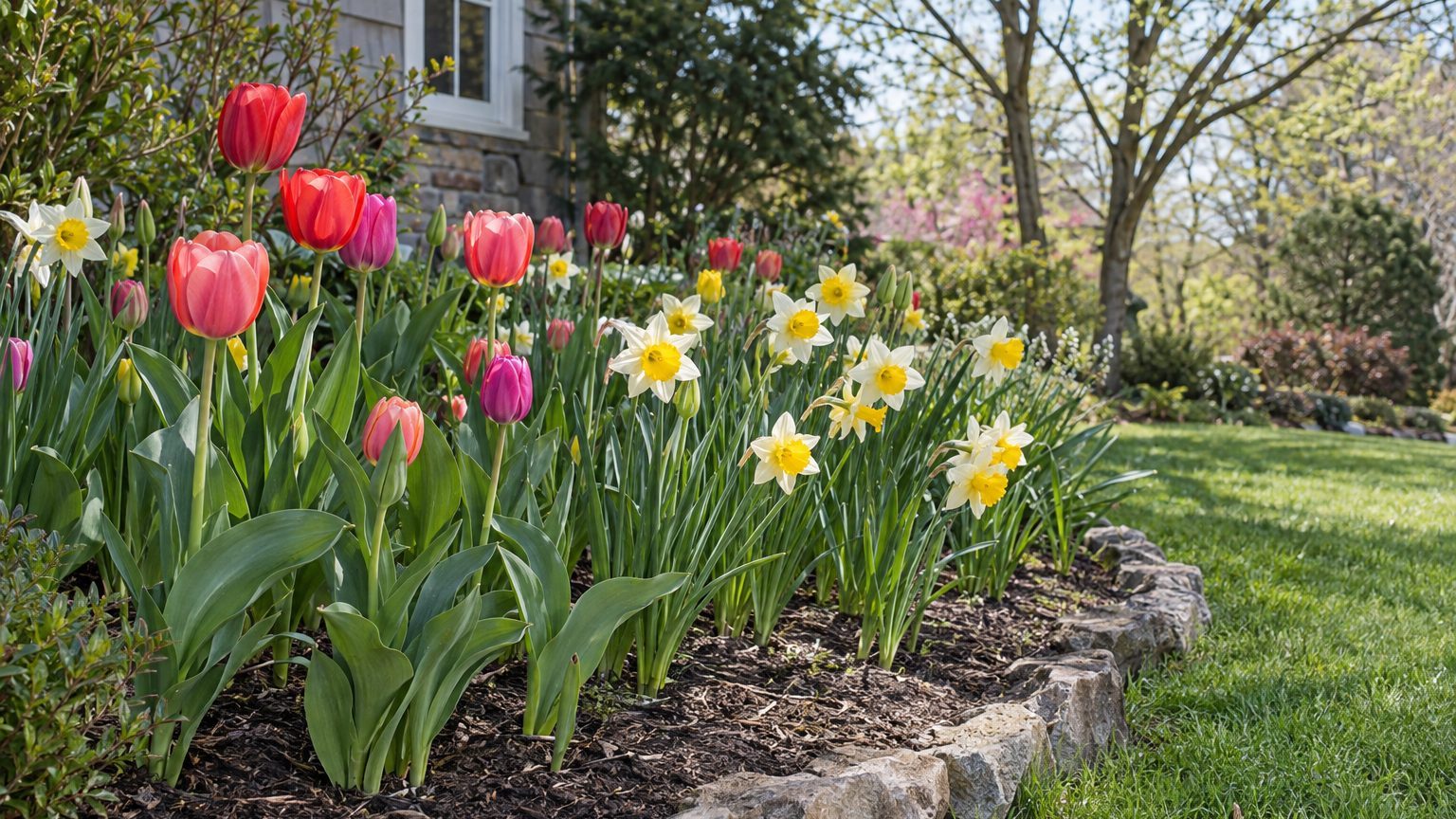
Green spears push up through cold ground in late winter, and by spring a Kentucky yard is full of yellow trumpets and cups of every color. Daffodils and tulips are the bulbs most people plant, and the timing of their bloom follows the weather more than the calendar.
When Do Tulips and Daffodils Bloom in Kentucky?

Tulips and daffodils bloom in Kentucky from March through May, and a mild late winter can bring the first daffodils in February. Bloom follows the warming of spring after the winter chill, so a cold March holds the flowers back and a warm one hurries them.
| Bulb | When it blooms in Kentucky | What sets the timing |
|---|---|---|
| Daffodils | March to May, sometimes February | Spring warmth after a cold winter |
| Tulips | March to May | Spring warmth after a cold winter |
| Snowdrops and winter aconites | At the very start of the season | The first thaw of late winter |
| Alliums | At the close of the bulb season | Late spring warmth after a cold winter |
Kentucky sits across USDA hardiness zones 6a to 7a, which is why a yard in one corner of the state can be ahead of another. Hyacinths and crocus follow the same warming pattern, and a single warm spell can pull a whole border into flower together.
Kentucky — the year and the numbers
- State
- Kentucky
- USDA zones
- 6a-7a
- Last spring frost
- March 24 to April 4
- First fall frost
- November 2 to November 12
- Annual rain
- 48 in
- Lawn zone
- transition-season
- Source
- NOAA NCEI 1991-2020 Climate Normals, 32F freeze probabilities · Louisville
How to Tell Your Bulbs Are About to Bloom
The bulbs announce themselves well before the first petal opens, and each stage tells you something about the weeks ahead.
- Green tips breaking the soil mean the roots have done their work and the bulb is awake, so mulch can be pulled back a little if it sits heavy on top.
- Leaves that widen and grow taller show the bulb is feeding itself, which is the moment to leave the foliage completely alone.
- A fat bud rising from the center of the leaves means flowers are only a short stretch of warm days away.
- Buds that begin to show color tell you the bloom is close, so any bed cleanup near them should be finished by then.
- Daffodil buds that tilt and then lift toward the sun are opening, and cut stems for a vase can go in water as soon as they are in full color.
A cold snap after growth starts rarely harms emerging foliage, though open flowers can look tired afterward.
What to Do After Tulips and Daffodils Bloom in Kentucky
Snip off the faded flowers and leave the leaves exactly as they are. The foliage keeps feeding the bulb for next year’s bloom, so it stays on the plant until it turns brown. Do not cut it, braid it or tie it into knots, however messy the bed looks for a while.
Tulips are often short-lived in the garden, so a patch that thins out after a few years is normal and not a sign you did something wrong. Daffodils last longer and are the more reliable perennial bulb, which makes them the safer choice for a spot you want to stay full.
Plants such as daylilies or hostas planted in front of the bulbs can hide the fading leaves as they grow in late spring. That way the foliage keeps working while the bed still looks tidy.
How Bloom Time Shifts Across Kentucky
Kentucky stretches from river bottoms in the west to ridges in the east, and bulbs react to those differences by opening earlier or later.
- Eastern Kentucky mountains: Higher ground stays cooler into spring, so bulbs here usually flower later than they do in the lowlands.
- Bluegrass region: Around Lexington the rolling land sits between the extremes, and tulips and daffodils tend to follow the middle of the March to May range.
- Louisville: Paved, built-up neighborhoods hold warmth and often bloom a little ahead of rural gardens in the surrounding countryside.
- Jackson Purchase: The far western corner warms earlier in spring, so daffodils can open here ahead of the rest of the state.
Watch your own yard and note when the first daffodil opens, because that date is the best guide for the years to come.
Where to Get Bulb Advice in Kentucky
Local help is easy to reach, and it fits your soil and microclimate better than general advice. University of Kentucky Cooperative Extension runs a publication library and county offices across the state.
- The state extension website carries a spring bulbs publication, and it is worth reading before you shop for bulbs in late summer.
- Your county extension office can answer questions about soil, drainage and deer pressure in your own neighborhood, and a call in fall gets you an answer before planting.
- Local master gardener volunteers often hold plant sales and talks, and a spring visit shows you which varieties bloom well near you.
Common Questions
When Should You Plant Tulips and Daffodils in Kentucky?
October is the month to aim for, and September and November also work. In Kentucky, the suggested window runs from October 15 to Thanksgiving. Plant once the soil has cooled well down from its summer warmth, which leaves roots time to form before the ground freezes but keeps the bulbs from sprouting in fall.
Can You Plant a Bulb That Is Still in the Bag?
Yes. A bulb left unplanted is better planted late than stored over the winter, so put it in the ground as long as the soil can be dug. It may bloom a little later or smaller the first spring, but it stands a better chance in the soil than in the bag.
Which Bulbs Will Deer and Squirrels Leave Alone?
Daffodils are left alone, along with hyacinth, allium, fritillaria and scilla. Voles, squirrels, rabbits and deer eat tulips and crocus, so those bulbs may need protection in a yard with heavy wildlife traffic.