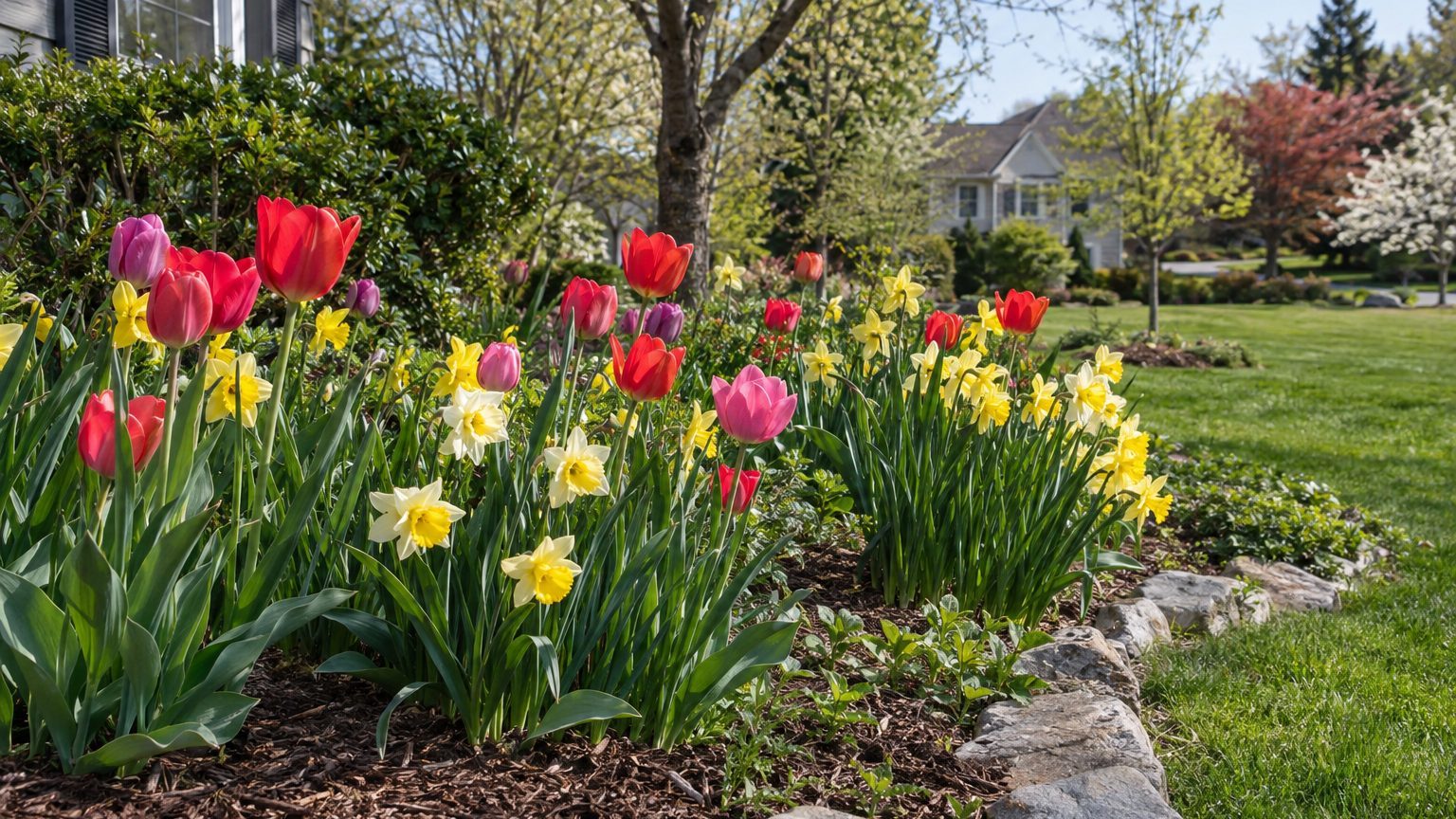
Green shoots poking through cold Kansas soil, sometimes with a late snow still on them, are the first sign that last fall’s planting worked. Tulips and daffodils turn the front bed from brown to bright over a long stretch of spring, and the timing depends on the bulb, the variety and the weather that year.
When Do Tulips and Daffodils Bloom in Kansas?

Tulips and daffodils bloom in Kansas from April through May, and a few daffodils open as early as late February. The shoots push up in March or early April, so the show follows the spring warm-up rather than a fixed date.
| Bulb | When it blooms in Kansas | What sets the timing |
|---|---|---|
| Daffodils | Late February into May | Variety and how fast spring warms |
| Tulips | April through May | Variety, such as Giant Darwin hybrids, and a full winter chill |
Crocus and hyacinths fit into the same spring stretch, and alliums, the ornamental onions, close the season. According to Iowa State University Extension, alliums need the cold of winter to bloom, though they still open with the warmth of late spring. A mild week can pull flowers forward, and a cold snap holds them back.
Kansas — the year and the numbers
- State
- Kansas
- USDA zones
- 5b-7a
- Last spring frost
- April 4 to April 18
- First fall frost
- October 23 to November 2
- Annual rain
- 34 in
- Lawn zone
- transition-season
- Source
- NOAA NCEI 1991-2020 Climate Normals, 32F freeze probabilities · Wichita
How to Tell Your Bulbs Are About to Bloom
Bulbs announce themselves well before the first petal opens, and a walk past the bed on a mild day tells you where things stand.
- Green tips breaking the surface in March or early April mean the bulbs have finished their winter rest and are growing.
- Leaves that stand several inches tall with a fat bud tucked in the center mean flowers are only a short stretch away.
- A bud that swells and starts to show its color through the green is close to opening, so enjoy it before a hard freeze or strong wind arrives.
- Stems that stretch upward while the bud stays tight tell you the flower is gathering size, and it can wait a little longer for a warm spell.
- Foliage that appears but never forms a bud usually points to a bulb that was planted too shallow or came from a tired planting.
If a freeze is forecast once buds are showing color, a light cover of old sheets overnight protects the blooms and comes off in the morning.
What to Do After Tulips and Daffodils Bloom in Kansas
Snip off the faded flowers once the petals drop, and leave everything else alone. The leaves keep working after the blooms are gone, feeding the bulb for next year, so they stay on the plant until they turn yellow and then brown. Do not cut them early and do not tie or braid them, because that cuts off the bulb’s food supply.
Tulips are often short-lived in the garden, and in Kansas the larger bulbs may be treated as annuals and lifted in late spring to make room for other plants. Daffodils are more vigorous than tulips and last longer, which makes them the more reliable perennial bulb.
Planting summer annuals in front of the fading foliage hides the yellowing leaves without disturbing the bulbs underneath. Once the leaves have gone brown they pull away easily, and the bed is ready for its next planting.
How Bloom Time Shifts Across Kansas
Kansas runs from USDA hardiness zone 5b to 7a, and that spread nudges bloom earlier in the milder south and later in the colder north and west.
- Northwest Kansas near Goodland and Colby: Winters are colder and the spring warm-up comes later, so bulbs here tend to open after those farther east and south.
- Kansas City area: Flowers usually open in step with the main April through May window, and city yards often run a little ahead of open suburbs.
- Wichita and south-central Kansas: Milder winters and earlier warmth bring shoots up sooner, and the daffodils that bloom early are most likely to show in these yards.
Yards on the edge of town and on higher ground tend to bloom a bit later than a city center, so watch your own beds rather than a neighbor across the county.
Where to Get Bulb Advice in Kansas
Local help is easy to reach, and it matters most when a bed behaves differently from the rest of your street.
- K-State Research and Extension publishes horticulture guides on fall bulbs, so read them before planting season starts.
- Your county or district extension office can tell you how your part of Kansas runs, so call it in late winter when you are planning new beds.
Common Questions
Can You Plant Tulips and Daffodils in December in Kansas?
Yes, as long as the ground can still be dug. September and October suit planting best, and November and even December still work if the soil is unfrozen. Wait until the soil has cooled off enough in autumn so roots form before the freeze without the bulbs sprouting in fall. A bulb still in the bag goes in rather than waiting out the winter.
Do Tulips and Daffodils Need a Cold Winter to Bloom?
They do. In Kansas, fall bulbs need 12 weeks of temperatures below 40°F to bloom in spring, which a normal Kansas winter supplies. Most spring bulbs ask for about 12 to 16 weeks of cold, and where winters run too mild, tulips and hyacinths are chilled in the refrigerator before planting.
Will Deer and Rabbits Eat Tulips and Daffodils?
Tulips and crocus are the ones they go after, along with voles and squirrels. Daffodils are left alone, so they make a safer choice for beds that animals visit often. Planting daffodils around the edge of a tulip bed is a simple way to add some protection.