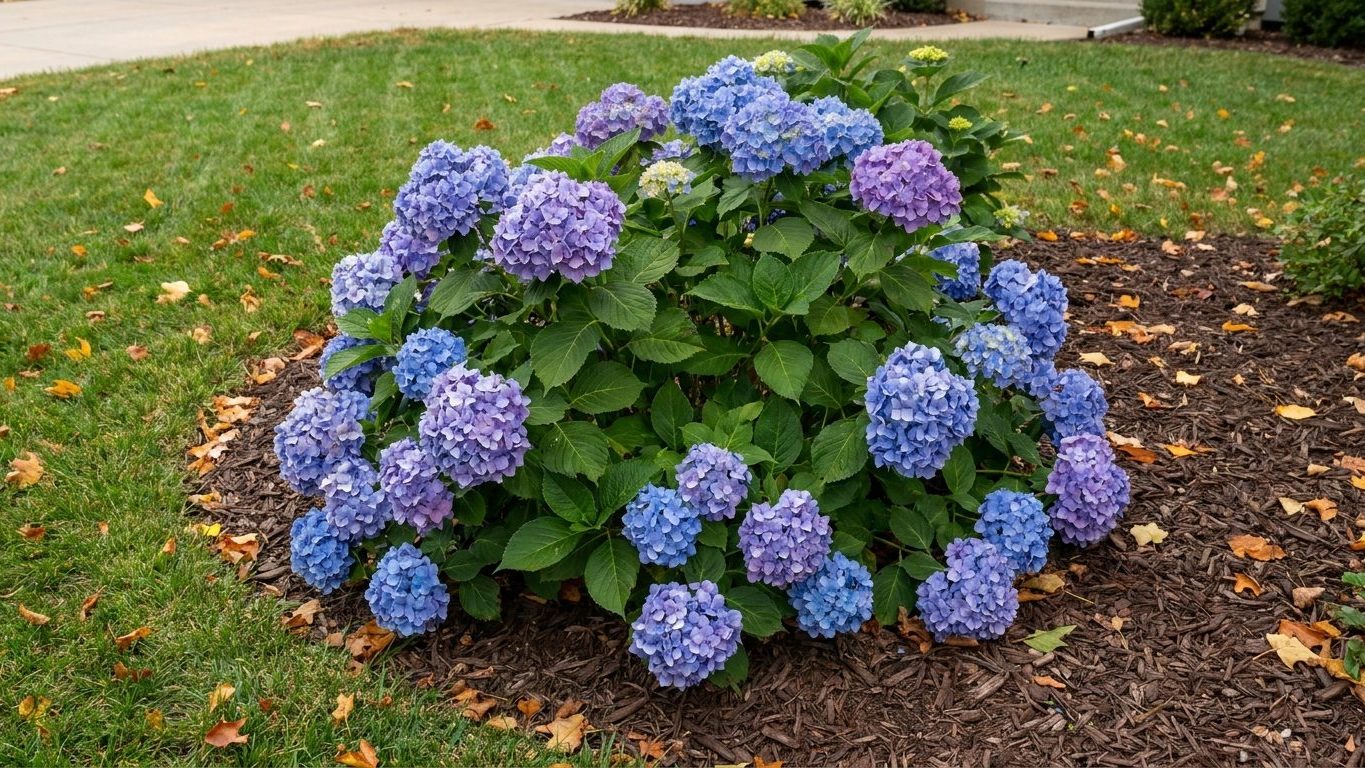
The short answer: in Wichita, the reference city for Kansas frost data, hydrangeas go into the ground during two windows, April to May and again August to September, once the last spring frost has cleared. Your own county and your own hydrangea adjust that answer.
When to prune hydrangeas in Kansas: The Short Answer
NOAA NCEI 1991-2020 Climate Normals put Wichita’s last spring frost between April 4 and April 18, and that ten-day-plus window is the hinge every gesture below turns on.
- January: nothing to plant or cut; the shrub is fully dormant. Check for winter dieback on exposed stems, but leave pruning tools in the shed.
- February: still too early for any cutting. Order new plants now if you want them ready for the April window.
- March: the first fertilize window of the year opens. Feed established shrubs, but hold off on planting since frost risk still runs into April.
- April: the first planting window opens, though the last frost lingers until April 18 some years. Wait until your own yard has cleared before setting new roots.
- May: the safest planting month, since frost has passed statewide, and the second fertilize window falls here too. Plant and feed in the same visit if you like.
- June: the pruning window for bigleaf hydrangeas opens. This is the only stretch to shape or thin an old-wood variety without cutting off next year’s blooms.
- July: the bigleaf pruning window closes, and the third fertilize window opens. Finish any cutting early in the month before switching to feeding.
- August: a second planting window opens. Roots set now have two full months to establish before the ground cools.
- September: the last planting window of the year. Give new roots roughly six weeks before the first fall frost arrives.
- October: the first fall frost lands somewhere between October 23 and November 2. Stop planting once that window opens in your county.
- November: dormancy sets in. Mulch over the root zone to buffer the cold, especially where the shrub sits at the colder edge of the state’s zone range.
- December: no gestures needed. Use the quiet month to plan next year’s planting and pruning around this same calendar.
Nothing on this list is a fixed date. Each entry is a window built around Wichita’s frost data, and your own yard may run a week or two earlier or later depending on where you sit in the state.
Kansas — the year and the numbers
- State
- Kansas
- USDA zones
- 5b-7a
- Last spring frost
- April 4 to April 18
- First fall frost
- October 23 to November 2
- Annual rain
- 34 in
- Lawn zone
- transition-season
- Source
- NOAA NCEI 1991-2020 Climate Normals, 32F freeze probabilities · Wichita
How to Work Out the Dates for Your Own Yard
Every date on the calendar above starts from Wichita’s airport station, so the real work is translating it to your own soil.
- Start from the reference window: NOAA NCEI 1991-2020 Climate Normals place Wichita’s last spring frost between April 4 and April 18, and that is your starting line, not your finish line.
- Add a buffer for your setting: suburban and rural yards typically see frost linger later in spring and arrive earlier in fall than the airport station, often by one to two weeks, more if you sit at higher elevation.
- Match the planting window to that buffer: if your yard runs a week behind Wichita, treat the April planting window as a May start and lean on the second window in August and September instead.
- Check your hardiness zone: the USDA Plant Hardiness Zone Map 2023 spans Kansas from 5b to 7a, and a shrub sitting at the 5b edge needs more winter cover than one closer to 7a.
- Count back from the fall cutoff: use the September planting window as your last safe entry, working backward from the October 23 to November 2 first fall frost so new roots get real time to settle in.
- Call before you commit: a county extension agent can confirm whether your specific ground runs warmer or colder than the reference station.
None of this replaces a local check. The calendar gives you the shape of the year, but your fence line, your slope, and your soil decide the actual week.
Kansas North to South: How the Dates Shift
Kansas stretches far enough that a single statewide date rarely fits every yard, and the shift runs in a fairly predictable direction.
- Northeast Kansas: sits at the milder edge of the state’s range, with frost typically clearing earlier in spring and holding off later in fall than the reference station.
- South Central Kansas: this is Wichita’s own territory, the reference point every date is built from.
- Western high plains: higher elevation and drier air push both frost dates further apart, so spring planting often waits longer and fall cutoff arrives sooner.
- Southeast Kansas: tends to run warmer, closer to the milder end of the state’s hardiness range, with a longer stretch of frost-free ground each year.
Wherever you land in that spread, treat Wichita’s dates as a middle reference rather than a rule, and lean on the Kansas hydrangea guide for a fuller regional breakdown.
Mistakes Kansas Punishes
Pruning bigleaf outside its window

Cutting a bigleaf hydrangea outside June and July removes buds already set for next year, since this variety blooms on old wood. Prune only inside that window, and check the varieties page before reaching for shears on an unfamiliar shrub.
Planting into April’s leftover frost
Setting new roots the moment the April window opens can catch the tail end of a frost that lingers to April 18 some years. Wait a full week past your own last frost, or shift the planting to May instead.
Full sun with no afternoon shade
Kansas summer heat and wind scorch leaves fast when a hydrangea sits in unbroken afternoon sun. Choose a spot with morning light and afternoon shade, and see the problems page for what leaf scorch looks like once it starts.
Kansas Extension Offices and County Contacts
The dates above start from one Wichita weather station, and your county office fills in the rest with local soil and frost detail.
- K-State Research and Extension: the statewide service behind Kansas’s county offices, with local frost and soil guidance.
- Your county extension office: agents there can confirm whether your yard runs earlier or later than the Wichita reference dates used here.
- The Kansas hydrangea guide: the parent page for zone range, frost windows, and how this calendar fits your part of the state.
Common questions
Can I plant hydrangeas in Kansas in the fall?
Yes, the calendar includes a second planting window in August and September, which gives roots roughly six weeks to settle before the first fall frost arrives between October 23 and November 2.
What USDA zone is most of Kansas in?
The USDA Plant Hardiness Zone Map 2023 places Kansas across a 5b to 7a range, meaning a yard at the northern or higher-elevation edge needs more winter protection than one closer to the state’s southern border.
Why didn’t my bigleaf hydrangea bloom this year?
The most common cause is pruning outside the June and July window, which removes buds already set for the following season. Check the timing of your last cut before assuming winter damage or shade is to blame.