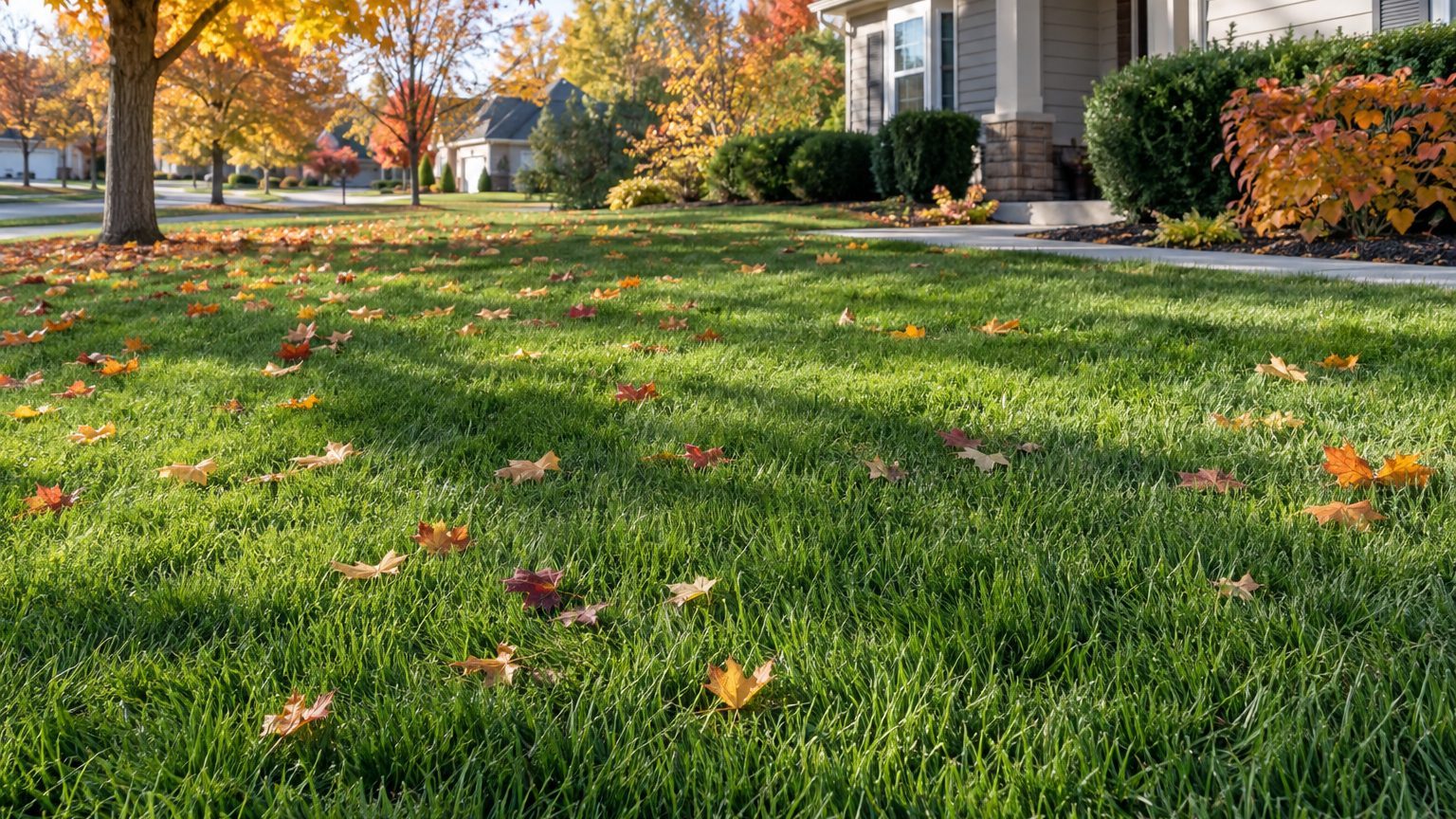
As spring warms, a Kansas lawn reveals a split personality. Tall fescue and bluegrass turn green early, while bermuda and zoysia sit tan and wait. Each type has its own season for seeding, feeding and mowing.
What to Do Each Month in a Kansas Lawn

Cool-season lawns (tall fescue, bluegrass) do their heavy work in late winter, late summer and fall. Warm-season lawns (bermuda, zoysia) do theirs from late spring through midsummer.
| Month | In the lawn |
|---|---|
| January | Rest. The grass is dormant, so keep foot traffic light on frozen turf. |
| February | Still resting, though an early crabgrass preventer application also works now if the weather turns mild. |
| March | Apply crabgrass preventer before the soil warms. Feed cool-season lawns, and start mowing as fescue and bluegrass green up. |
| April | Warm-season lawns start mowing as they wake up. Preventer and a light feeding still work this month, and so does dethatching bermuda or zoysia. |
| May | Seed bermuda or zoysia and lay warm-season sod now. Dethatch and feed warm-season lawns too. Crabgrass preventer can still go down this month. |
| June | Keep feeding bermuda and zoysia, and dethatch them if you missed May. Seeding and sod still work this month. Start watering as heat builds. |
| July | Water deeply, and feed warm-season lawns. Leave tall fescue unfed, since fertilizing it in summer is a mistake. Sod laid now needs steady moisture. |
| August | Core aerate, dethatch, and seed or overseed tall fescue and bluegrass. Keep watering through the heat. |
| September | Feed cool-season lawns and dethatch. If you missed August, aerating and seeding still work now. |
| October | Feed cool-season lawns again and keep mowing. Warm-season grass slows down and fades. |
| November | Make the last mows of the year as growth stops. Rake leaves so they do not smother the grass. |
| December | Rest. The grass is dormant, so clean and put away the mower. |
Not every task suits every lawn. If you are unsure which grass you have, check the FAQ at the bottom of the page before you buy seed or fertilizer.
Kansas — the year and the numbers
- State
- Kansas
- USDA zones
- 5b-7a
- Last spring frost
- April 4 to April 18
- First fall frost
- October 23 to November 2
- Annual rain
- 34 in
- Lawn type
- cool- and warm-season
- Source
- NOAA NCEI 1991-2020 Climate Normals, 32F freeze probabilities · Wichita
When Does the Lawn Season Start and End in Kansas?
Grass grows when the soil warms, not when the last frost passes. Cool-season seed germinates once the soil sits at 50 to 65 °F. Warm-season seed wants it warmer, at 65 to 70 °F. That is why fescue is seeded in late summer and bermuda in late spring.
Frost dates matter mainly to young seedlings. In Wichita, the last spring freeze usually falls between April 4 and April 18. Suburban and rural yards often freeze a week or two later, and higher ground later still.
In Wichita, the first fall freeze typically arrives between October 23 and November 2. Country yards often see it sooner. A seedling that has not rooted by then can heave or die, which is why cool-season seeding belongs in August and September. Check your own county for local timing.
How the Lawn Calendar Shifts Across Kansas
Kansas stretches a long way from the High Plains to the Missouri border, and the lawn calendar leans with it.
- Northwest Kansas: Springs arrive later and winters bite harder. Expect green-up and spring tasks to run behind the rest of the state, and give seedlings extra time to root before fall cold.
- Flint Hills and central Kansas: Timing sits close to the middle of the schedule above. Summer heat and dry spells make deep watering and August seeding matter more than any single date.
- Kansas City area and northeast Kansas: Tall fescue and bluegrass dominate, so late summer aeration and overseeding carry the year. Spring tends to come a bit earlier than in the west.
- Southeast Kansas: This area offers favorable conditions for bermuda and zoysia. Warm-season tasks can start toward the early end of their windows.
Near a regional boundary, follow the closer area and let your own grass decide the final week.
Lawn Care Timing Mistakes to Avoid in Kansas
Feeding Tall Fescue in Summer
Fescue struggles in Kansas heat, and fertilizer pushes soft growth the lawn cannot support. That invites disease and burns stressed turf. Feed fescue in early spring and in fall, and save summer feeding for bermuda and zoysia.
Applying Crabgrass Preventer Too Late
Preventer works by stopping seeds as they sprout, so it must be down before the soil warms. Applied after crabgrass is up, it does little. Aim for March, and treat April and May as a late catch-up only.
Seeding at the Wrong Time
Cool-season seed sown in spring meets summer heat before the roots are ready, and much of it dies. Sow fescue and bluegrass in August, with September as a fallback. Warm-season grass should wait until May, when the soil is warm enough to sprout it.
Where to Get Lawn Advice in Kansas
Local conditions vary from county to county, so a nearby expert beats a general rule. Local sources can help before you spend money on seed or fertilizer.
- K-State Research and Extension publishes turf guides for Kansas grasses, and it is a good first stop before choosing a grass type or planning an overseeding.
- Your county extension office can answer questions about your own soil and grass, so call it before the August seeding window opens.
Common Questions
How Can You Tell If Your Lawn Is Cool-Season or Warm-Season?
Look at these clues. Cool-season grass such as tall fescue or bluegrass stays greener through winter and greens up early in spring. Warm-season bermuda and zoysia go tan after fall frost and stay that way until late spring.
Is October Too Late to Seed Tall Fescue in Kansas?
Yes, for the best results. August is the target, and September still works. Seed sown later has little time to root before cold arrives, so wait for next August and spend the fall on feeding and mowing.
Is a Tan Lawn in Winter Dead?
Not necessarily. Warm-season grass turns tan when it goes dormant, and it recovers once the soil warms. Check for stems that still feel firm at the base and new green shoots in late spring.