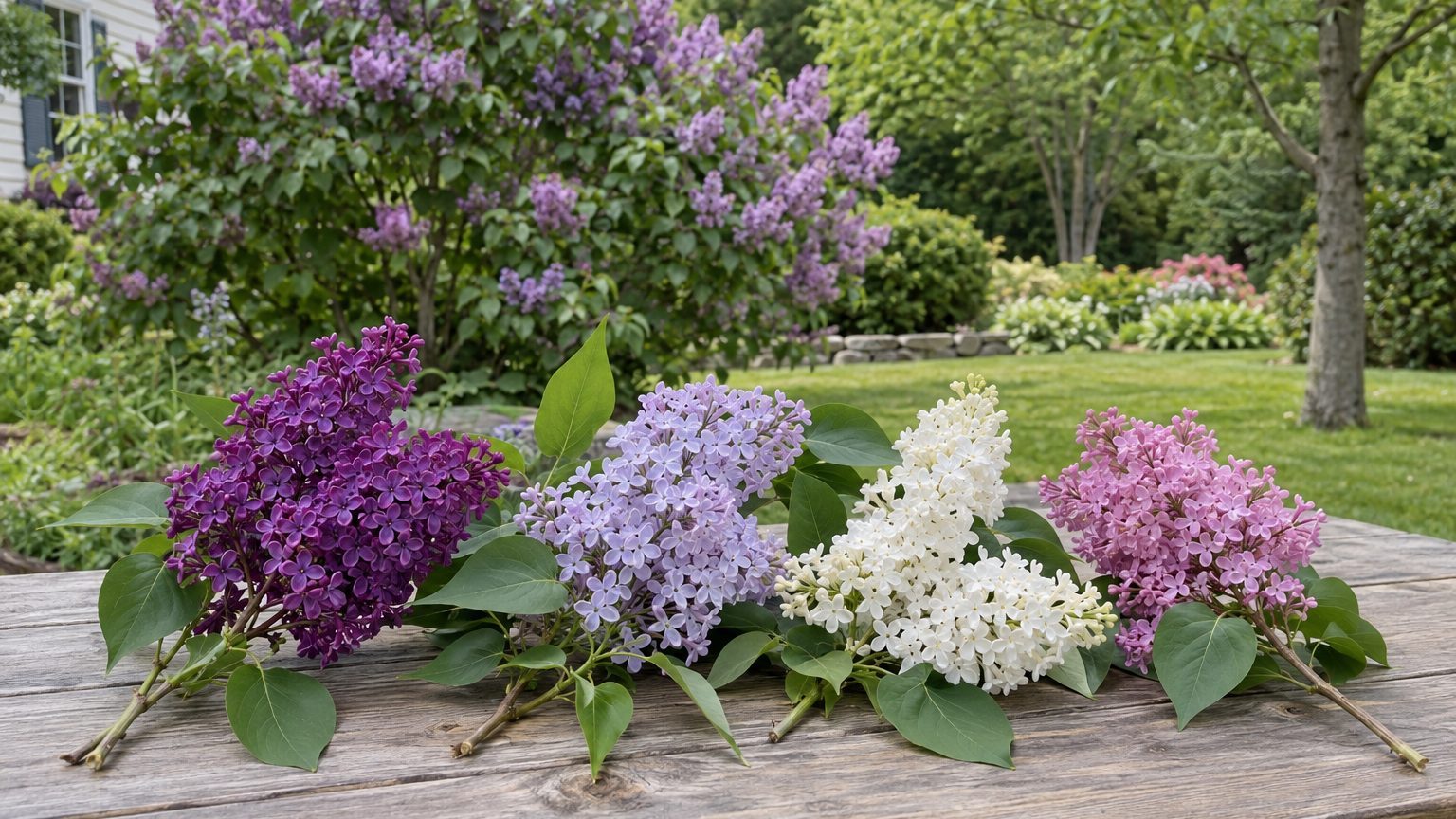
A lilac in full bloom fills a Kansas yard with scent from April into May, but not every lilac handles the summers that follow. Good candidates include common lilac, Meyer lilac, compact ‘Palibin’, and heat-tolerant ‘Superba’.
Best Lilacs to Grow in Kansas

Common lilac, Meyer lilac and the compact ‘Palibin’ are the dependable picks here. Lilacs need a cold winter rest to mature their flower buds, so they do best in cold-winter climates and struggle in hot, humid summers. Kansas sits on the warmer side of what lilacs like, which makes the choice of type matter more than it would farther north.
Common Lilac

Syringa vulgaris is the classic lilac, with wonderfully fragrant flowers in late May. Its fragrance makes it worth a spot in the garden. Borers can be a problem for some cultivars, so check the trunk base for small holes and sawdust before you buy.
Most common lilac cultivars are prone to blight, so look for ones observed with less disease: ‘Edith Cavell’, ‘Glory’, ‘Ludwig Spaeth’ and ‘Pink Elizabeth’.
Meyer Lilac

Syringa meyeri has lavender purple, fragrant flowers in spring. It grows slowly, with dense foliage and a broadly rounded shape, so it stays tidy without constant trimming.
Palibin
This compact selection is a good fit for a front bed or a spot near a walkway. It starts blooming when the plant is only 1 foot tall, so it can flower while still compact.
Reddish-purple buds open to pink flowers, and the heavy bloom comes on old wood, which is why trimming should wait until the flowers fade.
Superba
‘Superba’ is heat tolerant and mildew resistant, with dark pink, single flowers. That combination directly addresses the problem lilacs have in a warm, humid Kansas summer.
Japanese Tree Lilac
Syringa reticulata is often listed as a small tree rather than a large shrub. It suits a yard where you want a lilac that works as a specimen near a patio or at the corner of the house, and it asks for more overhead room than the shrub types.
Penda Bloomerang
Penda Bloomerang is the first re-blooming lilac, though its long-term performance in Kansas has not been evaluated. Treat it as an experiment. Plant one if you are curious, but keep a proven lilac nearby for dependable spring flowers.
Kansas — the year and the numbers
- State
- Kansas
- USDA zones
- 5b-7a
- Last spring frost
- April 4 to April 18
- First fall frost
- October 23 to November 2
- Annual rain
- 34 in
- Lawn zone
- transition-season
- Source
- NOAA NCEI 1991-2020 Climate Normals, 32F freeze probabilities · Wichita
How to Choose a Lilac for a Kansas Garden
Start with the problem your yard is most likely to hand a lilac: heat, disease, a tight spot or a late frost. Each one points toward a different type, and the match matters more than the color.
| Your situation | What suits it in Kansas | Why |
|---|---|---|
| Hot, humid summers | ‘Superba’ | It is heat tolerant and mildew resistant |
| Small space | ‘Palibin’ | Compact plant that blooms from 1 foot tall |
| Little time for upkeep | Meyer lilac | Slow growing, with dense foliage and a broadly rounded form |
| Worry about disease | ‘Edith Cavell’, ‘Glory’, ‘Ludwig Spaeth’, ‘Pink Elizabeth’ | Common lilac cultivars seen with less disease |
| Late spring frosts | Common lilac | It flowers later than early hybrids, whose blooms are more exposed to a late frost |
| Want a small tree | Japanese tree lilac | Often listed as a small tree rather than a large shrub |
Lilacs need a solid period of winter cold to grow and bloom well, whichever variety you choose. A lilac planted where winters are milder or summers hotter than it likes will leaf out but flower sparsely, so favor the heat-tolerant picks the farther south you garden.
Which Lilacs Suit Different Parts of Kansas
Kansas covers USDA hardiness zones 5b to 7a, and that spread changes how much margin a lilac has. Check your own county’s frost timing too, since suburban and rural yards often freeze later in spring than airport readings suggest.
- Northern Kansas: Winters are colder here, which is what lilacs want for good bud set. Common lilac and the other standard choices have the most room to perform well.
- Southern Kansas: Summers run hotter and winters are milder, so lean on heat-tolerant, mildew-resistant selections like ‘Superba’ and expect lighter bloom than farther north.
In the middle of the state, choose by the space you have and the disease problems common nearby.
Lilac Buying Mistakes to Avoid in Kansas
Buying on Reputation Alone
A lilac sold on a big promise, such as repeat bloom, can disappoint when its long-term local performance is unknown. Penda Bloomerang has not been evaluated long term in Kansas. Choose a proven lilac for dependable flowers, and treat the newcomer as an experiment.
Picking a Variety That Wants More Cold
Lilacs need a cold winter rest, and a hot, humid summer stresses them. A variety that fits colder climates will leaf out here but may give thin flowering and mildew. Choose heat-tolerant, mildew-resistant selections like ‘Superba’ or Meyer lilac and favor sunny sites with good air movement.
Ignoring Adult Size
A pot at the garden center says little about what the plant becomes. Japanese tree lilac grows as a small tree, while ‘Palibin’ stays compact and Meyer lilac forms a broad, rounded shrub. Read the mature size on the tag and give the plant room, so you are not forced into hard cutting later.
Where to Get Lilac Advice in Kansas
The state’s land-grant extension service, K-State Research and Extension, publishes shrub guidance written for Kansas yards, and the county extension office can answer questions about your own soil and frost timing.
- The state extension publications list deciduous shrubs for Kansas, including lilac cultivars, and are worth reading before you shop in late winter.
- Your county extension office can tell you how local frost timing and soil affect lilac choice, so call or stop in before you buy in spring.
Common Questions
When Do Lilacs Bloom in Kansas?
Most lilacs bloom in April and May, and later species and cultivars can carry flowers into June. Common lilac in Kansas typically opens in late May.
When Should You Prune Lilacs in Kansas?
May and June, right after the flowers fade. A lilac blooms on last year’s wood and sets next year’s flower buds in summer, soon after it flowers, so pruning in late summer, fall or winter cuts off the next spring’s flowers.
Can You Cut Back an Overgrown Lilac in Kansas?
Yes, in March or April while the plant is still dormant. A hard cut-back renews an overgrown lilac, but it will not flower for a few years afterward, so reserve it for shrubs that have gotten out of hand.