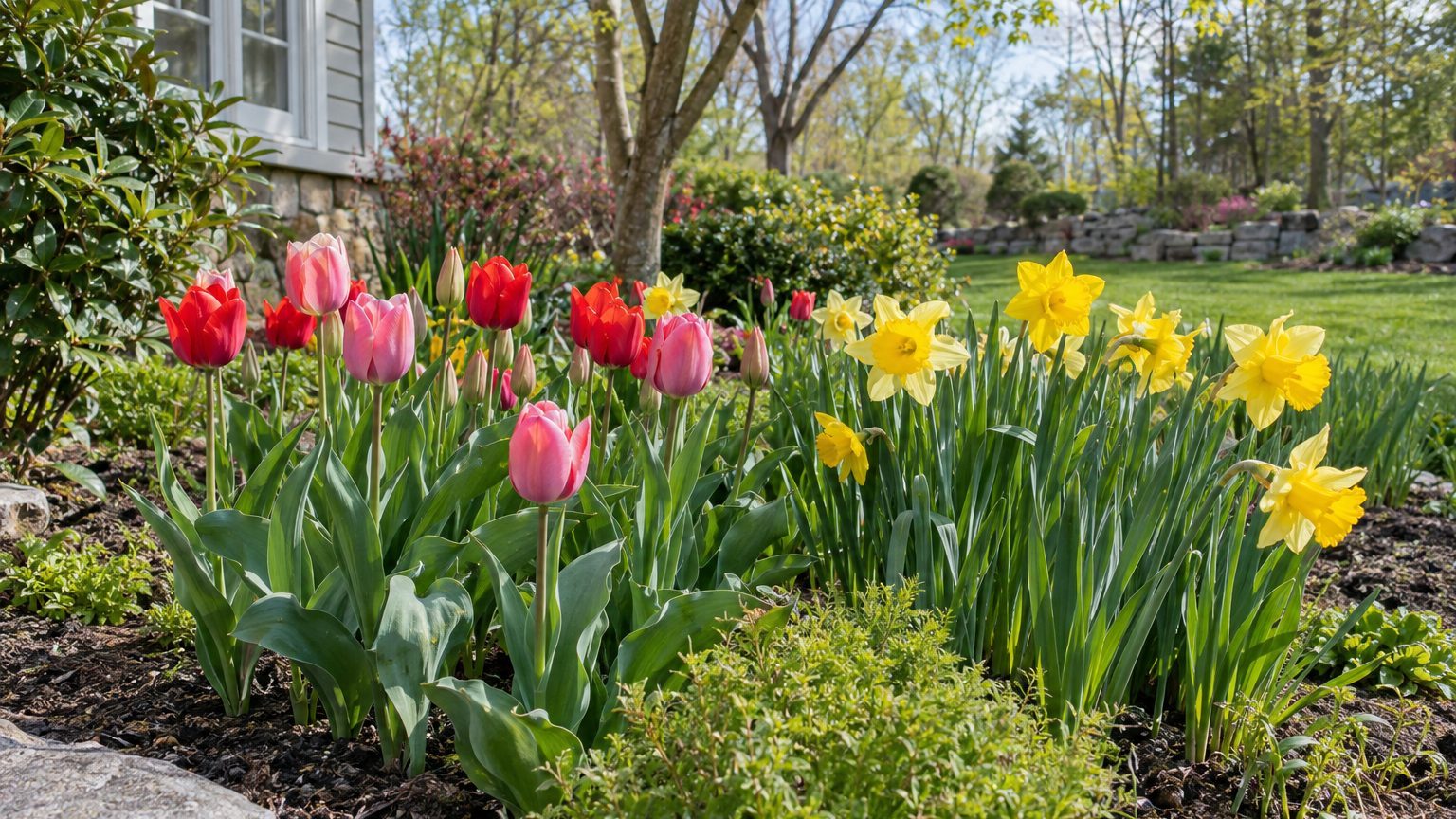
Tulip and daffodil shoots pushing up through cold, damp soil are one of the first signs that spring has reached an Idaho yard. Both bloom once the ground warms after winter, so the show comes earlier in a low valley and later on higher ground.
When Do Tulips and Daffodils Bloom in Idaho?

Tulips and daffodils flower in spring, as soon as the weather warms after a winter of cold. No single month fits the whole state, because the bloom follows the warming of each yard rather than a date on the calendar.
Most spring bulbs need about 12 to 16 weeks of cold before they can flower, and Idaho winters usually supply it. Alliums, like the other spring bulbs, need the cold of winter to bloom.
| Bulb | When it blooms in Idaho | What sets the timing |
|---|---|---|
| Crocus and daffodils | Spring, as the soil and air warm | Winter cold first, then spring warmth. Daffodils vary in height, color and blooming period. |
| Tulips | Spring, after the daffodils have started | A full winter chill. Species tulips cope well with dry conditions. |
| Hyacinths | Spring, as the weather warms | Winter chill, like tulips |
| Alliums | Late in the spring bulb season | Needs winter chill to bloom |
Crocus and snow iris also fit dry sites well. The bulbs only bloom well if they went into the ground in September or October, once the soil had cooled below about 60°F. That gives roots time to form before the ground freezes, without letting the bulbs sprout in fall.
Idaho — the year and the numbers
- State
- Idaho
- USDA zones
- 3b-7b
- Last spring frost
- April 23 to May 7
- First fall frost
- October 7 to October 21
- Annual rain
- 12 in
- Lawn zone
- transition-season
- Source
- NOAA NCEI 1991-2020 Climate Normals, 32F freeze probabilities · Boise
How to Tell Your Bulbs Are About to Bloom
Bulbs give plenty of notice, and a walk along the beds on a mild day shows where each one stands.
- Green tips poking through the soil mean the bulb has finished its winter rest and is growing, so a late cold snap is no cause for worry.
- Leaves that stand several inches tall tell you the roots are working and flowers are on their way.
- A fat bud rising from the center of the leaves shows the flower stem has started to lengthen.
- Buds that begin to show color mean bloom is close, so this is the moment to enjoy them or plan a cut bouquet.
- Daffodil buds that tilt and open from a papery sheath are ready to flower within a short time.
Tulips that come up but form no bud are usually worn out, which is common with tulips.
What to Do After Tulips and Daffodils Bloom in Idaho
Snip off the faded flowers and leave everything else alone. The leaves feed the bulb for next year’s bloom, so they stay in place until they turn yellow and brown. Do not cut them while green, and do not braid or tie them into neat bundles.
Tulips are often short-lived in the garden, and many fade after a few seasons. Daffodils last longer and are the more reliable perennial bulb. If you want tulips to return, look for Darwin hybrids or Emperor tulips, which are bred to return for several years.
Animals also shape what comes back. Voles, squirrels, rabbits and deer eat tulips and crocus, while daffodils are left alone.
How Bloom Time Shifts Across Idaho
Idaho ranges from zone 3b to 7b in the USDA system, so bloom dates vary a good deal from one place to the next.
- Treasure Valley: Boise sits in a low valley, where the soil warms sooner and bulbs bloom earlier than in most of the state.
- Wood River Valley and the mountain towns: Higher ground stays cold longer, so bulbs wake later and bloom later.
- Panhandle and northern Idaho: Cooler springs push bloom later than in the southwestern valleys, though the cold winters give bulbs the chill they need.
Within one yard, a sunny south wall brings bloom ahead of a shady north bed.
Where to Get Bulb Advice in Idaho
Local help is useful for questions about your own soil, elevation and varieties. University of Idaho Extension and your county office are the places to start.
- University of Idaho Extension offers gardening guidance for the state, and its pages are worth a visit before planting time in fall.
- Your county extension office can speak to conditions in your own valley or mountain town, so call or stop in when bulbs fail to bloom.
Common Questions
Do Deer and Squirrels Eat Tulips and Daffodils?
Tulips and crocus are a favorite of voles, squirrels, rabbits and deer. Daffodils are left alone, which makes them a safe choice where wildlife visits the yard.
What If Bulbs Are Still in the Bag After the Planting Months?
Plant them anyway. A bulb is better planted late than stored over the winter, so put it in as long as the ground can be dug.
Can You Force Tulips to Bloom Indoors?
Yes. To trick bulbs such as tulips into blooming, pot the bulbs, chill them, then bring them out into warmth and light.