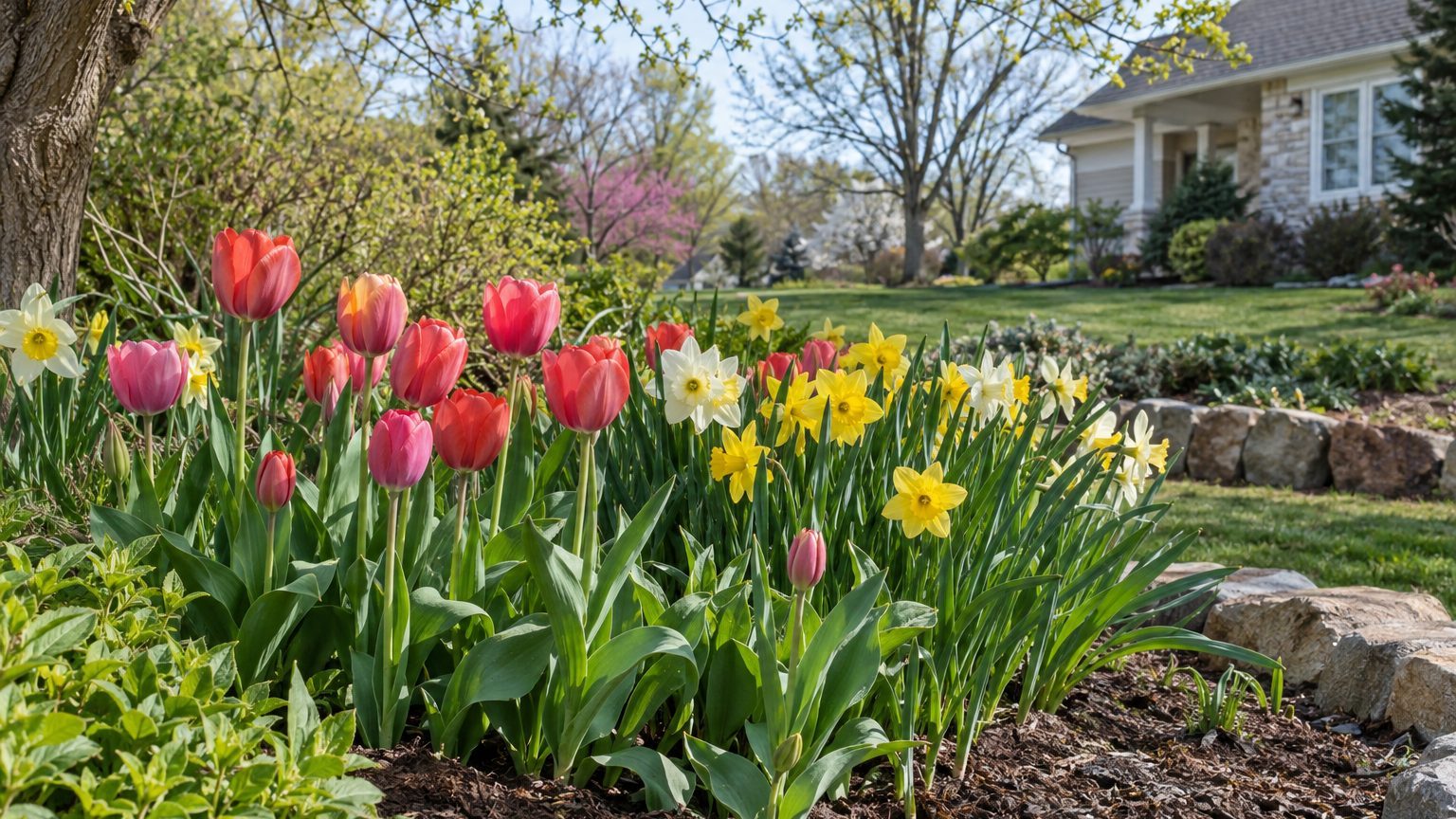
Yellow daffodils nodding beside a driveway and rows of tulips opening in a front bed mean spring has settled into Washington. The timing follows how fast the weather warms, and it varies from the mild west side of the state to the cooler interior. Here is when the blooms arrive and what to do once they do.
When Do Tulips and Daffodils Bloom in Washington?

Tulips and daffodils bloom in Washington from March through May. Flowering follows the warming of spring rather than a fixed date, so a cool, wet stretch holds buds closed a little longer and a run of mild days opens them sooner.
Tulips spread their color across the season because they come in early, mid and late varieties. Hybrid tulips open from late March to early May, which lets one bed stay in flower for weeks.
| Bulb | When it blooms in Washington | What sets the timing |
|---|---|---|
| Daffodils and tulips | March to May | Warming spring weather |
| Hybrid tulips | Late March to early May | Early, mid or late spring variety |
| Alliums | Toward the end of the spring bulb season | Warming weather, and needs winter cold to bloom |
Crocus and hyacinths run through the same long spring, and species tulips, which are smaller and very hardy, add to it. Planting a mix of early and late varieties is the simplest way to stretch the show, and the daffodil and tulip groups can overlap in the same bed.
Washington — the year and the numbers
- State
- Washington
- USDA zones
- 4a-9a
- Last spring frost
- February 27 to March 18
- First fall frost
- November 13 to November 30
- Annual rain
- 39 in
- Lawn zone
- transition-season
- Source
- NOAA NCEI 1991-2020 Climate Normals, 32F freeze probabilities · Seattle
How to Tell Your Bulbs Are About to Bloom
Bulbs give plenty of warning before the first petal opens, and a walk around the beds shows where each planting stands.
- Green tips pushing through the soil mean the bulb has finished its cold rest, which for most spring bulbs takes about 12 to 16 weeks of winter cold.
- Leaves that stand taller and fatter day by day tell you the bulb is drawing on stored energy, so keep any mulch loose and let the shoots through.
- A bud rising on a stem, still green and tight, means flowers are only a short time away.
- A bud that shows a streak of color at its tip is close to opening, and tulips in particular show this before the petals loosen.
- Allium leaves appear well before the round flower heads, and according to Iowa State University Extension, alliums need the cold of winter to bloom.
Shoots that look slow after a cold, wet week usually catch up as soon as the weather warms, so there is no reason to dig for them.
What to Do After Tulips and Daffodils Bloom in Washington
Remove only the faded flowers and leave everything else standing. The leaves keep feeding the bulb for next year’s bloom, so leave them in place until they turn brown. Never tie them, braid them or cut them while they are green, however untidy the bed looks.
Tulips are often short-lived in the garden, while daffodils last longer and are the more reliable perennial bulb. Some tulips are bred to come back. In Washington, Darwin hybrids and Emperor tulips are bred to return for several years, and species tulips naturalize well.
Planting the next round in a bed with a mix of daffodils and returning tulips keeps the spring display going with little work. Interplanting low perennials in front of the fading foliage hides it as it yellows, so the bed looks tidy without anyone touching a leaf.
How Bloom Time Shifts Across Washington
Washington spans USDA zones 4a to 9a, so a bed on Puget Sound and a bed east of the mountains do not bloom on the same schedule.
- Skagit Valley: Late October planting works here, giving bulbs time to root before the ground freezes without tempting them to sprout before winter. This is the valley known for its tulip fields.
- Western Washington around Seattle: Winters are mild and maritime, so spring warmth arrives early and bulbs lead the season. Cold wet soil and low light can still slow growth well past the last freeze.
- Eastern Washington beyond the Cascades: This is high desert with a far shorter season. Bulbs go in earlier, in late September in the colder interior, and spring generally warms later, so blooms open after those on the west side.
Treat the March to May window as a guide and watch your own beds for the cues above.
Where to Get Bulb Advice in Washington
Local questions about varieties, planting depth or pests are best taken to people who know the soil and weather in your county. Washington State University Extension is the state’s land-grant extension service and a dependable place to start.
- The Washington State University Extension site carries fall planting guides and spring bulb fact sheets, which are worth reading before the bulbs go in.
- Your county extension office can answer questions about local soil, drainage and pests, and it is a good call in late summer, before you buy bulbs.
Common Questions
When Should You Plant Spring Bulbs in Washington?
October and November are the usual planting months, with late September working in the colder interior. Planting can run into mid-December while the soil can still be dug. Aim to plant once the soil has cooled below about 60°F, so roots form but the bulbs do not sprout in the fall.
Will Deer and Other Animals Eat Your Tulips and Daffodils?
Deer enjoy tulips but leave daffodils alone, because daffodil sap contains needle-sharp crystals that burn the mouth. Voles, squirrels and rabbits go after tulips and crocus too. Crocuses are deer-resistant but not slug-resistant, so watch for slugs in damp spring weather.
What If Your Bulbs Are Still in the Bag?
Plant them. A bulb that is still unplanted is better in the ground late than stored over the winter, and it can go in as long as the soil can be dug.