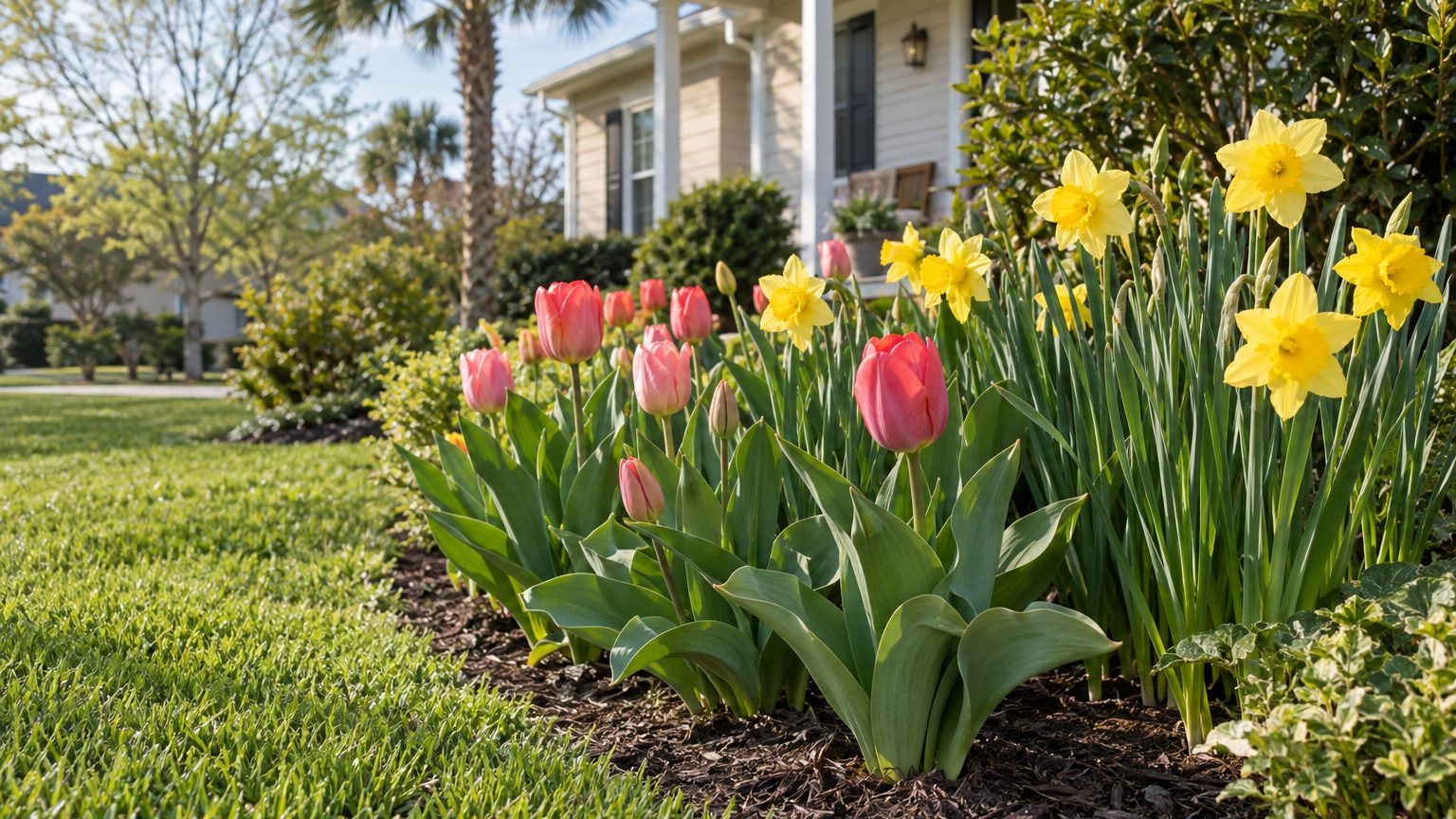
Paperwhites blooming by a front door in the cool months are a familiar Florida sight, while a bed of tulips is a much harder thing to pull off. Winters here are mild enough that spring bulbs behave differently than they do up north. Planting time, chilling and bulb choice all shift, and they shift again from Jacksonville down to Miami.
When to Plant Tulips and Daffodils in Florida

Plant spring bulbs in fall, once the soil has cooled below about 60°F, which gives roots time to form without tempting the bulbs to sprout early. A bulb’s year in a Florida yard runs roughly like this:
- In early fall, buy bulbs while the selection is good and keep them somewhere cool and dry until you are ready to plant.
- Through fall, chill tulips and hyacinths in the refrigerator, because Florida winters are too mild to give them the cold they need.
- Once the soil has cooled below about 60°F, plant the bulbs, with paperwhite types and alliums going straight into the ground.
- Right after planting, spread a layer of mulch to hold moisture and keep the soil from swinging in temperature.
- In late winter and early spring, the first shoots push up, and the leaves should stay in place after the flowers fade.
Cold arrives at different times across the state. In Jacksonville, in north Florida, the first fall frost falls between November 26 and December 13, and USDA hardiness zones in Florida run from 8b to 11b. Central and south Florida are effectively frost-free, so frost dates do not guide planting there.
Florida — the year and the numbers
- State
- Florida
- USDA zones
- 8b-11b
- Last spring frost
- February 16 to March 7
- First fall frost
- November 26 to December 13
- Annual rain
- 53 in
- Lawn zone
- warm-season
- Source
- NOAA NCEI 1991-2020 Climate Normals, 32F freeze probabilities · Jacksonville
Which Spring Bulbs Do Best in Florida?
Bulbs that need no deep winter chill do best. Tulips struggle, because Florida winters are just too warm to give them the resting period they need. Paperwhite-type narcissi and alliums are the dependable choices.
True daffodils are a letdown here, since little success can be expected with them. The polyanthus narcissi are the better substitute.
| Bulb type | How it does in Florida | Why |
|---|---|---|
| Tulips | Struggle | Winters are too warm for the cool dormancy they need |
| Hyacinths | Need help | Chilled in the refrigerator before planting where winters are mild |
| Polyanthus narcissi (paperwhite, Chinese sacred lily, Pearl White, Grand soleil d’or) | Do well | They flower without a chill period |
| True daffodils | Little success | They want more winter cold than Florida offers |
| Alliums | Reliable choice | They need the cold of winter to bloom |
Crocus belongs in the same cautious group as tulips, and voles, squirrels, rabbits and deer eat both. Daffodils are left alone, which is one more reason to plant narcissi types where critters visit.
When to Plant, Chill and Care for Spring Bulbs in Florida
Each job here follows a sign in the yard or the bulb rather than a date on the calendar. The first is soil temperature, the second is the refrigerator, and the third is the color of the leaves.
| Task | Best timing in Florida | Why then |
|---|---|---|
| Plant | In fall, once the soil has cooled below about 60°F | Roots form first, and the bulbs do not sprout too early |
| Chill (tulips and hyacinths) | In the refrigerator before planting | Most spring bulbs need 12 to 16 weeks of cold to flower, and Florida winters fall short |
| Leave the foliage | After bloom, while the leaves are still green | The leaves feed the bulb for next year |
Cut off only the faded flowers and let the leaves yellow and brown on their own. Paperwhite types skip the refrigerator step, and according to Iowa State University Extension, alliums need the cold of winter to bloom.
How Bulb Planting Time Changes Across Florida
Florida stretches across very different winters, and the bulb plan changes with them.
- North Florida (Jacksonville): Winter frost is real here, though three of thirty falls saw no freeze at all. This is the part of the state where the soil cools soonest, so bulbs can go in earlier than farther south.
- Central Florida (Orlando): Winters are effectively frost-free. Planting follows a cool snap in the soil, and tulips and hyacinths depend entirely on refrigerator chilling.
- South Florida (Miami): Frost is not part of the picture, and the growing calendar inverts. The main season runs through winter and summer is the hard part, so bulbs are planted later, when the soil finally cools.
Wherever you garden in the state, wait for the soil to cool before planting rather than relying on the calendar.
Where to Get Bulb Advice in Florida
Local help is useful when a bulb fails or a bed needs testing. Bulb choices that work in one county can fall flat in the next.
- UF/IFAS Extension publishes bulb guides for Florida, and its pages are worth a read before buying.
- Your county extension office can test your soil and diagnose a failing bulb, so bring a sample or photos along.
- Go to the county office before planting if you are unsure about drainage, since a quick test can save a whole bed of bulbs.
Common Questions
How Long Should You Chill Tulip Bulbs in Florida?
In Florida, bulbs need about 60 days at 40°F or 120 days at 50°F. Keep them in the refrigerator, away from ripening fruit, and plant them as soon as the chill period ends.
Will Tulips Come Back the Following Year in Florida?
Not reliably. Tulips are often short-lived in the garden even in cold climates, and in Florida they usually bloom once. Paperwhite types are the better choice for returning color.
What If You Still Have Unplanted Bulbs After the Planting Window?
A bulb still in the bag is better planted late than stored over the winter. Plant it as soon as the soil is cool enough to dig, and water it in.