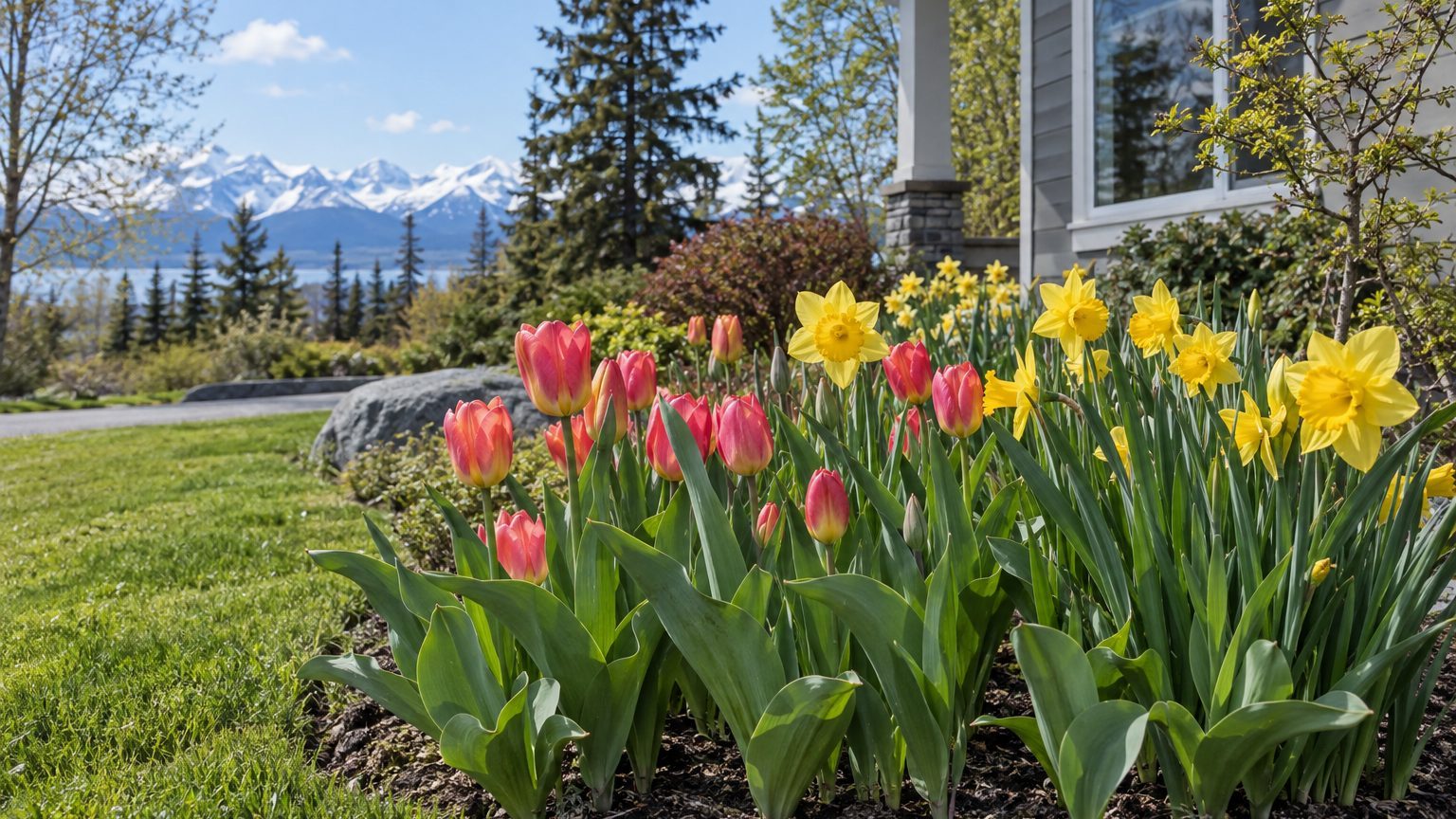
A paper sack of bulbs on the porch in late summer, just as birch leaves start turning yellow, is how an Alaska spring begins. Tulips and daffodils go in the ground while the soil is still workable, then spend the long winter under snow doing their rooting and chilling.
When to Plant Tulips and Daffodils in Alaska

Plant in August and September, with late August to early September the target, or whenever the soil has cooled into the low to mid 50s °F. A bulb’s year here runs like this.
- In August, buy your bulbs while the selection is full, choosing firm ones with no soft spots or mold.
- From late August to early September, set them in the ground. Planting once the soil has cooled below about 60°F gives roots time to form before the ground freezes, yet keeps the bulbs from sprouting in the fall.
- Once the ground begins to freeze in late fall, spread mulch over the bed to even out the freezing and thawing that can heave bulbs upward.
- Through winter, the cold does the chilling for you. Most spring bulbs want about 12 to 16 weeks of it, and Alaska winters supply it, so the refrigerator step used in mild climates is unnecessary.
- In spring, as the snow pulls back and the soil thaws, the first green shoots push through the mulch.
For a sense of timing, the first fall frost in Anchorage tends to arrive between September 22 and October 1, which is why planting at the start of the window matters. Alaska spans USDA hardiness zones 1a to 8a, so dates built around Anchorage shift in other parts of the state.
Alaska — the year and the numbers
- State
- Alaska
- USDA zones
- 1a-8a
- Last spring frost
- May 3 to May 12
- First fall frost
- September 22 to October 1
- Annual rain
- 16 in
- Lawn zone
- cool-season
- Source
- NOAA NCEI 1991-2020 Climate Normals, 32F freeze probabilities · Anchorage
Which Spring Bulbs Do Best in Alaska?
Daffodils are the dependable choice, since they last for years and nothing in the yard wants to eat them. Alliums, snowdrops and scilla also cope well with Alaska winters. Tulips are possible but short-lived, and they tempt hungry animals.
The cold itself is not the obstacle here, because winters easily deliver the chill that bulbs need. Voles, squirrels, rabbits and deer are the bigger concern for the bulbs they like.
| Bulb type | How it does in Alaska | Why |
|---|---|---|
| Daffodils | Reliable, returns for years | Longer-lived than tulips, and animals leave them alone |
| Tulips | Worth trying, often short-lived | Voles, squirrels, rabbits and deer eat them |
| Alliums | Good choice, such as ‘Purple Sensation’ | Needs winter cold to bloom |
| Scilla | Winters over well in Fairbanks | Tough enough for Interior cold |
| Snowdrops | Hardy | Handles cold winters without trouble |
Greigii tulips, the short, broad-leaved type, have come up after a mild winter in Alaska, and grape hyacinth sometimes winters over in Fairbanks too. Crocus belong in the same camp as tulips, since rodents dig them up. If critters visit your yard, lean on daffodils and alliums.
When to Plant, Chill and Care for Spring Bulbs in Alaska
The bulb year here has three main jobs: planting before the ground locks up, letting winter do the chilling, and leaving the foliage alone after bloom. A sign in the soil or the leaves works better than a date.
| Task | Best timing in Alaska | Why then |
|---|---|---|
| Plant bulbs | August to September, ideally late August to early September, or when soil is in the low to mid 50s °F | Roots settle before the ground freezes |
| Plant bulbs still in the bag | As long as the ground can be dug | Late planting beats storing bulbs over winter |
| Leave the foliage | After bloom, until the leaves turn brown | The leaves feed the bulb for next year |
| Remove faded flowers | After bloom | Only the spent blooms come off, never the leaves |
Alaska winters already provide the cold the bulbs need, so there is no need for a separate chilling step. Resist tidying the bed while the leaves are still green, even if the yellowing foliage looks messy next to the new growth of summer perennials. Tuck it behind taller plants if you need to hide it.
How Bulb Planting Time Changes Across Alaska
Alaska is huge, and the planting window shifts with the length of the fall. The soil-temperature sign works everywhere, so use it when a date feels off.
- Anchorage: One of the milder inhabited parts of the state, with a longer growing season. The full August to September window is realistic, though late August to early September is still the target.
- Fairbanks and the Interior: The season is far shorter, and winter arrives sooner. Aim for the start of the window, and check the soil rather than the calendar. Scilla and snowdrops are proven performers here.
- Farther north: The season is shorter still, so plant as early in the window as the bulbs are available, and keep to hardy types.
Long summer daylight helps bulbs recover and store energy, but it does nothing to slow the cooling of the soil in fall.
Where to Get Bulb Advice in Alaska
For a local planting date, a soil test or a diagnosis of a bed that has not performed, two offices can help.
- The University of Alaska Fairbanks Cooperative Extension Service publishes bulb guidance written for Alaska conditions, and it is a good first stop in late summer before you buy.
- Your county or district extension office can test your soil and look at problem plants, so bring a sample or a bulb in spring when growth shows.
- Once the bulbs are bought, the next job is to check the soil temperature and plant them.
Common Questions
Which End of a Bulb Goes Up?
The pointed tip faces up and the flatter, roughly rooted base faces down. If you cannot tell, set the bulb on its side, and the shoot will find its way up.
Should You Water Bulbs After Planting?
Give them one thorough watering so the soil settles around them and roots can start growing. After that, fall moisture and winter snow handle the rest, so there is no need to keep watering.
What Kind of Soil Do Spring Bulbs Need?
They need soil that drains well, since a bulb sitting in soggy ground tends to rot. If your bed stays wet after the spring thaw, choose a higher spot or work compost into the soil before planting.