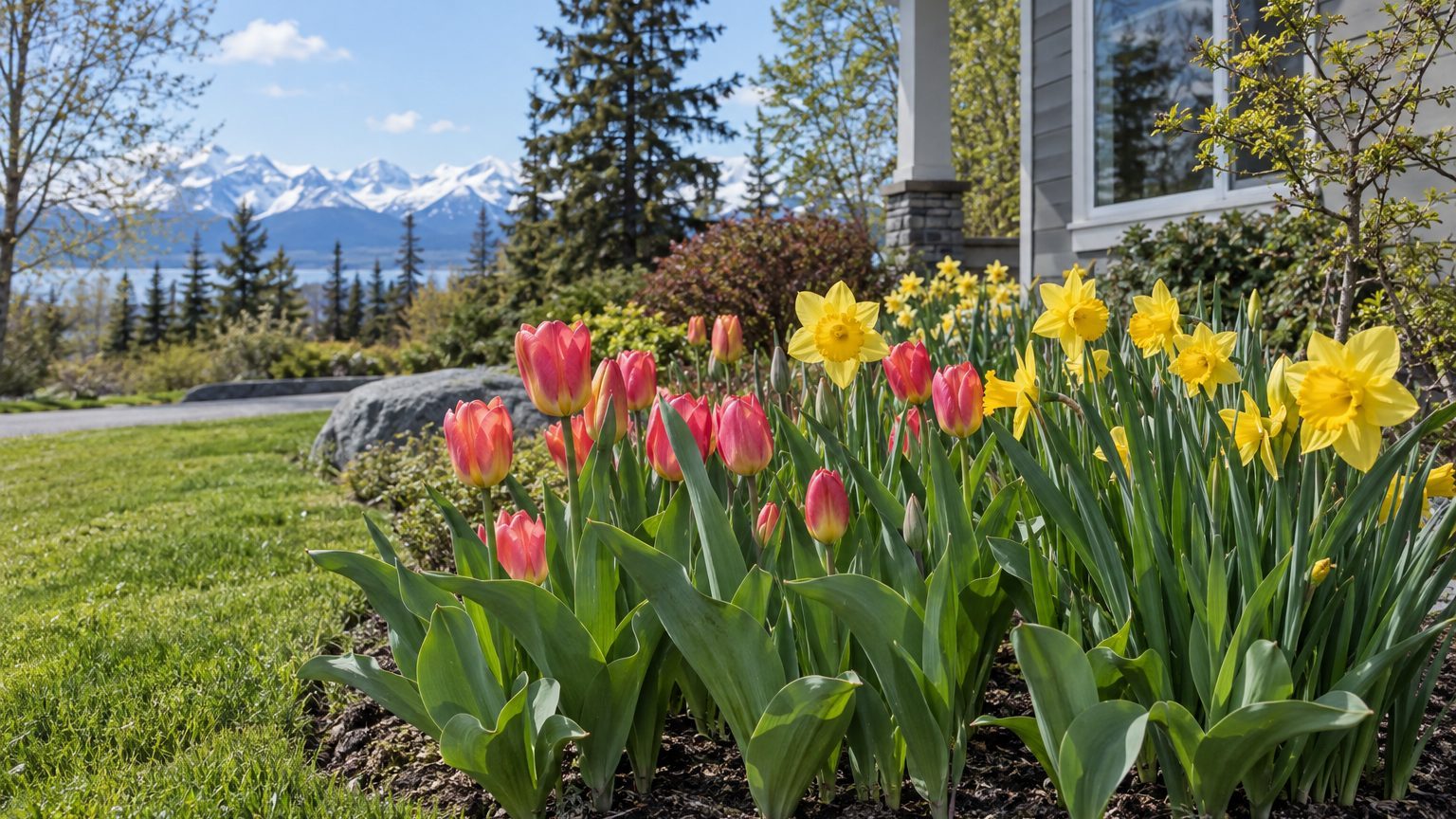
Green shoots pushing through the last crust of snow in an Alaska bed started as bulbs tucked into cold soil the fall before. Not every bulb sold at a garden counter handles an Alaska winter, though. Scilla, snowdrops, alliums, and a few tough tulips and grape hyacinths are the ones worth planting here.
Best Spring Bulbs to Grow in Alaska

Hardiness zones in Alaska run from 1a to 8a on the USDA system, so a bulb that thrives in a mild coastal bed can fail inland. The small, tough bulbs hold up most reliably, and a few larger ones are worth a try. Alaska extension growers name the following.
Scilla
Scilla tends to winter over well in Fairbanks, which is a hard test for any bulb. Small bulbs like this settle in quickly and ask little of the gardener. Plant them in a spot where they can spread into a carpet of blue.
Snowdrops
Snowdrops are hardy, and they are the bulb to reach for if your winters are severe. They start the season, so they are welcome after a long white stretch. Tuck them under shrubs or along a walk where you will notice them.
Grape Hyacinths
Grape hyacinth sometimes winters over in Fairbanks, which means it is worth trying but not a sure thing. Plant a small drift and see how it comes through before you invest in more. Pair it with scilla or snowdrops so the bed still has color if it fails.
Purple Sensation Allium
The showy allium called ‘Purple Sensation’ is a recommended fall-planted bulb for Alaska. According to Iowa State University Extension, alliums, like other spring bulbs, need the cold of winter to bloom, and they close out the bulb season as ornamental onions, with round purple heads above the foliage of other plants.
Greigii Tulips
A Greigii tulip came up the first spring after a mild winter, so the odds improve if your garden sits in a gentler spot. Tulips are often short-lived, so treat them as a bonus rather than a foundation, and plant them where a gap next year will not hurt.
Alaska — the year and the numbers
- State
- Alaska
- USDA zones
- 1a-8a
- Last spring frost
- May 3 to May 12
- First fall frost
- September 22 to October 1
- Annual rain
- 16 in
- Lawn zone
- cool-season
- Source
- NOAA NCEI 1991-2020 Climate Normals, 32F freeze probabilities · Anchorage
How to Choose Spring Bulbs for Your Alaska Garden
Match the bulb to your situation. Plant in August to September, from late August to early September or once the soil has cooled to the low to mid 50s °F. That gives roots time to form before the ground freezes, while the bulbs stay asleep above ground.
Most spring bulbs need about 12 to 16 weeks of cold to flower. Alaska winters generally supply it, so the refrigerator chilling used for tulips and hyacinths in mild climates is not part of the routine here.
| Your situation | What suits it in Alaska | Why |
|---|---|---|
| Very cold winter | Scilla and snowdrops | Scilla winters over well in Fairbanks, and snowdrops are hardy |
| Want a bulb that returns for years | Daffodils | They last longer than tulips and are the more reliable perennial bulb |
| A tulip is a must | Greigii tulips | One came up the first spring after a mild winter, though tulips are often short-lived |
| Little time or attention | Alliums such as Purple Sensation | They need the cold of winter to bloom |
| Want to experiment | Grape hyacinths | They sometimes winter over in Fairbanks, so start with a small planting |
Hot, humid summers rarely trouble Alaska gardeners, so they do not need to steer the choice. Space matters less than hardiness here, and the small bulbs fit almost anywhere.
Which Spring Bulbs Suit Different Parts of Alaska
Alaska is large enough that the same bulb can behave very differently from one town to the next, and the season length shifts with it. Anchorage is one of the mildest inhabited parts of the state, with about 143 frost-free days.
- Anchorage: Milder winters give tulips their best chance, so Greigii types are worth trying alongside daffodils and alliums.
- Fairbanks and the Interior: Winters and summers are harsher and the season is far shorter, so lean on scilla, snowdrops and, with caution, grape hyacinths.
- The far north: The season is shorter still, so stay with snowdrops and scilla, and expect to experiment rather than follow a set recipe.
Long summer daylight partly offsets a short season, which is why even the hardy small bulbs manage to bloom before the cold returns.
Spring Bulb Buying Mistakes to Avoid in Alaska
Choosing Bulbs by Looks
A bulb that looks pretty on a grocery store shelf may not be hardy here. A Greigii tulip planted this way came up only after a mild winter, and a hard one could have ended it. Check the type first, then buy scilla, snowdrops or alliums if you want a safer start.
Expecting Tulips to Last
Tulips are often short-lived, and an Alaska winter shortens the odds further. Plan on replacing them from time to time. Daffodils are the more reliable choice for a bed that should return each spring, so build the planting around them and add tulips as accents.
Storing Bulbs Over the Winter
A bulb that never got planted is better in the ground late than held over the winter in its bag. Plant for as long as the soil can still be dug. A late bulb may settle in more slowly, but a stored one tends to dry out and lose its chance.
Where to Get Spring Bulb Advice in Alaska
Local growers know which bulbs have come through winter in your own town. The University of Alaska Fairbanks Cooperative Extension is the state’s extension service, and its office near you can answer questions about hardiness and timing.
- The extension website carries growing guides on bulbs, and it is worth reading before you order or buy in late summer.
- Your local extension office can tell you which bulbs have lasted in your neighborhood, so call it before planting season in August.
- Ask what has overwintered in nearby gardens, then plant a small test patch of the hardiest bulbs this fall.
Common Questions
When Should You Remove the Leaves from Spring Bulbs?
Leave them on the plant after bloom until they turn brown. Remove only the faded flowers, because the leaves feed the bulb for next year.
Which Spring Bulbs Do Voles and Deer Leave Alone?
Daffodils are left alone. Voles, squirrels, rabbits and deer eat tulips and crocus, so plant those where you can protect them, or choose daffodils instead.
Do All Spring Bulbs Bloom at the Same Time?
No. Spring bulbs bloom in a long succession, from snowdrops and winter aconites at the start of the season to ornamental onions (alliums) at the end. A mix of types keeps the bed in color for much longer than one variety would.