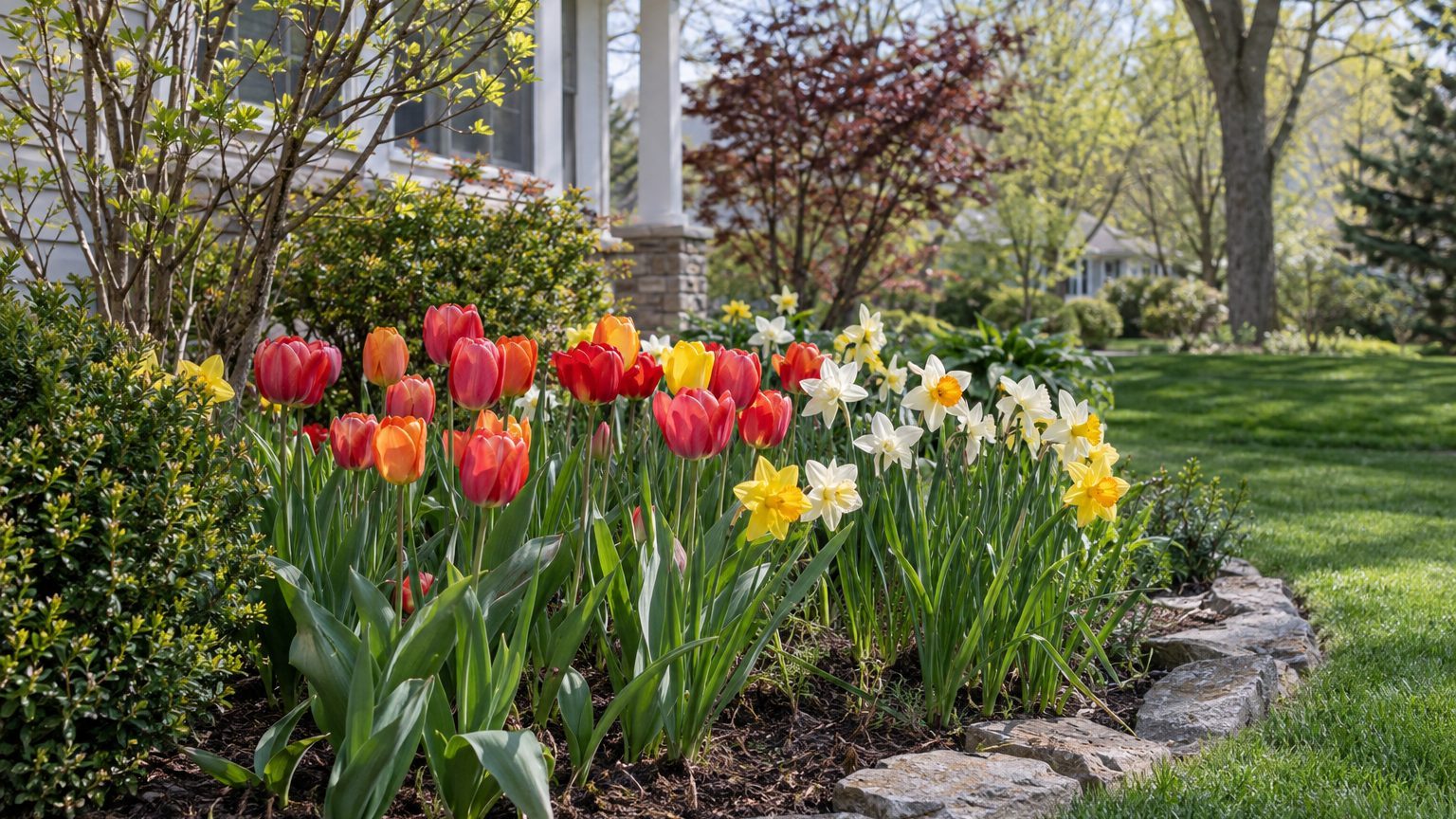
Green daffodil tips pushing through the last gray patches of snow are one of the first signs of spring in an Alaska yard, and tulips follow once the soil warms. When they actually open depends on where you garden, how the winter went and how fast spring arrives, so the timing here comes down to the season rather than a date.
When Do Tulips and Daffodils Bloom in Alaska?

Tulips and daffodils bloom when spring warms the ground, and no fixed month goes with them. A cold, late spring pushes the flowers back, and a mild one brings them forward. Anchorage has the gentlest conditions, while the Interior and the north start later.
| Bulb | When it blooms in Alaska | What sets the timing |
|---|---|---|
| Snowdrops | Start of the bulb season, as spring warms | Hardy, so they handle Alaska winters |
| Daffodils | Follows spring warming | Winter cold of about 12 to 16 weeks, then warming soil |
| Tulips | Follows spring warming | The same winter cold, and a mild winter helps them return |
| Alliums | End of the bulb season, as spring warms | Requires winter cold to bloom |
Spring bulbs flower in a long succession, with snowdrops and winter aconites opening the season and ornamental onions closing it. Crocus and hyacinths sit in between, and grape hyacinth sometimes winters over in Fairbanks. All of it starts with planting in August or September, in late August to early September or when the soil is in the low to mid 50s °F. Roots then form before the ground freezes, and the bulbs do not sprout in the fall.
Alaska — the year and the numbers
- State
- Alaska
- USDA zones
- 1a-8a
- Last spring frost
- May 3 to May 12
- First fall frost
- September 22 to October 1
- Annual rain
- 16 in
- Lawn zone
- cool-season
- Source
- NOAA NCEI 1991-2020 Climate Normals, 32F freeze probabilities · Anchorage
How to Tell Your Bulbs Are About to Bloom
Bulbs give plenty of notice, and you can read their progress from the bed.
- Green tips breaking the surface mean the bulb has come through the winter and roots are active, so leave any mulch loose and do not dig around them.
- Leaves that open and stand upright show the flower stalk is forming in the center, which is the cue to keep the bed watered if the spring is dry.
- Buds that swell and show color tell you the flowers are only a short while from opening.
- A cold snap while the tips are showing is a real risk, since frost in Anchorage can still arrive between May 3 and May 12.
- Chewed or missing tulip and crocus shoots point to voles, squirrels, rabbits or deer, while daffodils are left alone.
Blooms that stay closed in cold weather are simply waiting for warmth, and they open when it comes.
What to Do After Tulips and Daffodils Bloom in Alaska
Snip off the faded flowers and leave everything else in place. The leaves keep feeding the bulb after the petals drop, so they stay on the plant until they turn yellow and then brown. Do not cut them while they are green, and do not tie or braid them, because that cuts the bulb off from its food.
Plan on daffodils as the lasting performer. Tulips are often short-lived in the garden, so treat them as a bonus that may fade after a few seasons. A Greigii tulip has been reported coming up the first spring after a mild winter in Alaska, which suggests the shorter, sturdier types are worth trying.
Voles, squirrels, rabbits and deer go after tulips and crocus, and daffodils are left alone. If animals are active in your yard, daffodils are the dependable choice and tulips need a little more attention.
How Bloom Time Shifts Across Alaska
Alaska covers climates that differ a great deal, and bulbs follow them, with later bloom wherever spring is slower to arrive.
- Anchorage: This is one of the mildest inhabited parts of the state, with a longer frost-free season. Long summer daylight helps bulbs rebuild after bloom.
- Fairbanks and the Interior: Winters are harsher and the growing season is far shorter, so bloom comes later than in Anchorage. Scilla winters over well in Fairbanks, snowdrops are hardy, and grape hyacinth sometimes survives.
- The far north: The season is shorter still, so bloom comes later again and only the hardiest bulbs are worth a try.
Choose bulbs for the winter you actually get, and let your own spring set the date.
Where to Get Bulb Advice in Alaska
Alaska’s growing conditions vary so much from town to town that local advice goes further than general rules. University of Alaska Fairbanks Cooperative Extension publishes guidance written for Alaska gardens, including pages on bulbs.
- The extension website has bulb articles written for Alaska gardens, which are worth reading before you order in summer.
- The extension office nearest you can answer questions about which varieties suit your area, and a visit before the late August planting window pays off.
Common Questions
Can You Plant Bulbs After the Fall Window Has Passed in Alaska?
Yes. A bulb that is still in the bag is better planted late than stored over the winter, so plant as long as the ground can be dug.
Which Bulbs Winter Over Well in Fairbanks?
Scilla tends to winter over well in Fairbanks, grape hyacinth sometimes does as well, and snowdrops are hardy. These are the safest starting point for the Interior.
Which Allium Is Worth Trying in Alaska?
In Alaska, a showy allium called Purple Sensation is recommended for fall planting. It needs no chill period to bloom, which makes it an easy bulb to add.