Gray, matted patches show up where the last snowbank melted, and thin spots turn crabgrass-green by summer. Vermont lawns deal with a short growing season, long snow cover, and cool, damp stretches that favor fungus. Most problems here trace back to a handful of causes, and each has a season and a fix.
Lawn Pests and Diseases in Vermont
Snow Mold After Melt

As snow recedes, you may find circular patches of gray or pinkish matted grass, often crusty on top. Long snow cover over unfrozen ground sets it up, and Vermont delivers that often. Rake the patches gently to fluff the blades and let air in, then give the grass time to recover before deciding whether to reseed.
Crabgrass in Thin Spots
Crabgrass appears as coarse, light green clumps that spread flat in bare or thin turf once the soil warms. A pre-emergence preventer works best in April, and it also works in May. After that window, thicker grass is your main defense, so fill bare spots rather than leaving soil open.
Dollar Spot in Summer
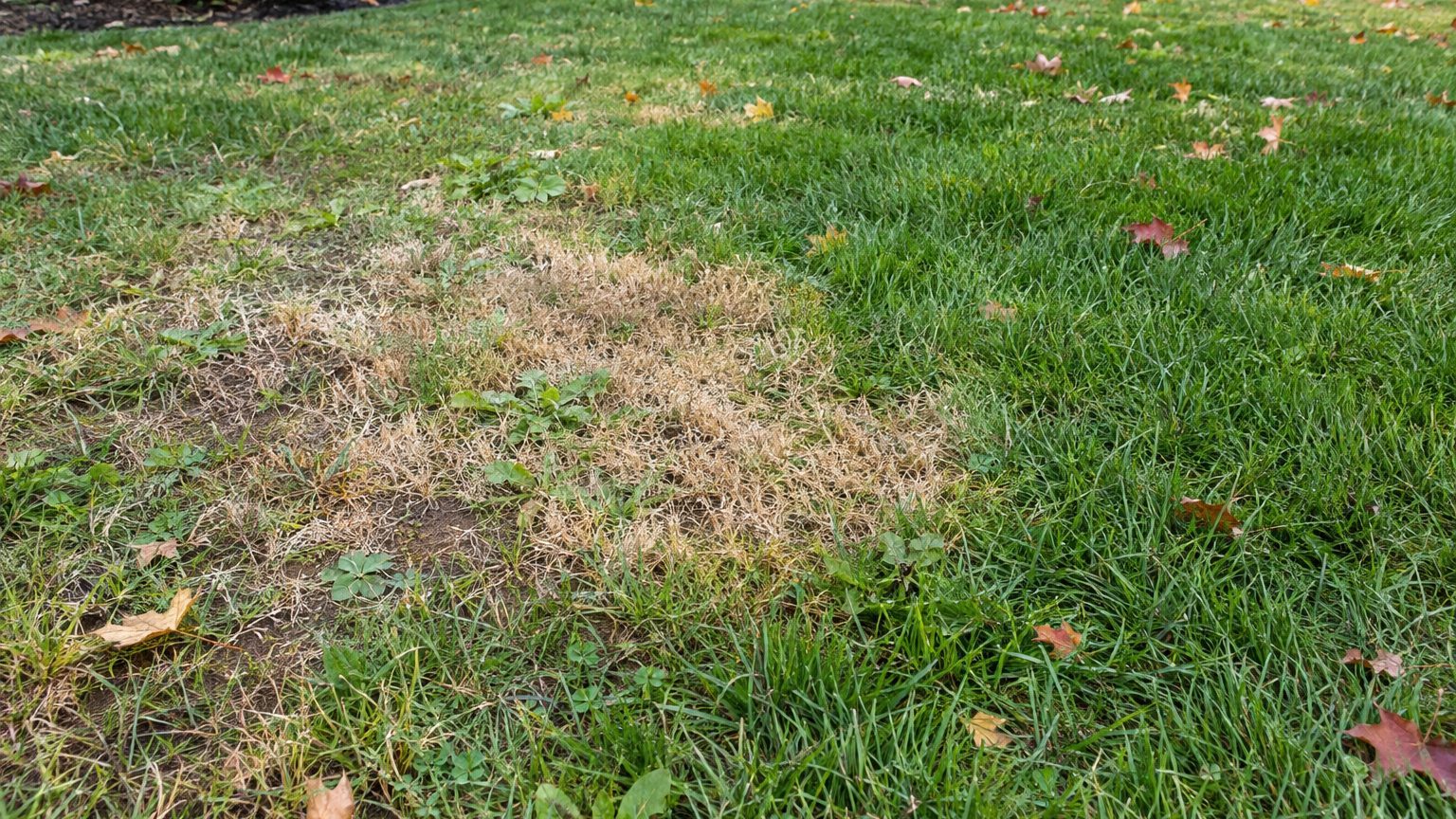
Look for small, straw-colored spots, sometimes with thin tan bands across individual blades in the morning dew. It shows up in warm, humid weather, especially on lawns short on nitrogen. Mow at a healthy height, water deeply in the morning, and feed on schedule so the turf stays dense enough to outgrow it.
Red Thread in Cool, Wet Weather
Pink to red threads stick out from grass blades, and the lawn looks scorched in irregular patches. It favors cool, damp weather and underfed turf, which describes plenty of Vermont springs and autumns. The grass usually survives it. A fertilizer application in the right window typically helps the lawn grow out of it.
White Grubs in Late Summer
Grubs are plump, white, C-shaped larvae that chew roots, so damaged turf lifts like a loose carpet. Brown patches that peel back with no resistance, especially in late summer and early fall, point to them. Skunks and crows digging up the lawn are another giveaway. Reseed damaged areas in August or September.
Moss and Thin Grass in Shade
Moss takes over where trees block sun, soil stays wet, or the ground is compacted. Spongy turf that squishes underfoot may also hold a thatch layer, and a layer up to 1/2 inch thick is healthy. Beyond that, dethatch or core aerate. Open up the canopy where you can and use a shade-tolerant seed mix.
Vermont — the year and the numbers
- State
- Vermont
- USDA zones
- 3b-5b
- Last spring frost
- April 30 to May 10
- First fall frost
- October 3 to October 13
- Annual rain
- 38 in
- Lawn type
- cool-season
- Source
- NOAA NCEI 1991-2020 Climate Normals, 32F freeze probabilities · Burlington
How to Tell Which Lawn Problem You Have
Start with the shape of the patch and the time of year, then pull on the grass. Whether the turf lifts, whether it is wet or dry, and whether the spot sits in sun or shade narrow things down quickly.
Symptoms can mislead you, so compare the patch, timing, and turf condition before you act. A brown patch could be a disease, a pest, or simple drought stress.
| What you see | When | Where | Points to |
|---|---|---|---|
| Gray or pink matted circles | Right after snowmelt | Where snow piled up | Snow mold |
| Coarse light green clumps | Summer | Thin or bare turf | Crabgrass |
| Small straw-colored spots | Warm, humid spells | Dry, underfed lawns | Dollar spot |
| Pink threads on blades | Cool, wet weather | Lawns low on nitrogen | Red thread |
| Turf peels up like carpet | Late summer to early fall | Sunny, irrigated areas | White grubs |
| Soft green mat, thin grass | Any season | Shade, wet or packed soil | Moss |
If the grass resists a gentle tug, suspect a fungus or a stress problem. If it comes away with no roots, grubs are the likelier culprit.
Where Lawn Problems Are Worst in Vermont
Vermont’s lawns face different pressure depending on elevation and distance from Lake Champlain.
- Champlain Valley: The lake moderates temperatures, so Burlington and nearby towns have the mildest conditions. Crabgrass and summer fungi can remain active longer here, and spring work can start earlier.
- Green Mountains: Snow lingers on the slopes and the season runs substantially shorter. Snow mold is more persistent, and seed needs earlier timing to root before cold returns.
- Northeast Kingdom: Cold settles in early and stays late, so snow mold and winter injury are the common troubles. Choose hardy grass blends and give new seed a full late-summer start.
Wherever you live, microclimates matter, since a shaded north-facing yard acts like a higher elevation.
Lawn Care Mistakes That Invite Problems in Vermont
Mowing Too Short
Scalped grass lets sunlight reach the soil and invites crabgrass and weak roots. Mowing runs from April through November here, so there are many chances to get it wrong. Set the mower high, keep the blade sharp, and leave clippings to feed the lawn.
Watering Lightly and Often
Frequent light sprinkling keeps the surface damp, which helps dollar spot and red thread take hold and keeps roots shallow. Water matters most in June, July and August. Soak the lawn deeply in the morning, then let the top layer dry before watering again.
Fertilizing at the Wrong Time
Vermont law bars lawn fertilizer before April 1 or after October 15, and on frozen ground. Within that window, feed in May and September, and October also works. Applying nitrogen in midsummer pushes soft growth that disease likes, so skip it.
Where to Get Lawn Advice in Vermont
For problems that do not match a clear description, local expertise saves guessing. A sample of the damaged turf, plus a photo of the whole area, gives an advisor much more to work with.
- University of Vermont Extension offers lawn guides and a way to ask questions, so go there when a patch resists a quick diagnosis.
- Your county extension office can help identify pests and diseases, so contact it as soon as you spot unusual damage.
- A soil test before September seeding or feeding tells you what the lawn needs, so collect samples ahead of that window.
Common Questions
When Should You Seed a Lawn in Vermont?
August and September give new grass warm soil and cooler air to root before winter. If you miss that window, May also works, though summer heat and weeds compete harder with spring seedlings.
When Should You Core Aerate or Dethatch in Vermont?
September suits both jobs, because the grass recovers quickly and seed can go down right after. If you miss it, May is the fallback.
How Long Can You Keep Mowing in Vermont?
Mowing continues from April through November, as long as the grass is growing. Keep cutting at a steady height into late fall so the lawn does not go into winter long and matted, which makes snow mold worse.