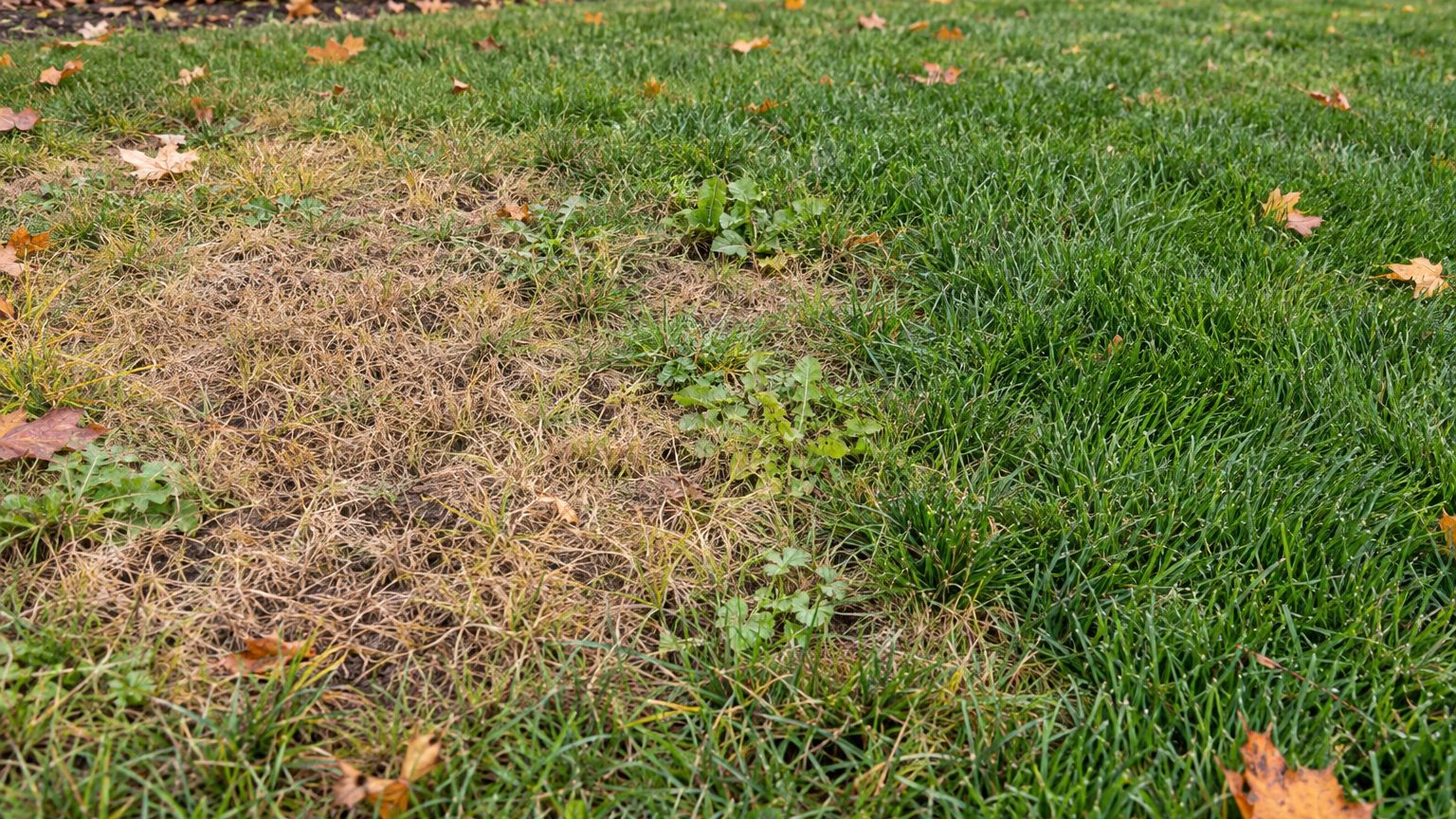
Brown patches in July, thin grass under the maples, moss creeping along the shady edge: New Hampshire lawns show their troubles in predictable ways. Most trace back to short growing seasons, hard winters, shade and soil that stays wet in spring. Knowing what each problem looks like and when it appears makes the fix much simpler.
Lawn Pests and Diseases in New Hampshire
Snow Mold in Early Spring

When the snow melts, you may find matted, grayish or pinkish circles where grass lay under a long, wet blanket. Cold winters and deep drifts make this common here. Rake the patches lightly so air reaches the crowns, and the blades usually grow out of it without reseeding.
Crabgrass in Warming Soil
Crabgrass sprawls in low, light green clumps that turn purple and die with the first hard frost, leaving bare spots behind. It sprouts as soil warms, so preventer belongs on the lawn in April, with May as a fallback. Thick turf is the lasting defense because seedlings need light to start.
Moss and Thin Grass in Shade
A green carpet of moss under pines, or grass that thins beside the house, signals too little sun, compacted soil or both. Moss is the result, not the cause. Prune back lower branches for light, aerate in September (May also works), and overseed with a shade mix.
Grubs and Chewed Roots
Grubs are pale, C-shaped larvae that feed on roots. You will see irregular patches of grass that lift like loose carpet, and often skunks or birds digging for them. Water the lawn regularly through dry spells so roots stay vigorous, and reseed damaged areas in August or September.
Drought Stress and Summer Dormancy
Straw-colored turf in midsummer is often dormant, not dead. Crowns stay alive and green returns with cooler weather and rain. If a dry spell drags on, water deeply during June, July and August rather than sprinkling lightly each day.
Thatch Buildup
Press a finger into the lawn: a spongy layer between green blades and soil is thatch. Up to 1/2 inch is healthy. Beyond that, dethatch or core aerate, ideally in September, with May as a backup.
New Hampshire — the year and the numbers
- State
- New Hampshire
- USDA zones
- 3b-6a
- Last spring frost
- April 16 to April 27
- First fall frost
- October 13 to October 26
- Annual rain
- 40 in
- Lawn type
- cool-season
- Source
- NOAA NCEI U.S. Climate Normals 1991-2020, 32F freeze probabilities · Manchester
How to Tell Which Lawn Problem You Have
A clue can mislead, so pair what you see with where and when it appears. Pull on the grass, check the light, and note the season. Taken together, these checks help narrow New Hampshire lawn troubles to the likely causes.
| What you see | Where or when | Likely problem |
|---|---|---|
| Matted gray or pink rings | Right after snowmelt | Snow mold |
| Coarse, sprawling light green clumps | Summer, sunny and bare spots | Crabgrass |
| Green mat over thin turf | Shade, damp or compacted soil | Moss |
| Turf peels back like carpet | Late summer, with animal digging | Grubs |
| Uniform tan grass, roots intact | Hot, dry stretches in summer | Drought dormancy |
| Spongy feel underfoot | Anywhere, worse on older lawns | Thatch |
If the turf tugs up with no resistance and roots are missing, suspect grubs. If it stays rooted and tan, think drought. Patches that follow the line of a shadow point to light, not disease.
Where Lawn Problems Are Worst in New Hampshire
The state stretches from a short coastline to mountain country, and trouble shifts with it.
- North Country and the White Mountains: Snow can linger and the growing season is short, so snow mold and slow spring recovery deserve attention. Frost can arrive earlier in mountain and northern areas, so seed on the early side of August and September and check your county’s timing.
- Lakes Region: Shaded lots among pines and hardwoods bring moss and thin turf, and soil near the water often stays damp, which favors compaction and moss.
- Seacoast and Merrimack Valley: Milder conditions give a longer season for crabgrass and grubs, while sandy soils dry out quickly and show drought stress sooner.
Check your own town’s conditions before borrowing a neighbor’s schedule.
Lawn Care Mistakes That Invite Problems in New Hampshire
Mowing Too Short
Scalped grass has little leaf to feed roots, and bare soil gives crabgrass light to sprout. Mowing runs from April through November here, so raise the blade and cut often enough that you never remove much at once.
Watering Lightly and Often
Shallow sprinkling keeps roots near the surface and the thatch damp, which suits disease. Water deeply in June, July and August, and let the soil dry between sessions. Adjust watering to rainfall and the lawn’s condition rather than assuming a fixed need outside summer.
Fertilizing at the Wrong Time
Heavy feeding in summer pushes soft growth that stresses in heat. Fertilize in May and September, with October and November as a fallback, so grass builds roots and stores energy before winter.
Where to Get Lawn Advice in New Hampshire
University of New Hampshire Cooperative Extension offers research-based guidance written for local soils and winters. Your county office can look at a sample or a photo and match it to what is happening in your town.
- Start with the extension website for lawn care guidance when a patch first appears, since early identification limits damage.
- Contact your county office in late summer if grubs are suspected, so you can reseed in August or September.
- Ask about soil testing before you fertilize in May or September.
Common Questions
Is a Brown Lawn in July Dead?
Not necessarily. Tug a handful of blades: if the crown is firm and the roots hold, the grass is dormant and will green up when the weather cools and rain returns.
Can You Fix Moss by Raking It Out?
Raking removes what is there, but moss returns if shade, compaction or poor drainage stay the same. Open up light, aerate, and overseed with a shade-tolerant mix.
When Do You Put Down Crabgrass Preventer in New Hampshire?
April is the target, before soil warms enough for seeds to sprout. If April slips by, May still works, though results fade as the season advances.