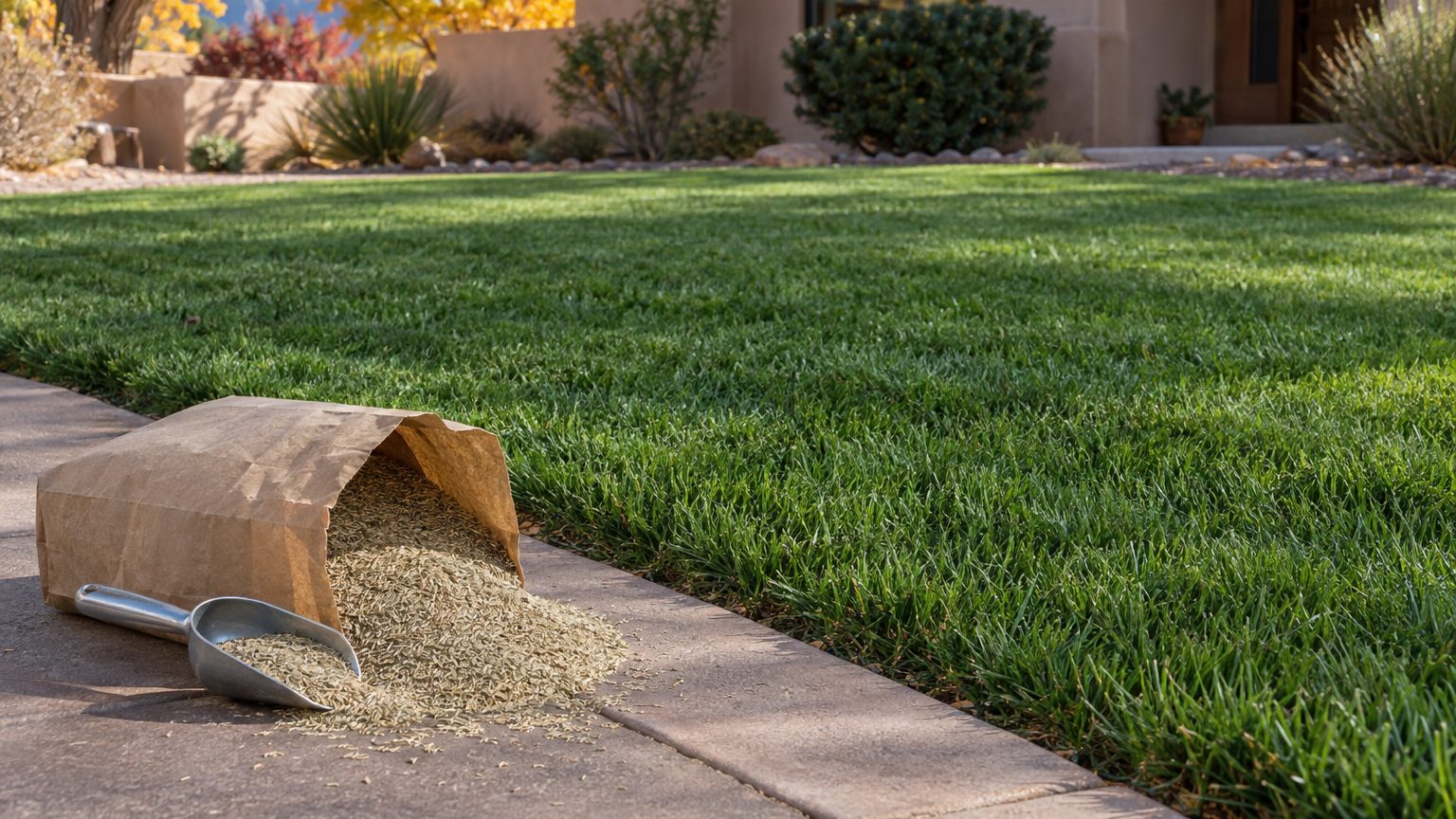
Walk a New Mexico lawn in summer and the contrast is easy to spot: some yards need steady irrigation to stay green, while warm-season lawns turn gold in winter and green up again when the soil warms. The right grass for a New Mexico yard depends on elevation and how much you want to water, with tall fescue and bermudagrass suiting different parts of the state.
Which Grass Grows Best in New Mexico?
Both cool-season and warm-season grasses work here, and the split follows elevation. Cool-season grasses stay green longer but need more water in the dry months. Warm-season grasses handle heat and thrive in full sun but go tan after the first hard freeze. In Albuquerque, the last spring freeze usually lands between March 31 and April 12, and the first fall freeze between October 29 and November 9. Suburban and rural yards, and anything at higher elevation, typically see frost later in spring and earlier in fall, so check your own county.
Tall Fescue
Tall fescue is a cool-season grass suited to New Mexico yards at cooler elevations. Its deep roots cope with dry spells better than bluegrass, and it tolerates some shade. Seed it in August, and overseed thin spots by aerating first.
Bermudagrass
This warm-season grass loves full sun and heat, and it can be started from seed or sod. It goes dormant and tan in winter, which surprises many new owners. Seed it in May for the best start, with June as a fallback.
Zoysiagrass
A warm-season grass that forms a dense, soft carpet, but it is mostly planted as sod or plugs rather than seed. It spreads slowly, so patience is part of the deal. Lay sod in May, or in June or July if you miss that window.
Kentucky Bluegrass
Bluegrass suits the cooler, higher ground in the state, where summers are milder. In the hot lowlands it demands a lot of water and often struggles. Plant it only where elevation keeps summer heat in check and you are ready to irrigate regularly.
New Mexico — the year and the numbers
- State
- New Mexico
- USDA zones
- 4b-9a
- Last spring frost
- March 31 to April 12
- First fall frost
- October 29 to November 9
- Annual rain
- 9 in
- Lawn type
- cool- and warm-season
- Source
- NOAA NCEI U.S. Climate Normals 1991-2020, 32F freeze probabilities · Albuquerque
How to Choose Grass Seed for a New Mexico Yard
Start with the sun your yard gets and the water you can realistically give it. A lawn you can irrigate through summer opens up more options than one you plan to leave alone.
Foot traffic and mowing habits matter too. Warm-season grasses repair themselves quickly in summer, while cool-season grasses recover best after a late-summer seeding.
| Grass | Season | How it does here |
|---|---|---|
| Tall fescue | Cool | Handles part shade and kids at play, stays greener in winter, wants regular summer water |
| Bermudagrass | Warm | Well suited to full sun and heavy use, tan in winter, mows well from April to October |
| Zoysiagrass | Warm | Dense and soft, slow to fill in, usually started from sod or plugs |
| Kentucky bluegrass | Cool | Fits cooler, higher ground and needs regular irrigation in hot spots |
For shade under trees, tall fescue is the better pick. For a sunny yard where you accept a brown winter, bermudagrass can be a practical choice once established. Cool-season lawns are mowed from March through November, and warm-season ones from April through October.
Which Grasses Grow Where in New Mexico
New Mexico climbs from low desert basins to mountain towns, and the grass choice shifts with every step up.
- Albuquerque and the Rio Grande Valley: Summers are hot and winters mild enough for either tall fescue or bermudagrass, so the choice comes down to water and winter color.
- Las Cruces and the southern desert: Heat favors bermudagrass and zoysiagrass over cool-season types.
- Santa Fe and the northern mountains: Cooler summers and colder winters make tall fescue and Kentucky bluegrass more reliable than warm-season grasses.
Hardiness zones in the state run from 4b to 9a in the USDA system, so check local winter conditions before choosing a grass.
Grass Seed Mistakes to Avoid in New Mexico
Picking the Wrong Grass for Your Elevation
Bluegrass in a hot lowland yard or bermudagrass in a cold mountain town leads to patchy, expensive lawns. Match the species to your local summer heat and winter cold before you buy anything.
Seeding at the Wrong Time
Cool-season seed does best sown in August, with September as a fallback, because the soil is warm and the cooler weather ahead lets seedlings root. Warm-season seed belongs in May. Seed thrown down outside those windows often fails.
Burying or Skimping on the Seed
Cover seed with no more than 0.25 inch of soil and press it down so it touches the ground firmly. Seed buried too deeply may fail to emerge, while sparse coverage leaves room for weeds. Follow the rate printed on the bag for your species.
Where to Get Lawn Advice in New Mexico
Local growing conditions change quickly across the state, so local advice pays off before you spend money on seed.
- New Mexico State University’s extension service publishes lawn guidance written for the state’s climate, worth reading before you pick a species.
- Your county extension office can tell you what grows in your neighborhood, and a visit in late winter leaves time to plan.
- Ask about a soil test before the seeding window opens, so you know what the ground needs.
Common Questions
Can You Grow a Green Lawn in New Mexico Without a Lot of Water?
Bermudagrass and zoysiagrass cope with heat better than cool-season grasses once established. They go tan in winter but green up again when the soil warms.
When Should You Fertilize a New Mexico Lawn?
Tall fescue and other cool-season lawns do best fed in March, September and October, and never in summer. Bermudagrass and zoysiagrass want feeding from May through July.
When Should You Put Down Crabgrass Preventer?
Apply it in March; February, April and May can also work. Apply it before crabgrass sprouts, and skip it in any area you plan to seed.