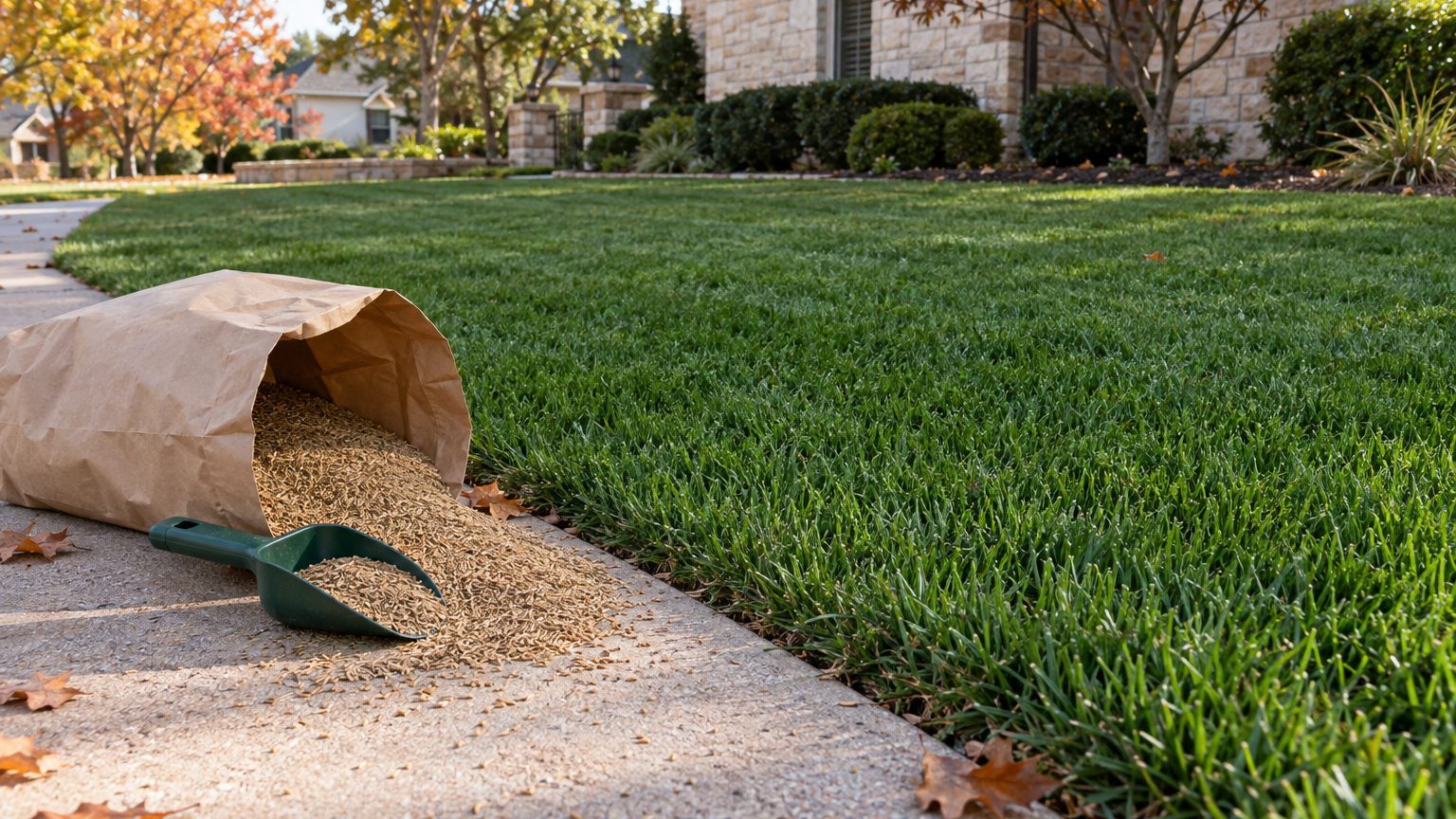
A Texas lawn in July tells you quickly which grass was the right call: the green stays thick where the species loves heat and fades where it does not. Warm-season grasses win in this state, and the best grass seed for Texas depends on which of them can actually be sown as seed.
Which Grass Grows Best in Texas?
Warm-season grasses grow best in Texas, because summers run long and hot while cool-season grasses stall and thin out under that stress. The lawn grasses covered here are bermudagrass, St. Augustinegrass, zoysiagrass and buffalograss.
Bermudagrass
Bermudagrass can be started from seed, and it thrives in full sun and summer heat. It spreads fast and recovers from wear. Sow it in May, when the soil has warmed enough for quick germination.
Zoysiagrass
Zoysiagrass forms a dense, soft turf that crowds out weeds and tolerates some shade, though it fills in slowly. It suits yards where you want a tidy look and will wait for it. Sod or plugs are the quicker route in most yards.
St. Augustinegrass
St. Augustinegrass is the classic shade-tolerant lawn across much of Texas, with wide blades and a lush look. It is never sold as seed, so you plant sod or plugs. Laying sod works best in May, and April or June also works.
Buffalograss
Buffalograss is a native that fits west and central Texas, where water is scarce and rainfall is thin. It needs little mowing and little irrigation once established. It struggles in heavy shade and in wetter, more humid parts of the state, so match it to dry, sunny ground.
Texas — the year and the numbers
- State
- Texas
- USDA zones
- 6a-10a
- Last spring frost
- February 4 to March 1
- First fall frost
- December 1 to December 19
- Annual rain
- 52 in
- Lawn type
- warm-season
- Source
- NOAA NCEI 1991-2020 Climate Normals, 32F freeze probabilities · Houston
How to Choose Grass Seed for a Texas Yard
Start with how much sun the yard gets, then think about foot traffic and how much water you can spare. Mowing habits matter too, since some grasses need frequent trimming to look their best and others are happy with less.
Keep in mind that only some of these species come as seed. If your best match is St. Augustinegrass, plan on sod or plugs rather than a seed bag.
| Your yard | Grass | Why it fits |
|---|---|---|
| Full sun, heavy play | Bermudagrass | Grows from seed, tolerates heat and wear, recovers quickly |
| Partial shade | St. Augustinegrass | Handles shade better than bermudagrass, sod or plugs only |
| Sun to light shade, tidy look | Zoysiagrass | Dense turf that crowds weeds, slower to fill in |
| Dry west or central yard, low upkeep | Buffalograss | Native, needs little water and little mowing |
If you want to water sparingly and mow less often, buffalograss is a good match in a dry region. If you want the lawn to bounce back from kids and dogs, bermudagrass earns its place. Seed in May, and if that month slips by, June still works.
Which Grasses Grow Where in Texas
Texas covers four USDA hardiness zones within the range of 6a-10a, so the right grass shifts as you travel across the state.
- Panhandle: Winters are the coldest in the state, so bermudagrass and buffalograss are the dependable picks, and St. Augustinegrass is the weaker choice here.
- Hill Country and central Texas: Dry, sunny ground suits buffalograss and bermudagrass, while zoysiagrass fits spots where you can water a little more.
- North Texas: Winters bite harder than along the coast, which favors bermudagrass and zoysiagrass over St. Augustinegrass.
- Houston and the Gulf Coast: Mild winters and humid air make St. Augustinegrass and bermudagrass the common lawns, and buffalograss is a poor fit in this wet climate.
Timing follows the same pattern, so a spring or fall frost date from one region says little about another. Check with your local office before copying a neighbor’s calendar from a different part of the state.
Grass Seed Mistakes to Avoid in Texas
Buying Cool-Season Seed
Fescue and ryegrass blends look appealing on the shelf, but they struggle through Texas summers and thin out in the heat. Choose a warm-season species instead, and look at the label to confirm the species before you buy.
Sowing at the Wrong Time
Warm-season seed needs warm soil to germinate, so sowing in cold weather wastes the bag. Seed in May, with June as the fallback, so the young grass can establish during the growing season. Water the new seedbed regularly, since watering matters most in June, July and August.
Burying or Smothering the Seed
Seed that is buried too deep never reaches the surface, and seed left on bare, hard soil never roots. Cover it with no more than 0.25 inch of soil and press it down firmly for good seed-to-soil contact. Spread the seed evenly rather than piling it on, since a heavy dose crowds seedlings and a thin one leaves gaps for weeds.
Where to Get Lawn Advice in Texas
Local conditions vary so much across Texas that a nearby expert saves guesswork. Local resources cover most questions about species, timing and problems.
- Texas A&M AgriLife Extension publishes lawn care guides and a bermudagrass management calendar, so check it before you buy seed in spring.
- Your county extension office can answer questions about your soil and local grass choices, so call before planting.
Common Questions
Can You Grow a Lawn from Seed in Texas?
Yes, with bermudagrass, which is the common seeded option. St. Augustinegrass is never sold as seed, and zoysiagrass and buffalograss are often started other ways, so check what a given product actually contains.
When Should You Fertilize a New Texas Lawn?
Fertilize in May or June, after the lawn has fully greened up. April and September also work, but avoid hot, dry late summer and late fall.
When Should You Put Down Crabgrass Preventer in Texas?
Apply it in February or March, before the weed seeds sprout. Skip it on areas you plan to seed, since a preventer can stop your new grass from coming up too.