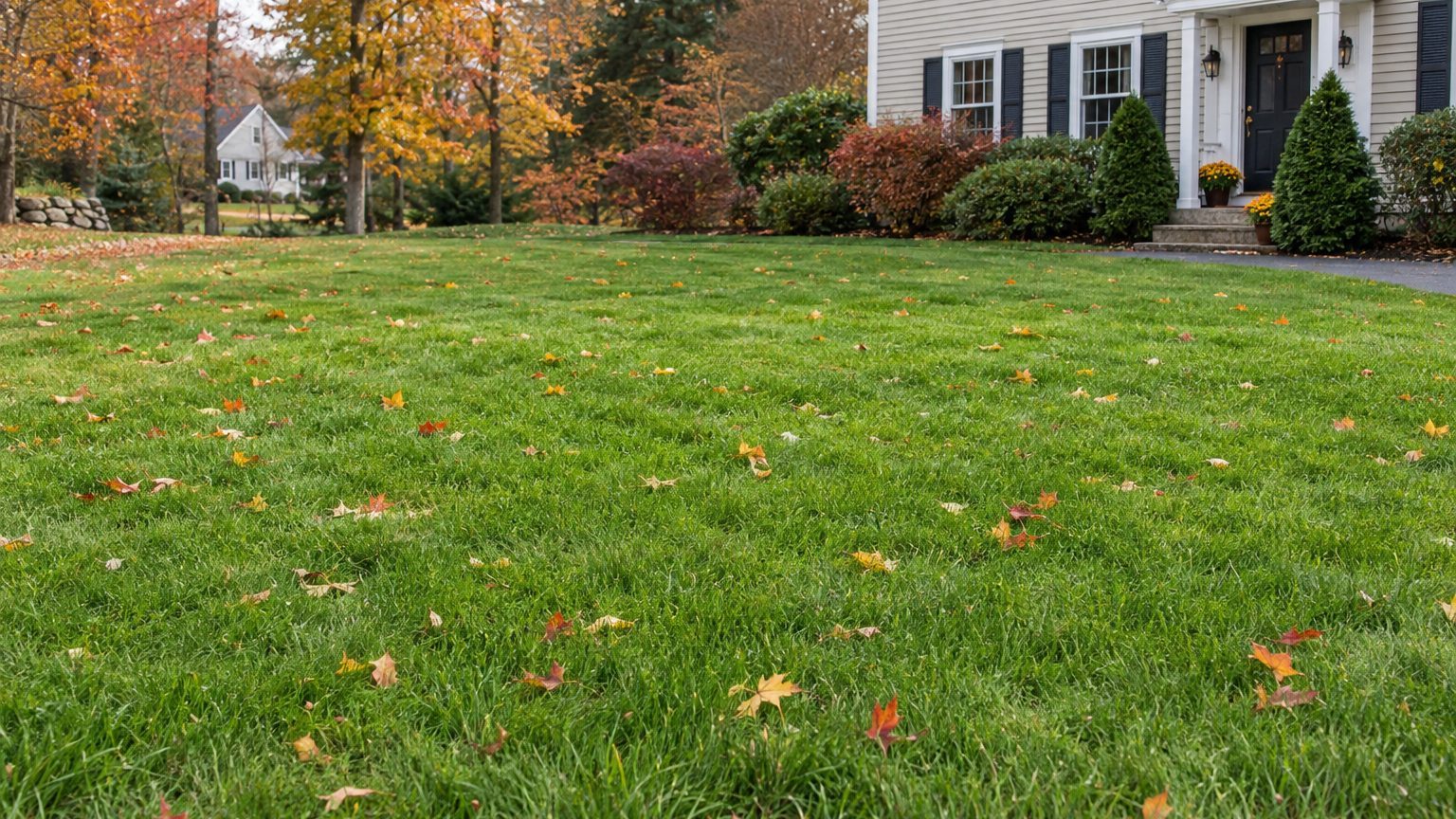
Mowing in April, seeding in late summer, and fertilizing during the main growth periods: that is the rhythm of a New Hampshire lawn. Cool-season grasses like Kentucky bluegrass, fescue and ryegrass grow hardest in spring and early fall, then sit tight through long winters.
What to Do Each Month in a New Hampshire Lawn
Cool-season grass does its heavy lifting in spring and again from late summer into fall. Plan your work around the spring and fall growth surges, and leave the hot and frozen months alone.
| Month | In the lawn |
|---|---|
| January | Rest. The grass is dormant under snow, so keep foot traffic and plow piles off the turf where you can. |
| February | Rest. Dormancy continues, and the only job is watching for matted, snow-molded patches as the snow thins. |
| March | Rest, mostly. Soil is thawing and soggy, so stay off it to avoid compacting wet ground and tearing the crowns. |
| April | Put down crabgrass preventer before the weed seed germinates, and make the first mow once the grass is really growing. If you miss it, May still works for the preventer. |
| May | Fertilize now that growth is strong, and keep mowing regularly. Core aeration, dethatching and seeding also work this month if fall slipped by. |
| June | Mow regularly and start watering when rain falls short. |
| July | Water deeply in dry spells and keep mowing. Growth slows in the heat, so do not push the grass with extra feeding. |
| August | Start seeding bare or thin areas as the soil stays warm and nights cool. Keep watering new seed evenly, and mow the established lawn as needed. |
| September | The big month: core aerate, dethatch, seed and fertilize. Warm soil and cool air give new grass the best chance to root. |
| October | Keep mowing, and if you missed September, a fertilizer application still works now. Rake or mulch fallen leaves so they do not smother the grass. |
| November | Make the last mow when growth stops, and fertilizer still works early in the month. Clear leaves before the first snow. |
| December | Rest. The grass is dormant, so store the mower and keep salt and shoveled snow off the turf edges. |
New Hampshire law caps the nitrogen in lawn fertilizer sold in stores, and phosphorus fertilizer is sold only for new lawns, repairs, seeding or a soil-test shortage. Check the bag before you buy.
New Hampshire — the year and the numbers
- State
- New Hampshire
- USDA zones
- 3b-6a
- Last spring frost
- April 16 to April 27
- First fall frost
- October 13 to October 26
- Annual rain
- 40 in
- Lawn type
- cool-season
- Source
- NOAA NCEI U.S. Climate Normals 1991-2020, 32F freeze probabilities · Manchester
When Does the Lawn Season Start and End in New Hampshire?
Grass wakes up when the soil warms, not when the calendar says spring. Grass seed germinates once soil reaches 50 to 65 °F; established turf begins growing as spring conditions improve. In New Hampshire that usually means April brings the first real growth, and the mower comes out soon after.
Frost dates tell you something different: the risk to young seedlings. In Manchester, the last spring freeze typically falls between April 16 and April 27, and the first fall freeze between October 13 and October 26. Suburban and rural yards often freeze later in spring and earlier in fall, so check the dates for your own county.
The season winds down as soil cools, not simply after a frosty night. Grass keeps growing slowly well into autumn, which is why mowing and a late fertilizer feeding stretch into November. Then dormancy takes over until the following spring.
How the Lawn Calendar Shifts Across New Hampshire
New Hampshire spans hardiness zones 3b to 6a on the USDA system, but local soil and frost conditions—not the zone alone—should guide your schedule.
- Seacoast: Ocean air moderates conditions along the Seacoast, so use local soil conditions for spring work and county frost guidance for fall seeding.
- Merrimack Valley and southern New Hampshire: In Manchester, Nashua, and Concord, use local soil conditions to choose the right point within each calendar window.
- Lakes Region and Monadnock area: Higher ground and cold air pooling around hills and water push spring work later and bring fall frost sooner, so lean toward the later part of spring tasks and the earlier part of fall seeding.
- White Mountains and the North Country: Soil warms late and freezes early, so seed in August rather than waiting, and expect a shorter mowing season.
At higher elevations, treat the early part of each fall window as your target.
Lawn Care Timing Mistakes to Avoid in New Hampshire
Seeding Too Late in Fall

Grass seed sown after the soil cools sprouts slowly and may enter winter with thin roots. Frost heave and snow mold then take their toll, leaving bare spots in spring.
Seed in August or September while the soil is still warm. If September gets away from you, May is a fallback, but fall seeding gives better results.
Putting Down Preventer Too Early or Late
Crabgrass preventer works only as a barrier before the weed seed germinates. Apply it too late and the seedlings are already through, so the product does nothing.
April is the target here, and May still catches many lawns. Skip it entirely on areas you plan to seed, because preventer blocks grass seed too.
Fertilizing in Summer Heat
Feeding cool-season grass in July pushes soft growth the plant cannot support in heat and drought. You pay for fertilizer and then for extra watering.
Hold off until September, with May as the other main feeding. October and November still work if you are running behind.
Where to Get Lawn Advice in New Hampshire
Soil, shade and elevation vary a lot from one New Hampshire town to the next, so local advice sharpens the general schedule above.
- UNH Extension publishes lawn fact sheets and fertilizer law guidance, and it is a good first stop before buying seed or fertilizer in spring or late summer.
- Your county extension office can answer site-specific questions about soil tests, problem patches and local timing, so call before a big fall renovation.
Start with a soil test in early spring, so the results guide your first feeding.
Common Questions
When Should You Aerate a Lawn in New Hampshire?
September is the time for core aeration, when cool-season grass recovers fast and weeds are less aggressive. If fall slips past you, May also works. Aerate when the soil is moist but not soggy.
Is It Too Late to Seed in October in New Hampshire?
For most yards, yes, particularly at higher elevations where frost arrives early. August and September are the main seeding months, with May as a fallback. Seed that does not root before freeze-up is likely to heave or wash out over winter.
Do You Need to Water a New Hampshire Lawn All Summer?
Watering matters most in June, July and August, when dry spells stress shallow roots. Water deeply and less often rather than a little each day. A lawn that browns in a long dry stretch usually revives when cooler, wetter weather returns.