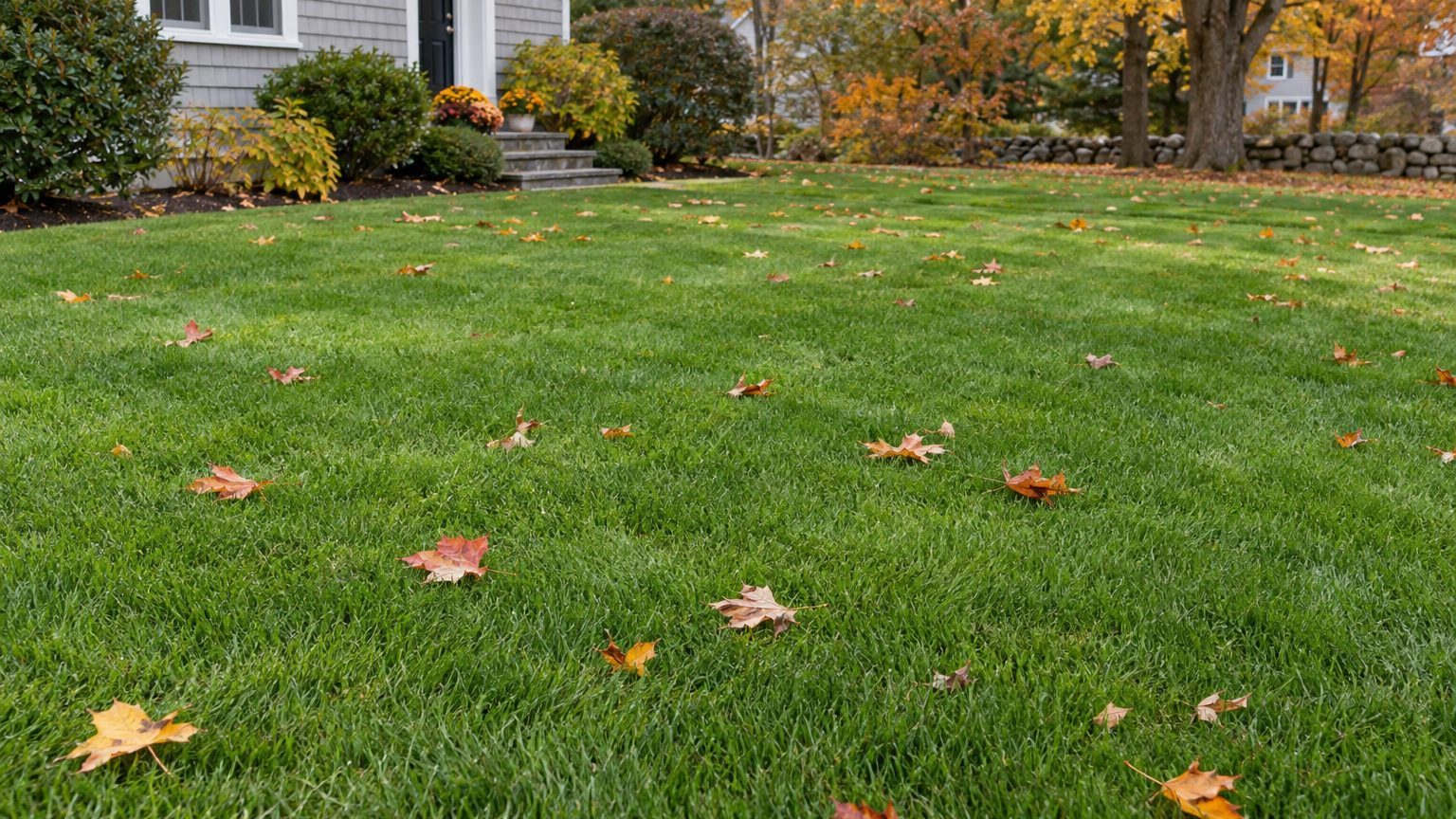
Rhode Island lawns green up in spring, crowd the mower through early summer, stall in July heat, and then get their real chance to thicken in early fall. The grass follows that rhythm, and your work goes best when it follows the same one, from crabgrass control in April to seeding and feeding when the air cools.
What to Do Each Month in a Rhode Island Lawn
Cool-season grasses do most of their rooting in fall and spring, so the big jobs cluster there. Summer is for mowing and watering, and winter is for staying off the turf.
| Month | In the lawn |
|---|---|
| January | Rest. The grass is dormant, so keep foot traffic and plow piles off frozen turf. |
| February | Rest. Dormant grass heals slowly, so wait on any work and watch for matted snow-mold patches as the snow melts. |
| March | Crabgrass preventer can go down late in the month if spring runs warm. Otherwise wait, because the soil is still cold and the grass has barely stirred. |
| April | Apply crabgrass preventer now, before the weed seed sprouts. Mowing begins as growth picks up. Core aeration, dethatching, seeding, sod and a feeding all work this month too, though fall suits them better. |
| May | Feed the lawn now while growth is strong. Mow regularly. If you missed April, aeration, seeding and sod still work, and so does crabgrass preventer early on. |
| June | Mow regularly and begin watering when rain falls short. Deep, less frequent soaking builds roots that handle the coming heat. |
| July | Keep mowing and watering. Cool-season grass slows in the heat, so leave it a bit tall to shade the soil. |
| August | This is a good time for core aeration, dethatching, seeding and laying sod. Warm soil and cooling nights give new grass a fast start. Keep watering and mowing. |
| September | A key month for aeration, seeding, sod and a feeding. Dethatch only if thatch is thicker than about an inch. Keep mowing. |
| October | Keep mowing while the grass grows. If you missed September, sod still works now. Rake leaves so they do not smother the turf. |
| November | Mow until growth stops, and a late feeding still works. Clear the last leaves before snow settles on them. |
| December | Rest. The grass is dormant, so put the mower away and stay off frozen turf. |
Dates shift with each spring and fall, so let conditions move the schedule as needed. The order of jobs matters more than the exact day.
Rhode Island — the year and the numbers
- State
- Rhode Island
- USDA zones
- 6a-7b
- Last spring frost
- April 7 to April 17
- First fall frost
- October 24 to November 3
- Annual rain
- 48 in
- Lawn type
- cool-season
- Source
- NOAA NCEI U.S. Climate Normals 1991-2020, 32F freeze probabilities · Providence
When Does the Lawn Season Start and End in Rhode Island?
Grass wakes when the soil warms, not when the last frost passes. Seed sprouts once the soil reaches 50 to 65 °F, which is why spring seeding works only in a narrow window and why fall, with its warm ground, is easier. Cool-season turf then keeps growing until the soil chills in late fall.
Frost dates matter mainly for young seedlings. In Providence, the last spring freeze usually lands between April 7 and April 17. Suburban and rural yards often see it a week or two later, and inland or higher ground can run later still, so check your own county before trusting a single date.
In fall, the first freeze in Providence typically arrives between October 24 and November 3. Yards outside the city tend to see it earlier. A seedling needs time to root before then, which is the reason August and September seeding beats waiting for October.
How the Lawn Calendar Shifts Across Rhode Island
Rhode Island is small, but the shoreline and the interior still run on slightly different clocks.
- Newport and the South County shore: The ocean keeps spring cooler and fall milder, so frost tends to come later in autumn and the growing season stretches a little longer. Salt spray and sandy soil dry out lawns faster in summer.
- Providence and the Narragansett Bay towns: Bay water and city warmth soften the edges of the season, so spring work can start on the early side of the usual window.
- Northwest Rhode Island (Burrillville, Foster, Glocester): Higher, colder ground wakes later in spring and freezes earlier in fall. Plan on the later end of spring jobs and seed early in the fall window.
Wherever you live, watch soil temperature and grass growth along with the calendar.
Lawn Care Timing Mistakes to Avoid in Rhode Island
Seeding Too Late in Fall

Seed that goes down in late fall may sprout and then freeze before it roots. Young grass is tender, and the first hard freeze can arrive as soon as late October.
Aim for August and September, when the soil is warm and the nights are cool. If you miss that window, April and May still work, and you can wait rather than gamble on cold ground.
Crabgrass Preventer Applied Too Early or Late
Preventer works only as a barrier before crabgrass seed sprouts. Put it down too early and it fades before the weed germinates. Put it down after the seedlings are up and it does nothing.
April is the target, with March or May as a fallback. Avoid it in any area you plan to seed, since it blocks grass seed too.
Heavy Feeding in Summer Heat
Pushing nitrogen onto stressed cool-season grass in July or August feeds disease and weeds more than turf. The grass is slowing down and cannot use it well.
Feed in May and September, when roots and blades are actively growing. November is a fallback for a late feeding.
Where to Get Lawn Advice in Rhode Island
Soil, shade and shoreline conditions vary from yard to yard, so local guidance helps fill in what a general schedule cannot. Local help is close at hand.
- The University of Rhode Island Cooperative Extension offers turf guidance for the state, and it is a good first stop before a spring or fall project.
- Your county or local extension contact can help with a soil test, ideally taken before you seed or feed.
Common Questions
Can You Seed a Rhode Island Lawn in Spring?
Yes, April and May both work. Spring seedlings have less time to root before summer heat arrives, which makes fall seeding easier.
Do You Need to Bag Clippings When Mowing?
Usually not. Short clippings break down quickly and return nutrients to the soil. Bag them only when the grass has grown very tall or is diseased.
Should You Dethatch Every Year?
No. Dethatch only when the thatch layer is thicker than about an inch, and do it in August or September when the grass can recover quickly.