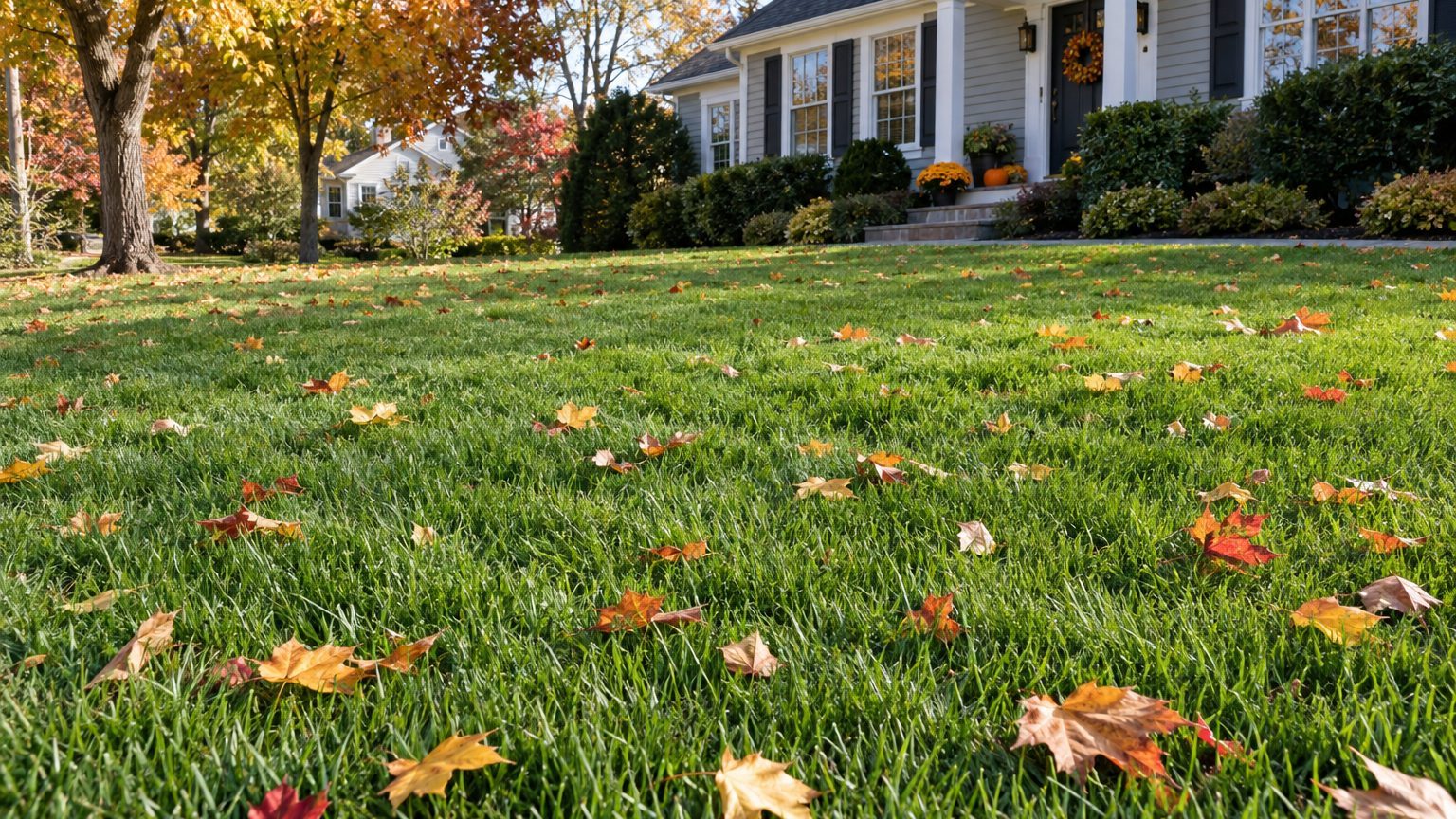
Soft green grass under the last patches of April snow, then a thick lawn by June: in Massachusetts that is the work of a few well-timed jobs. Crabgrass preventer goes down in spring, fertilizer in May and September, and seed, aeration and dethatching in late summer and early fall. Each task has its own window, and missing one usually has an easy fix.
What to Do Each Month in a Massachusetts Lawn
Most of the work lands in spring and early fall, with a long quiet stretch in winter. Cool-season grasses do their best growing when nights are mild and the soil is moist, so the calendar leans on April, May and September.
| Month | In the lawn |
|---|---|
| January | Rest. The grass is dormant. Keep foot traffic and plowed snow piles off the turf where you can. |
| February | Rest. Nothing to apply. After a thaw, look for matted gray or pinkish patches where snow sat the longest. |
| March | Still dormant, with the ground often soft. Rake out winter debris lightly and stay off soggy turf, since wet soil compacts under footsteps. |
| April | Mowing starts as the grass greens up. This is the month for crabgrass preventer, before the weed seed sprouts. If you miss it, May still works. |
| May | Feed the lawn now while growth is strong. Core aeration, dethatching and seeding also work this month if fall got away from you. Crabgrass preventer still works early in the month. |
| June | Mow regularly and begin watering when rain falls short. Deep soakings push roots down before the heat arrives. |
| July | Keep mowing and watering. Cool-season grass slows in the heat, and a lawn that turns tan is often resting, not dead. |
| August | Seeding season opens as the nights cool. Water new seed so it never dries out, and keep watering established turf through dry spells. |
| September | The busiest month: core aerate, dethatch, seed and fertilize. Warm soil and cool air give new grass the best start. |
| October | Keep mowing and clear fallen leaves so they do not smother the grass. If you missed September, fertilizing still works now. |
| November | Mow until growth stops. Fertilizing still works while the grass is green, but Massachusetts rules bar fertilizer on frozen, snow-covered or saturated ground, and on dormant or brown turf. |
| December | Rest. The grass is dormant, so clean and store the mower and keep salt and snow piles off the turf. |
Fall does the heavy lifting here. A lawn that gets its September work usually needs far less rescuing the next spring.
Massachusetts — the year and the numbers
- State
- Massachusetts
- USDA zones
- 5a-7b
- Last spring frost
- April 1 to April 8
- First fall frost
- November 3 to November 14
- Annual rain
- 44 in
- Lawn type
- cool-season
- Source
- NOAA NCEI 1991-2020 Climate Normals, 32F freeze probabilities · Boston
When Does the Lawn Season Start and End in Massachusetts?
Grass wakes up when the soil warms, not when the last frost passes. Cool-season grasses such as Kentucky bluegrass, fescues and ryegrass germinate when the soil sits at 50 to 65 °F, which is why seed sown in August and September sprouts quickly and spring seed in cold ground just sits.
Frost dates matter mostly for young grass. In Boston, the last spring freeze usually falls between April 1 and April 8, and seedlings sown ahead of that can be nipped. Inland towns and the hills get their last freeze later, so give them extra patience.
Fall works the same way in reverse. Around Boston, the first freeze tends to arrive between November 3 and November 14, but the lawn slows well before that as days shorten. Mowing carries on into November, and the season ends only when the blades stop growing.
How the Lawn Calendar Shifts Across Massachusetts
The state is small, yet a lawn in the Berkshires lives a different season from one on Cape Cod, so shift the calendar by how soon your soil warms and cools.
- The Berkshires: Cold air pools in the hills and valleys, so the lawn greens later and goes dormant earlier. Lean toward the later side of spring tasks and start fall seeding at the front of its window.
- Worcester County and the central hills: Elevation keeps spring cooler than in the east. Wait a little longer before spring applications, and do not delay fall seeding.
- Greater Boston and the North and South Shores: The harbor and ocean soften the cold, so spring comes sooner and fall lingers. The dates fit Boston’s waterfront most closely, while nearby yards may differ.
- Cape Cod and the Islands: Surrounding water keeps autumn mild, which gives late seeding extra time to root. Sandy soil dries fast, so summer watering matters more here.
When in doubt, let conditions in your own yard guide the timing within these windows.
Lawn Care Timing Mistakes to Avoid in Massachusetts
Crabgrass Preventer Applied Too Late

Preventer works by blocking crabgrass seed as it sprouts, so it does nothing once the weeds are up. Put it down in April, and treat May as the backup. After that, you are pulling plants by hand or fighting them all summer.
Fertilizing Cold, Waking Grass
A March feeding looks tempting when the lawn starts to green, but the roots are still sluggish and much of the fertilizer washes away. It also pushes soft leaf growth over a weak root system. Wait for May, when the grass can use it.
Seeding After the Window Closes
Seed sown in June or July faces heat, dry spells and weeds before it can root. Seed sown too late in fall may not mature before winter. Aim for August and September, and use May only as a fallback when you must.
Where to Get Lawn Advice in Massachusetts
Local guidance fits your soil better than general rules. UMass Extension publishes turf guidance written for Massachusetts conditions, and your town or county may have further help.
- Its lawn care guidance covers routine practices and fertilizer rules, and it is worth checking before the spring and fall work begins.
- Your nearest county or regional extension contact can point you to a soil test, which is worth doing before you fertilize or seed.
Common Questions
Is Brown Grass in August Dead?
Not necessarily. If the blades are tan but the crown at the base is still firm and the turf resists a tug, the lawn is resting in summer heat. If the grass pulls up easily like loose carpet, grubs or true dieback are likelier, and a closer look is worth it.
Should You Rake Leaves Off the Lawn in Fall?
Yes, when they pile up thick enough to hide the grass. A heavy mat blocks light and holds moisture against the blades. A light scattering can be mowed into small pieces and left in place.
What Causes Gray, Matted Patches After the Snow Melts?
Snow mold is the usual suspect when you see matted gray or pinkish rings in spots where snow lay deepest. Rake the patches gently to let air in, and the grass normally recovers as spring growth picks up.