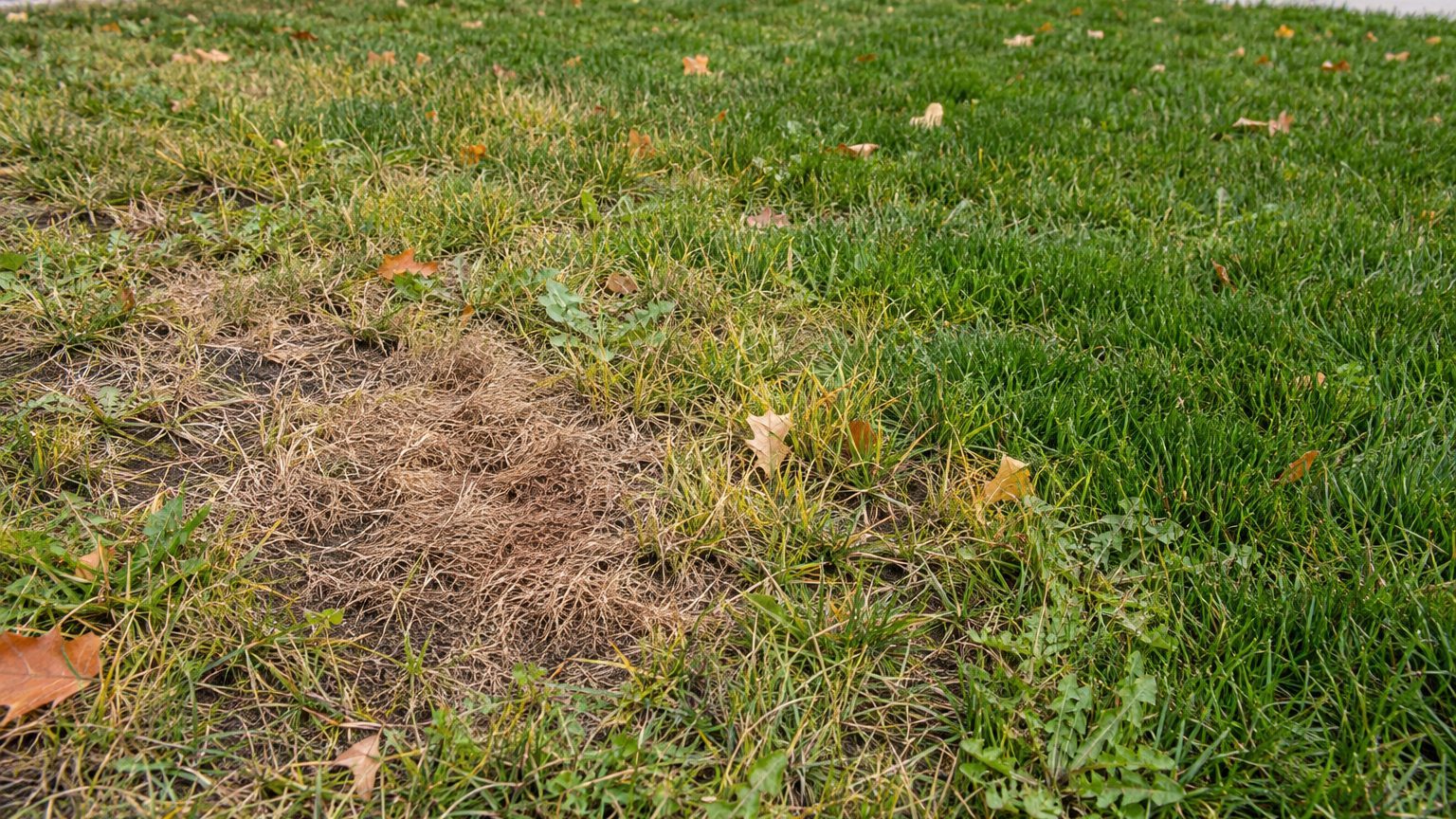
Straw-colored patches by midsummer, thin turf along a sunny curb, crabgrass pushing up through a spring lawn: Nevada yards show their troubles in familiar ways. Heat, dry air and watering habits often play a part. Reading the pattern on the grass can help narrow down the cause before you reach for a fix.
Lawn Pests and Diseases in Nevada
Crabgrass in Spring

Crabgrass shows up as pale green, coarse clumps that spread flat from the center, usually where the lawn is thin or scalped. It grows from seed each year, so stopping it is a matter of timing.
A pre-emergence preventer goes down in April, and May still works if April slips by. Thick turf does the rest by shading seedlings out.
Dry Patches in Summer Heat
Straw-colored patches beside driveways, sidewalks and on south-facing slopes often point to drought stress rather than disease. Footprints stay visible on the blades, and the soil under the patch is dry when you push in a screwdriver.
Watering matters most in June, July and August. Soak the soil deeply so roots follow the moisture down, rather than sprinkling the surface.
Grubs Under Loose Turf
Grubs are pale, C-shaped beetle larvae that chew grass roots. The giveaway is a brown patch that lifts like loose carpet, often with birds or skunks digging at it.
Cut a small flap of sod and look at the root zone before treating anything. A healthy lawn can tolerate some grub activity, and treatment is rarely needed unless the roots are clearly being stripped.
Thatch Buildup
Thatch is the spongy mat of stems and roots between the soil and the green blades. A layer up to 1/2 inch is healthy, but a thicker one sheds water and hides pests and fungal trouble.
Dethatch in August or September, or in April if you missed those months. Core aeration is the gentler alternative, best in September and also fine in April or May.
Nevada — the year and the numbers
- State
- Nevada
- USDA zones
- 4a-10a
- Last spring frost
- January 7 to February 1
- First fall frost
- December 8 to December 23
- Annual rain
- 4 in
- Lawn type
- cool-season
- Source
- NOAA NCEI U.S. Climate Normals 1991-2020, 32F freeze probabilities · Las Vegas
How to Tell Which Lawn Problem You Have
A symptom rarely gives the answer. Pair what the spot looks like with where it sits and when it appeared, then run a quick test: tug the grass, probe the soil, feel the surface underfoot.
The shape of the patch also helps. Irregular dry areas follow sun and pavement, while grub damage tends to spread unevenly across otherwise watered turf.
| What you see | Where and when | Likely problem |
|---|---|---|
| Straw patches that green up after a deep soak | Sunny edges, June through August | Heat and drought stress |
| Pale, coarse clumps spreading flat | Thin spots, from April and May on | Crabgrass |
| Turf that peels up like carpet because roots are damaged | Late summer, irregular patches | Grubs |
| Spongy feel, water that runs off | Whole lawn, August and September | Thatch buildup |
Thin grass beneath trees follows a different logic. Shade and competition from tree roots often weaken turf there, though pests or disease can still occur; a shade-tolerant grass or a mulched bed may be the lasting answer.
Where Lawn Problems Are Worst in Nevada
Nevada spans hardiness zones 4a to 10a in the USDA system, but that range describes winter cold rather than which lawn problems will appear. Elevation and latitude shape the problems a lawn faces.
- Las Vegas Valley: Heat and drought stress are common, and lawns here often scorch along pavement and west-facing walls. Watering errors show up fast.
- Reno and Carson Valley: Cool-season turf does better, but thatch, crabgrass in thin spots and winter damage are the usual complaints.
- Lake Tahoe: Cold, high-elevation yards have a short growing season, so slow recovery and shade from tall pines cause more trouble than heat does.
Frost timing varies just as widely, which is why local planting dates are best confirmed with your county office.
Lawn Care Mistakes That Invite Problems in Nevada
Mowing Too Short
Scalped grass loses leaf area, dries out faster and leaves bare soil for crabgrass to colonize. Mowing runs from April through November here, so the habit repeats for much of the year.
Raise the blade a notch and cut regularly, taking only a little off each pass.
Watering Little and Often
Short daily sprinklings keep roots shallow and the surface soggy, which invites fungus and leaves the lawn helpless in a hot spell. Deeper, less frequent soaking pushes roots down.
Check coverage by setting empty cans around the yard to see which zones get too little.
Fertilizing in Summer Heat
Feeding cool-season turf during a hot spell pushes soft growth the grass cannot support. Apply fertilizer in September and November, with May as a fallback.
Keep granules off pavement, where rain or sprinklers can wash them into the street.
Where to Get Lawn Advice in Nevada
Local advice matters in a state this varied. A tip that suits Las Vegas can fail in Reno, so lean on people who know your elevation and soil.
- The state extension service offers lawn guides and pest identification help, useful when a patch will not match any description.
- Your county extension office can confirm local planting dates and answer questions about soil and water in your area. Call before seeding or fertilizing.
Common Questions
When Should You Seed a Lawn in Nevada?
August and September are the main window for seeding. April and May also work if you want to fix thin spots in spring.
Can You Use Las Vegas Frost Dates for the Whole State?
No. Frost arrives much earlier in fall and leaves much later in spring in Reno, Carson City and at elevation, so confirm timing with your county extension office.
Do Brown Spots Always Mean Disease?
Not in Nevada. Brown spots in sun, near pavement, often come from uneven sprinkler coverage. Run the can test, then probe the soil and tug the grass before blaming a fungus.