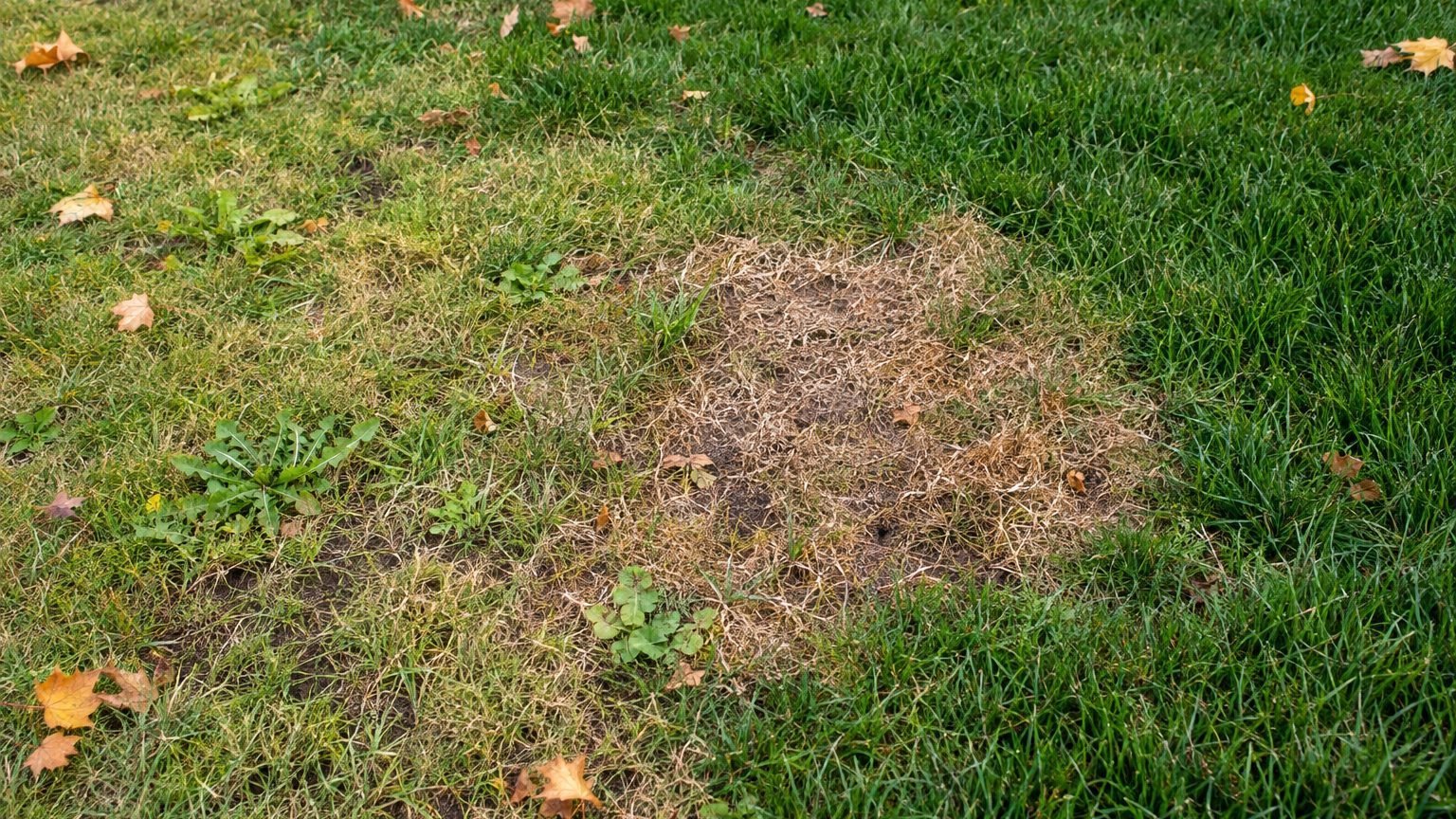
Brown rings, spongy turf and thinning grass can show up across California, often because of heat, water or the grass planted there. Most problems follow the season and the region. Once you know what a patch looks like and when it appears, the fix is usually a change in how you mow, water or feed.
Lawn Pests and Diseases in California
Annual Bluegrass
This light-green grass sprouts in thin cool-season lawns in fall and winter, then shows pale seed heads in spring. It dies back in summer heat and leaves bare holes. A dense, taller lawn crowds it out, and pulling young clumps by hand works on small areas.
Dollar Spot
Small, straw-colored spots appear in spring and again in fall, often on lawns that are thin or underfed. Look closely at the blades for tan bands with darker edges. Feeding at the right times and watering deeply in the morning, so grass dries quickly, calms it down.
Crabgrass

Coarse, pale clumps spread flat from a center point once the soil warms in late spring. They die in the first cold snap inland, but the seed stays behind. A thick lawn blocks seedlings, and pulling plants before they set seed keeps the next year’s crop small.
White Grubs
Irregular brown patches that lift like loose carpet point to grubs chewing the roots in summer. Pull back a flap of turf and look for plump, C-shaped larvae in the soil. Skunks and crows tearing up the lawn are another sign. Water the lawn through the damage so surviving roots recover.
Brown Patch
Circular brown areas with a darker edge show up during humid summer weather, mostly on tall fescue and ryegrass. Lawns that stay wet overnight suffer most. Water early in the day, skip heavy summer feeding, and keep the lawn at the recommended mowing height.
Thatch Buildup
Thatch is the tangle of stems and roots between green blades and soil, and bermudagrass makes plenty of it. A layer up to 1/2 inch is healthy. Above that, dethatch or core aerate, because the layer sheds water and shelters pests and disease.
California — the year and the numbers
- State
- California
- USDA zones
- 5a-11a
- Frost
- none in an average year
- Annual rain
- 12 in
- Lawn type
- cool- and warm-season
- Source
- NOAA NCEI 1991-2020 Climate Normals · Los Angeles
How to Tell Which Lawn Problem You Have
A symptom by itself is rarely enough. Pair what the patch looks like with when it appeared and whether the spot sits in sun or shade. A quick tug on the grass and a look at the soil underneath can narrow the possibilities.
| What you see | Where or when | Likely problem |
|---|---|---|
| Turf lifts like a rug, roots missing | Summer, sunny and irrigated areas | White grubs |
| Small straw-colored spots | Spring and fall, thin lawn | Dollar spot |
| Brown ring with a darker edge | Humid summer, wet overnight | Brown patch |
| Coarse pale clumps spreading outward | Late spring onward, warm soil | Crabgrass |
| Light-green tufts with seed heads | Winter and spring, then dies in heat | Annual bluegrass |
| Spongy feel, water runs off | Any season, often on bermudagrass | Thatch buildup |
Thin grass under trees, with moss or bare soil, is usually a shade and root-competition issue rather than a disease. Dry, crunchy patches that recover after a deep soak may be drought-stressed, but recovery alone does not rule out disease.
Where Lawn Problems Are Worst in California
California covers coastal fog, scorching valleys and snowy mountains, so the same lawn struggles in very different ways depending on where you live.
- Central Valley: Long, hot summers stress cool-season lawns around Sacramento and Fresno, while winter freezes slow the grass for a while. Winter freezes do happen here, so grass slows down for a while.
- Bay Area and North Coast: Cool, foggy mornings keep blades damp, which favors dollar spot and annual bluegrass. Shade from redwoods and cypress thins turf further.
- Los Angeles and San Diego: A freeze does not occur in an average year, so crabgrass and thatch on bermudagrass are repeat offenders, along with water restrictions that tempt people to cut back irrigation too far.
- Sierra foothills and mountain towns: Freezing winters and a short growing season slow recovery, so damage from any problem lingers into the following year.
Never assume advice written for Los Angeles fits a yard in Truckee or Redding.
Lawn Care Mistakes That Invite Problems in California
Mowing Too Short
Scalped grass has shallow roots, bakes in summer sun and leaves open soil for crabgrass seed. Mowing continues across the year in California, so set the mower higher and cut often enough that you never remove much blade at once.
Watering Shallow and Often
Short, frequent sprinkles keep the surface wet, feed brown patch and keep roots near the top. Water deeper and less often, early in the day, during the April through October season. Follow your local water district’s rules on days and hours.
Feeding in Summer Heat
Fertilizer pushes soft growth that heat then scorches. Cool-season lawns do best fed in March, May, September and October, and you should limit feeding in the hottest months. Bermuda and zoysia lawns respond in May, June, September and October.
Where to Get Lawn Advice in California
Local conditions vary so much that a nearby expert saves guesswork. Free local resources are worth a look before you buy any treatment.
- The UC Agriculture and Natural Resources network publishes lawn guides, so check it when a patch shows up and you want to confirm the cause.
- Your county extension office or a local gardening program can look at a sample, so contact them early in the season when the problem is still small.
Common Questions
When Should You Dethatch a Lawn in California?
Cool-season lawns take dethatching in September, and March also works. Warm-season lawns such as bermuda and zoysia do better in May or June, when they are growing fast and recover quickly.
When Should You Reseed Bare Spots?
Cool-season grasses root well when sown in September or October. If you miss that window, March and April still work. Bermuda and zoysia lawns are seeded in April or May.
Is Core Aeration Worth It on a Compacted Lawn?
Yes, when the soil is hard, water runs off and roots stay shallow. Aerate in September or October, and March is a fallback. Doing it before seeding or feeding helps both reach the roots.