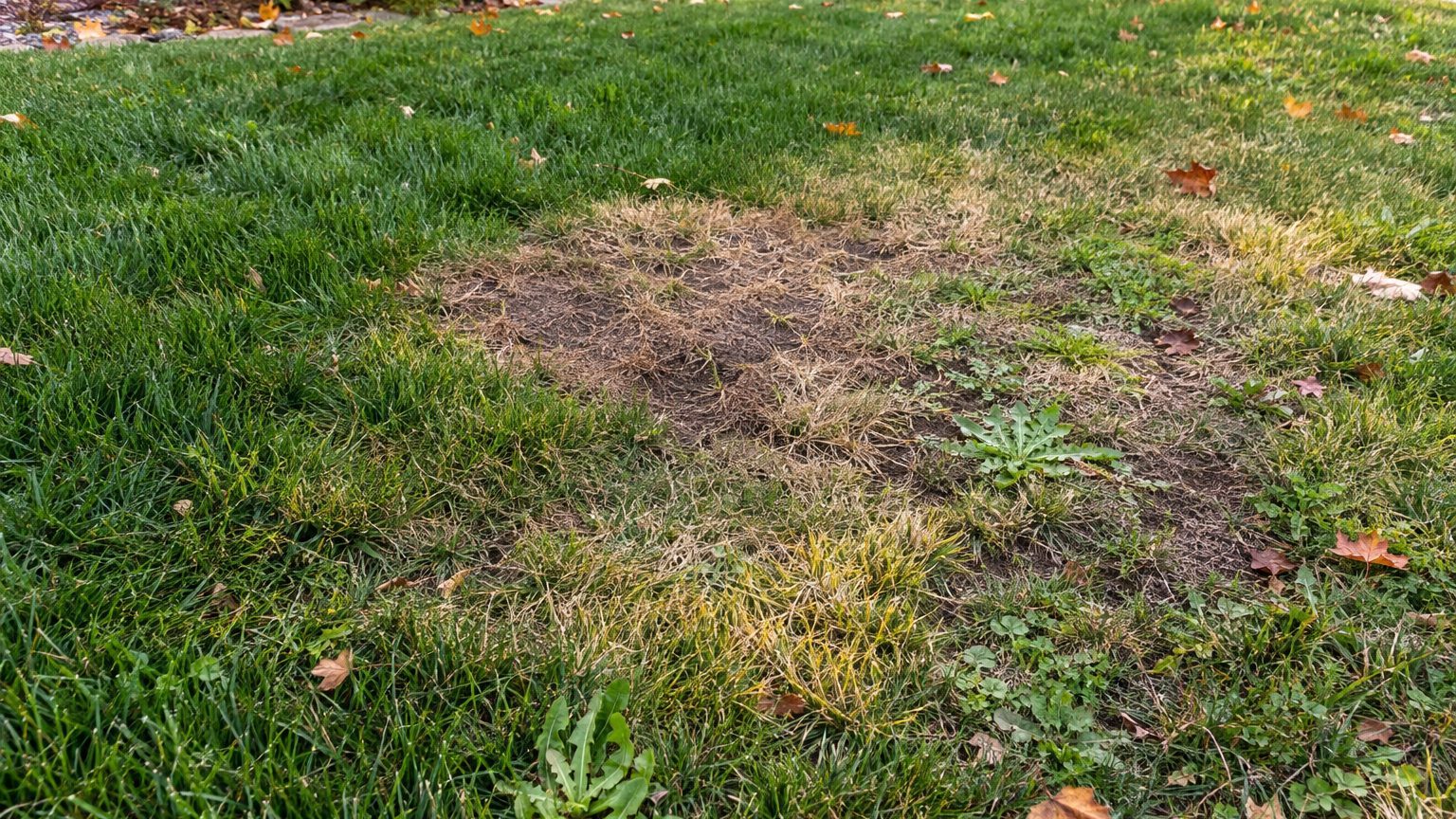
Dandelions in May, straw-colored patches by July, a lawn that feels spongy underfoot: Colorado turf shows trouble in familiar ways. Dry air, strong sun, and regional differences set the pattern, while weeds, grubs, disease, and stress from watering or mowing can all cause trouble. Knowing which one you have decides the fix.
Lawn Pests and Diseases in Colorado
Dandelions and Broadleaf Weeds

Yellow flowers on a rosette of toothed leaves, or low mats of clover, often show up in spring. They fill gaps where grass is thin, so the weeds are usually a symptom of an open lawn.
Dig out young plants with the taproot, then seed bare spots in August or September so grass closes the space. April and May also work if you missed fall.
Crabgrass
Coarse, light green blades that spread outward from a central point like a star, mostly along driveways and hot edges. It sprouts as the soil warms and thrives in thin turf.
A pre-emergence preventer goes down in April, and May still catches it. Once crabgrass is up, mow high and pull young plants before they set seed.
Necrotic Ring Spot
Rings or crescents of dead, straw-colored grass, often with a green tuft in the middle, usually on Kentucky bluegrass in summer heat. The grass in these patches fails because roots are damaged, so extra water alone will not green it up.
Water deeply, skip heavy summer feeding, and reseed damaged areas in late summer with a mix that includes other grass types.
White Grubs
Irregular brown patches that feel loose, where turf peels back like a loose carpet because roots have been chewed. Look for plump, C-shaped white larvae in the top layer of soil.
A few grubs are normal. If damage is spreading, roll back a square of sod to confirm before treating, and keep the lawn well watered so roots can regrow.
Colorado — the year and the numbers
- State
- Colorado
- USDA zones
- 3b-7b
- Last spring frost
- May 1 to May 11
- First fall frost
- September 30 to October 12
- Annual rain
- 15 in
- Lawn type
- cool-season
- Source
- NOAA NCEI 1991-2020 Climate Normals, 32F freeze probabilities · Denver
How to Tell Which Lawn Problem You Have
A clue rarely tells the whole story. Pair what the grass looks like with where it grows and when it started, then run a simple test: tug the turf, and press a screwdriver into the soil.
Shape matters. Rings can suggest disease, star-shaped clumps can suggest crabgrass, and ragged blocks can suggest grubs or dry stress.
| What you see | Where or when | Likely problem |
|---|---|---|
| Turf lifts like carpet, few roots | Irregular patches, late summer | White grubs |
| Rings or crescents of straw-colored grass | Bluegrass lawns in summer heat | Necrotic ring spot |
| Coarse, star-shaped clumps | Hot edges near pavement, summer | Crabgrass |
| Yellow-flowered rosettes with deep roots | Thin spots, spring | Dandelions |
| Spongy feel, thatch layer thicker than 1/2 inch | Dense, heavily fed turf | Thatch buildup |
If the spongy layer is thicker than that, dethatch in August or September, or core aerate in September. April works for either one too. Brown grass that springs back after watering, with the screwdriver sliding in easily, may have been thirsty, though this does not rule out disease.
Where Lawn Problems Are Worst in Colorado
Colorado’s climate varies sharply across the state, so lawn problems can look different from place to place.
- Front Range (Denver, Colorado Springs, Fort Collins): Dry weather and strong sun can stress lawns, while hail or wind may thin the turf and leave room for weeds.
- Mountain towns (Breckenridge, Vail, Steamboat Springs): Short seasons and frost that can arrive in July slow recovery, so thin spots stay open longer and weeds fill them.
- Grand Junction and the Western Slope: Lower valleys run hotter and drier, so heat stress and irrigation problems matter more than cold damage.
- Eastern Plains (Sterling, Lamar): Steady wind and open sun dry the turf quickly, which makes shallow watering especially costly.
Check what your own neighborhood does before copying a Denver schedule.
Lawn Care Mistakes That Invite Problems in Colorado
Mowing Too Short
Scalped grass has little leaf to shade the soil, so roots bake and weeds like crabgrass germinate in the light. Short turf also stresses the plant in dry, windy weather.
Raise the mower deck and cut regularly from April through November, removing only a little at a time.
Light Daily Sprinkling
Brief sprinkles wet only the surface, so roots stay shallow and the lawn crashes in a heat wave. Shallow watering also feeds weeds and some diseases.
In June, July, and August, soak the lawn slowly and deeply, then let the soil surface begin to dry before the next round. A screwdriver pushed into the soil tells you how far the water went.
Feeding in the Heat
A heavy dose of fertilizer in midsummer pushes soft top growth and can worsen disease on bluegrass, while roots lag behind.
Feed in September and November instead, when cool weather lets the lawn store energy. May is the fallback if you missed fall.
Where to Get Lawn Advice in Colorado
Local help matters because elevation, soil, and irrigation change the answer from one town to the next. Local resources are worth knowing.
- Colorado State University Extension offers fact sheets on weeds, insects, and watering, and it is a useful place to turn when a patch looks unfamiliar.
- Your county extension office may help identify a sample of the damaged turf, so bring a small cutout with roots as soon as the problem appears.
Common Questions
Does Colorado Grass Die Over Winter?
Cool-season lawns turn tan and go dormant in cold weather, then green up as the soil warms. If the crown still feels firm and roots are white, the lawn is alive.
Is the Frost Timing the Same Across Colorado?
In the Denver area, the last spring frost usually falls between May 1 and May 11. The first fall frost typically arrives between September 30 and October 12. Mountain towns run far shorter seasons, and the Western Slope differs again.
How Do You Know When the Lawn Needs Water in Summer?
Walk across the grass. If footprints stay pressed down and the blades look dull blue-gray instead of bright green, the lawn is thirsty. Water deeply at that point instead of sprinkling lightly.