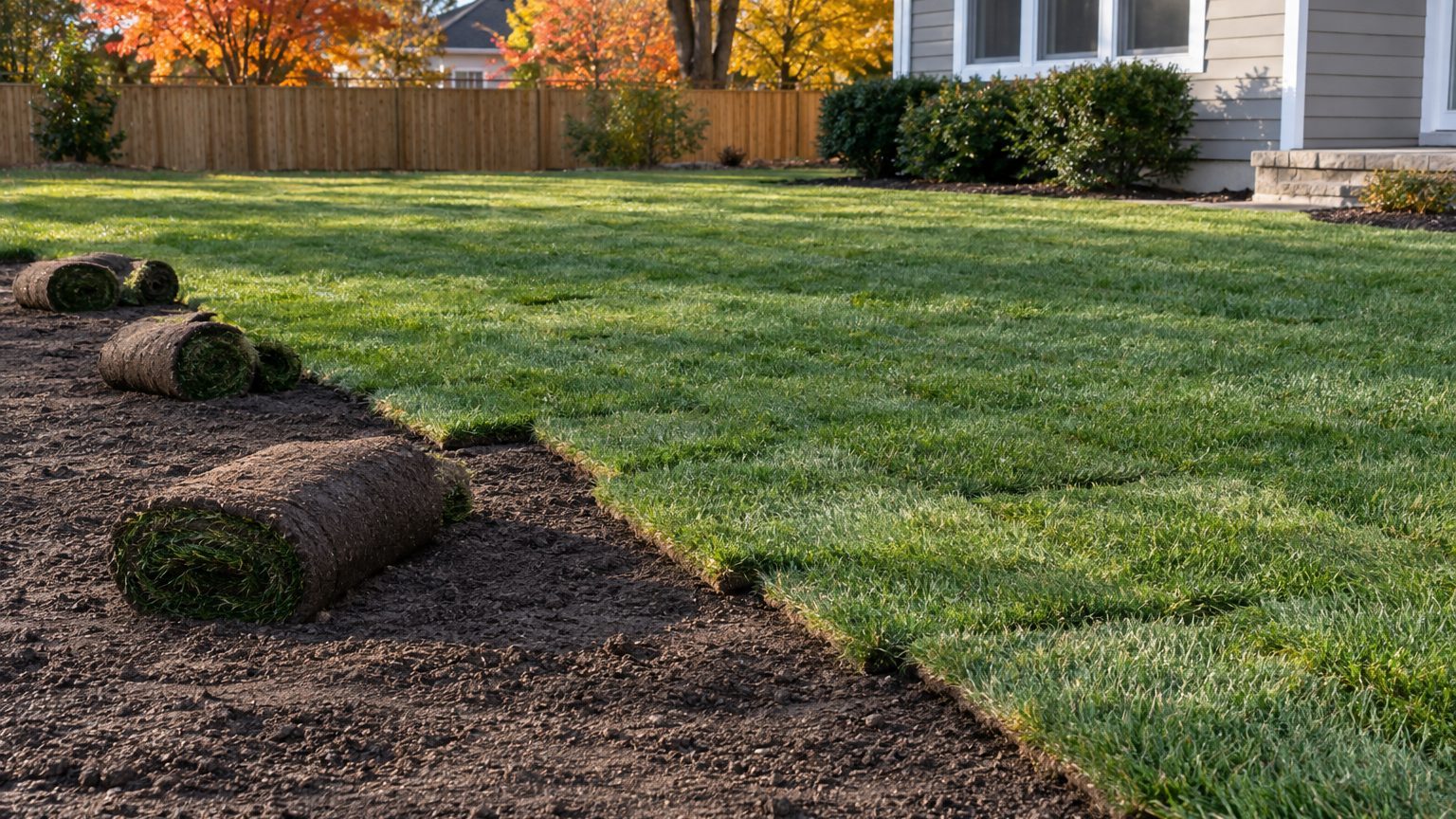
A fresh roll of sod looks like a finished lawn the moment it unrolls, but whether it stays green depends on the weather it meets soon after installation. Timing comes down to your grass type and the season, with the ground thawed and the turf in active growth. Getting that match right means the roots knit into the soil before heat or cold can stress them.
When Is the Best Time to Lay Sod?
Sod timing depends on grass type, soil conditions, and region. Cool-season lawn windows vary by region. Warm-season timing also varies by region.
Local guidance shows how the season shifts. In Indiana, fall is the optimum time for cool-season sod, while Nebraska names early spring or early fall because watering demands are lighter than in summer. Warm-season sod in Indiana goes down well in early summer.
Region changes the details, so the table just below gives the window for each state, with its zone.
From the almanac
When to lay sod, state by state
The months each state's extension calendar marks for this, kept inside that state's own frost-free season. Open your state for the frost dates, the USDA zone and the rest of the year.
Northeast
- ConnecticutAug–SepUSDA 6a-7b
- New JerseyAug–SepUSDA 6a-7b
- New YorkAug–SepUSDA 3b-7b
- PennsylvaniaAug–SepUSDA 5a-7b
- Rhode IslandAug–SepUSDA 6a-7b
Southeast
- AlabamaMayUSDA 7a-9a
- DelawareAug–SepUSDA 7a-8a
- FloridaApr–SepUSDA 8b-11b
- GeorgiaMayUSDA 6a-9b
- LouisianaMayUSDA 8a-10a
- MarylandSep–OctUSDA 5b-8a
- MississippiMayUSDA 7b-9a
- South CarolinaMayUSDA 7a-9a
- West VirginiaAug–SepUSDA 5a-7a
Midwest
Southwest
West
Sources: state frost facts and Penn State Extension — Lawn Management through the Seasons; Lawn Establishment · Clemson Cooperative Extension, HGIC — Bermudagrass / Zoysiagrass / Centipedegrass / St. Augustinegrass maintenance calendars · UF/IFAS — Fertilizing your Florida lawn; St. Augustinegrass · University of Maryland Extension — Lawn renovation and overseeding; Fertilizing home lawns. A state with no marked month is not shown.
How to Lay Sod

Sod rewards preparation and speed, so have the bed ready before the pallets arrive.
- Work compost into the topsoil, 25 to 50 percent by volume in Mississippi guidance, so the new roots find loose ground with some body to it.
- Schedule delivery for the day you plan to lay, because in Nebraska sod is laid within 24 hours after harvesting to keep it fresh.
- In Nebraska, start along a straight edge and set the pieces in a brick-like pattern with staggered ends, so seams never line up in a long, weak line.
- In Nebraska, push each piece snug against its neighbor, since tightly fitted edges keep the exposed ends from drying out.
- In Nebraska, roll lightly and then water thoroughly, which presses the roots against the soil and gives them a drink right away.
- Water in the morning each day until the sod roots, usually about 10 days after installation in Indiana, so the roots never sit in dry soil.
Check rooting by gripping the blades and lifting. In Nebraska, sod that resists is usually ready for fewer but deeper waterings, and mowing at 3.0 to 3.5 inches can begin once top growth appears. Keep foot traffic light until then.
Sod Timing by Grass Type
Cool-season grasses grow strongest in the mild shoulder seasons, so those are the months that suit their sod. Warm-season grasses want the opposite, a stretch of heat that pushes growth and speeds rooting.
Treat the locally preferred window as the easier option; installation outside it may require more attention.
| Grass | Season | Timing |
|---|---|---|
| Tall fescue, Kentucky bluegrass | Cool | Fall is optimum in Indiana; Pennsylvania also lists spring among the optimum times |
| Bermudagrass, zoysia | Warm | Almost any time in Indiana, early summer preferred |
Centipede and St. Augustine behave like the other warm-season grasses. In Mississippi they sit dormant in winter, yet they can still be installed with adequate planning. Expect the lawn to remain brown until growth resumes.
Sod Installation Mistakes to Avoid
Letting Sod Sit on the Pallet
Rolled sod is alive and stacked tightly, so it heats up and breaks down. In Pennsylvania, it deteriorates rapidly within 24 to 48 hours in warm weather. The cost is yellowed, thin pieces that root poorly.
Prepare the soil first, schedule delivery for the day you will lay, and do not take more than your crew can finish.
Leaving Gaps at the Edges
Loose seams and curled edges dry out first, leaving brown lines across a lawn that otherwise looks fine. You end up patching or replacing strips.
Butt each piece firmly against the next, stagger the ends, and trim edge pieces to fit rather than leaving a sliver. Rolling afterward settles the seams into the soil.
Aerating Too Soon
Pulling cores from a new lawn can lift or tear sod that has not yet anchored. In Nebraska, newly laid sod is left alone until it is firmly rooted, which takes 1-2 months.
Test by tugging a corner. If it lifts, wait. Until the sod is firmly rooted, keep traffic light and postpone aeration.
When to Lay Sod in Your State
Let the grass and the soil give the signal. Use local guidance for cool-season and warm-season grass, especially where warm-season sod can be installed during dormancy.
- The page for your state lists the months that fit its climate and zone, so check it before you order sod.
- Read it alongside your grass type, since a cool-season and a warm-season lawn in the same state use different windows.
Common Questions
Can You Lay Sod in Winter?
It depends on the ground and the grass. In Nebraska and Pennsylvania, cool-season sod can go down almost any time the soil is not frozen. In Mississippi, warm-season grasses are dormant in winter but can still be installed with adequate planning. Expect a brown lawn until growth resumes.
Is Sod Better than Seed?
Sod gives you an instant lawn, the ability to use it quickly, and no soil tracking or erosion. It also lets you establish turf at times that are less than optimal for seeding. The tradeoff, for cool-season grasses, is cost, since sodding is usually the most expensive way to start a lawn.
Is Summer Too Hot to Lay Sod?
Summer sod can work, but it asks for more water. Nebraska guidance prefers early spring or early fall for cool-season grass because irrigation needs are lower than in summer. Warm-season sod handles the heat better, and in Indiana early summer suits it well.