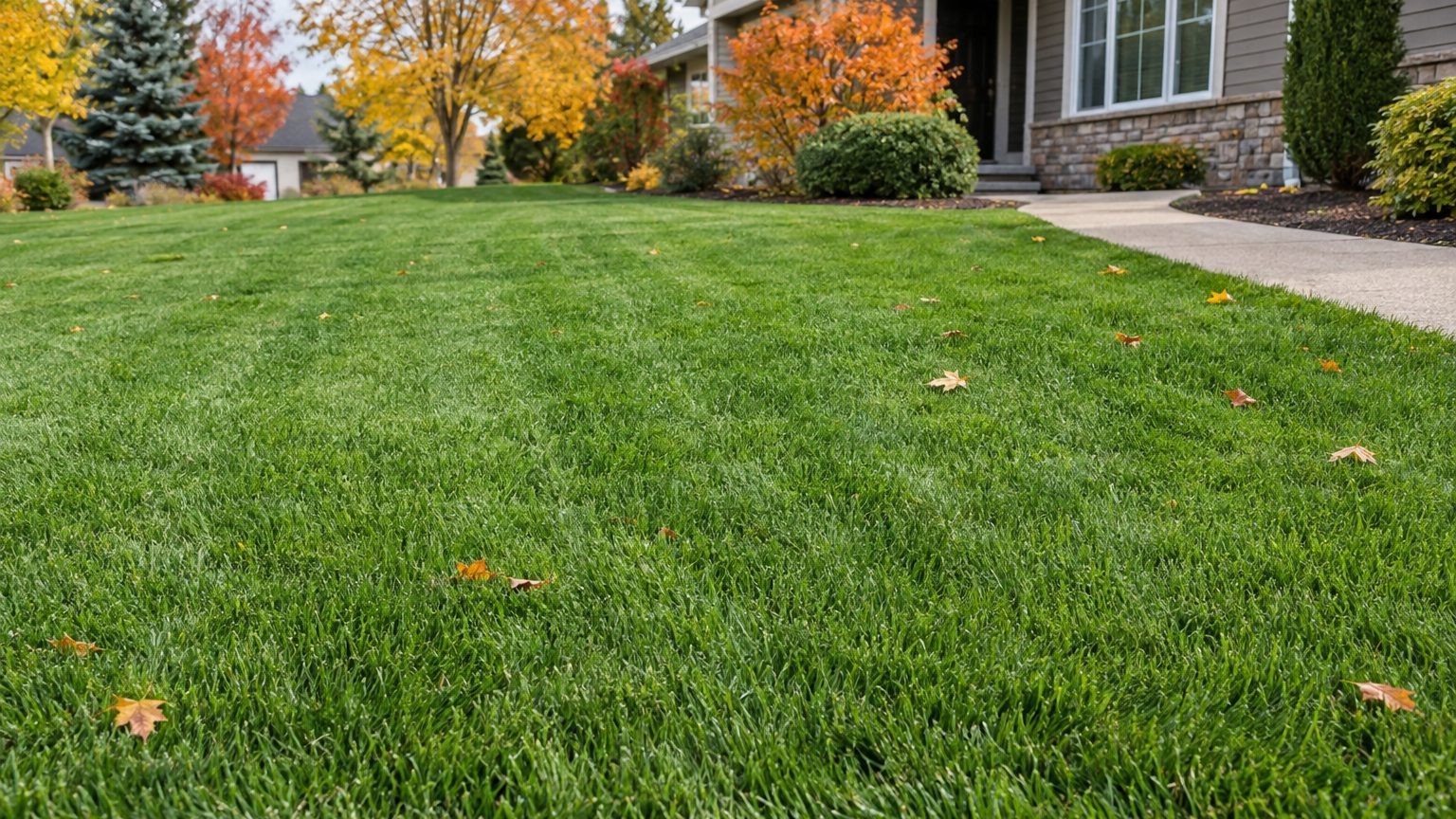
A lawn in the Northwest Territories is a short, bright summer job: thaw, a flush of growth under long daylight, then frost again before most people have settled into a routine. Lawns here are small projects in Yellowknife and a few other communities, and the plan is built around a brief season and a hard winter.
Frost Dates and Growing Season in Northwest Territories
In Yellowknife, the last spring frost falls on average around May 25 and the first fall frost around September 18, and because those are midpoints, frost arrives later than that in one year out of two. Treat them as the middle of a window, never a safe date. Communities farther north run weeks behind. Yellowknife sits in Canadian hardiness zone 1b (a Canadian rating that does not convert to a USDA zone). Grass grows with soil warmth, not the calendar, so a young seedling needs the ground thawed and the nights past the worst frost risk. The year runs like this:
- In winter, the lawn sits under snow and frozen ground, and nothing you do helps it, so keep traffic and heavy piles of shoveled snow off it where you can.
- In spring, as the ground thaws, you rake off debris and wait for the soil to drain before walking on it, since soggy turf tears easily.
- In June, seeding is at its best, and the first feeding goes down once the grass is actually growing.
- From June through August, the lawn gets regular water and mowing, with the watering window running through the same three months.
- In September, mowing continues until growth stops, while returning frost signals the close of the season and leaves no room for fall seeding.
That short runway is why spring seeding wins here: seed sown in June has the whole summer to root before frost returns.
Northwest Territories — the year and the numbers
- State
- Northwest Territories
- Hardiness zones
- 1b
- Last spring frost
- May 25
- First fall frost
- September 18
- Annual rain
- 11 in
- Lawn type
- cool-season
- Source
- Environment and Climate Change Canada — Canadian Climate Normals 1981-2010, station YELLOWKNIFE A · Yellowknife
Cool-Season or Warm-Season Grass in Northwest Territories?
Cool-season grass is the only kind that makes sense here. Warm-season species need long, hot summers and would never survive the winters, so the question is really which cool-season grasses handle extreme cold.
Cold hardiness matters far more than heat or drought tolerance, since summers are short and the real test is surviving months of frozen ground.
| Grass | How it does in Northwest Territories | Why |
|---|---|---|
| Kentucky bluegrass | Dependable base for a lawn | Tough in cold winters and spreads to fill gaps |
| Creeping red fescue | Good, especially in lighter soil | Fine fescues cope with cold and lean ground |
| Chewings fescue | Good in mixes | Fine texture that blends well with bluegrass |
| Hard fescue | Good for low-care lawns | Needs little feeding and handles poor soil |
| Perennial ryegrass | Short-lived | Often fails in the coldest winters |
Most seed blends mix Kentucky bluegrass with fine fescues, so you get cold hardiness and some flexibility in soil. Perennial ryegrass can help a blend establish quickly, but expect it to thin out after hard winters.
When to Seed, Fertilize and Aerate a Lawn in Northwest Territories
Spring seeding once the ground has thawed is the rule, because the season is too short for fall seeding. If June slips by, July still works as a fallback.
Feeding waits until the grass is growing, which in this climate means late spring, and aeration has no window in the regional guidance, so skip it unless the soil is badly compacted.
| Task | Best months in Northwest Territories | Why then |
|---|---|---|
| Seeding | June (July also works) | Thawed ground and a full summer to root |
| Fertilizing | June, or August | The first feeding comes once the grass is growing |
| Mowing | June to September | Growth runs from early summer until frost |
| Watering | June to August | Warm, active growth calls for regular water |
A late summer feeding in August helps the lawn store energy before winter, as long as it happens well ahead of the first frost.
Lawn Problems to Watch for in Northwest Territories
Winter-Killed Patches

Straw-colored or bare areas that appear as the snow melts can reflect winter damage, especially where wind strips snow cover or ice lingers. Rake the patches lightly once the soil dries, then reseed in June.
Thin Grass in Poor Soil
Pale, sparse turf over sandy or rocky ground can point to soil that holds little moisture or nutrients. Here, a first feeding in June and regular watering through summer help, and choosing fine fescues makes the lawn more forgiving.
Soggy Spring Turf
Soft, muddy lawn after thaw, especially in low spots, can mean water is temporarily trapped above frozen ground. Stay off it until it firms up, since walking on saturated turf compacts it and leaves ruts behind.
How Lawn Care Dates Change Across Northwest Territories
The territory is huge, and the same task lands at different times depending on how far north and how close to big water you are.
- Yellowknife: Dates here follow the Great Slave Lake shoreline climate, where the lake slows spring warming a little but softens early fall chill.
- Inuvik and the Mackenzie Delta: Thaw comes later and frost returns sooner, so the lawn season is shorter and seeding sits at the tail end of the June window.
- Fort Smith and the south: Spring arrives earlier, giving a bit more room before the first frost.
Watch your own soil rather than the calendar, and start when the ground has thawed and drained.
Where to Get Lawn Advice in Northwest Territories
The territory has no county extension offices, so advice comes from the government’s agriculture staff and from local growers who know your soil.
- The Northwest Territories Department of Industry, Tourism and Investment agriculture service can point you to guidance on northern soils and growing conditions, and spring is the time to ask.
- A local garden centre or gardening group can help you choose a seed blend and diagnose a bare patch, ideally before you buy in June.
Common Questions
Can You Grow a Lawn in the Northwest Territories at All?
Yes, in communities with enough soil and a frost-free stretch of summer. Cold-hardy blends of Kentucky bluegrass and fine fescues are the ones that survive.
Is Fall Too Late to Seed a Lawn There?
Yes. The season is too short for fall seeding, so wait for spring once the ground has thawed.
Should You Use Warm-Season Grass for a Sunny Yard?
No. Warm-season grasses cannot handle the winters, and sun alone does not change that. Stick with cool-season species and plan on watering during the dry stretches of June through August.