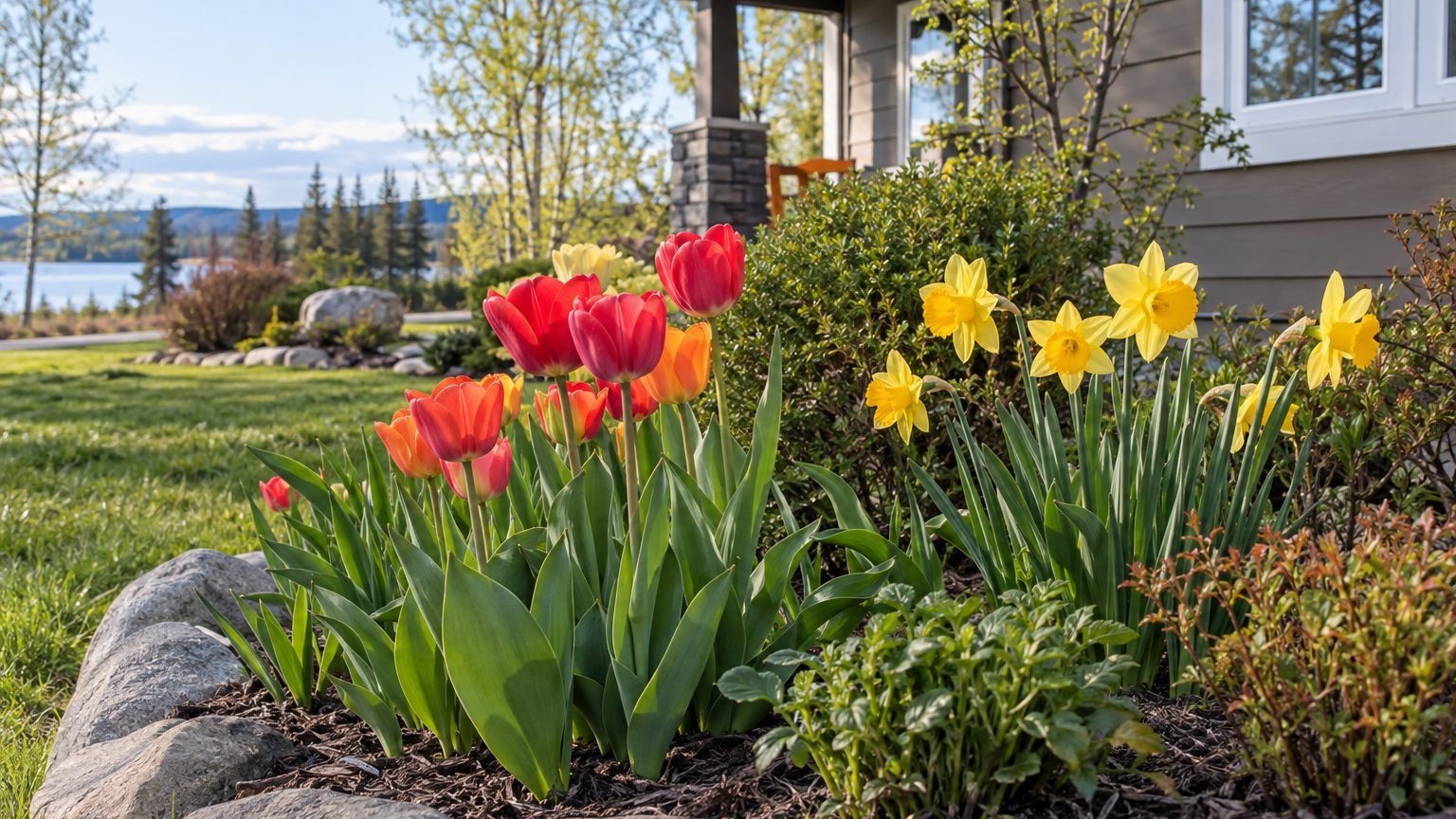
Snowbanks shrink slowly in the Northwest Territories, and the first color in the garden often comes from bulbs that went into the ground the previous fall. Bulbs that handle deep winter cold are the ones to look for, and a short list of them does very well here. Planting them is a late-summer job.
Best Spring Bulbs to Grow in Northwest Territories

Winter cold is not the problem in the territory, because most spring bulbs need a long cold spell to flower and Yellowknife sits in Canadian hardiness zone 1b (a Canadian rating that does not convert to a USDA zone). The real test is whether a bulb survives that cold year after year. Allium, scilla, snowdrops and grape hyacinth have the best record, and Greigii tulips are worth a try.
Purple Sensation Allium
This showy allium is a fall-planted bulb that extension growers in cold northern climates recommend. It does not need a chill period to bloom, so it flowers even when winter conditions are uneven.
Plant it with the other bulbs in late summer and give it a spot with room to stand tall.
Greigii Tulips
Greigii tulips are a short, sturdy group that has come up the first spring after a mild winter in cold northern gardens. Tulips are often short-lived, so treat them as a bonus rather than a permanent fixture.
Plant a few each fall and let the rest of the border carry the show.
Scilla
Scilla tends to winter over well in cold interior climates like this one. The small blue flowers return on their own and spread slowly into a carpet.
Tuck them under shrubs or along a walkway, where nothing will disturb the bulbs.
Snowdrops
Snowdrops are hardy, which is the point in a territory where winter lasts so long. They are a good first planting for anyone who wants a bulb that asks for little after the first fall.
Grape Hyacinth
Grape hyacinth sometimes winters over in cold interior gardens, so it earns a place as a try-it bulb rather than a sure thing. Plant a small drift and see how it does in your own yard before you buy more.
Northwest Territories — the year and the numbers
- State
- Northwest Territories
- Hardiness zones
- 1b
- Last spring frost
- May 25
- First fall frost
- September 18
- Annual rain
- 11 in
- Lawn zone
- cool-season
- Source
- Environment and Climate Change Canada — Canadian Climate Normals 1981-2010, station YELLOWKNIFE A · Yellowknife
How to Choose Spring Bulbs for Your Northwest Territories Garden
The right bulb depends on how much risk you want to take and how much attention you plan to give. Timing is the same for every type: August and September, when the soil has cooled to about 10 to 13°C (the low to mid 50s °F) so roots form before the ground freezes.
No local page covers bulb timing in the territory, so these dates follow the nearest comparable climate. Confirm them with a local garden centre, a garden society or a territorial gardening group.
| Your situation | What suits it in Northwest Territories | Why |
|---|---|---|
| Very cold winters | Snowdrops and scilla | Both are hardy and tend to winter over well |
| Little time to fuss | Purple Sensation allium | Alliums need the cold of winter to bloom. |
| You want tulips anyway | Greigii tulips | They have come up after a mild winter, though tulips are often short-lived |
| Animals visit the yard | Daffodils | Voles, squirrels, rabbits and deer leave them alone |
Grape hyacinth fits the try-it column: it sometimes winters over, so plant a few and watch. Daffodils are the more reliable perennial bulb, which makes them a safe choice when you want something to come back.
Which Spring Bulbs Suit Different Parts of Northwest Territories
The territory covers a huge area, and the same bulb behaves differently from one town to the next. Spring arrives later the farther north you go, and the figures here describe only one city.
- Yellowknife: the average last spring frost is May 25, and in one year out of two frost comes later than that, so treat it as the middle of a window rather than a safe date.
- Hay River and Fort Smith: in the southern part of the territory, spring usually eases sooner, which gives a little more room to try borderline bulbs such as grape hyacinth.
- Inuvik: gardens in the far north run well behind Yellowknife, so stick to the hardiest choices, such as snowdrops and scilla.
Wherever you garden, a sheltered spot beside a wall or fence gives any bulb a better chance than an open lawn edge.
Spring Bulb Buying Mistakes to Avoid in Northwest Territories
Buying Bulbs by Looks Alone
A bag of whatever looks pretty on the shelf is a gamble in a climate this cold. Some types come up once after a mild winter and then give out.
Choose from the hardy group first, and add one or two experiments each year so you learn what your own yard supports.
Expecting Tulips to Last
Tulips are often short-lived in the garden, and a hard northern winter makes that more likely. Planting a large block and counting on it year after year usually ends in empty patches.
Plant tulips in small numbers, and lean on daffodils for bulbs that return reliably.
Keeping Bulbs in the Bag
A bulb that is still in the bag is better planted late than stored over the winter. A bulb that is still in the bag is better planted late than stored over the winter: plant as long as the ground can be dug.
Plant them as long as the ground can be dug, even if the best window has passed.
Where to Get Spring Bulb Advice in Northwest Territories
The territory has no county extension offices. Start with the agriculture services of the Government of the Northwest Territories, then lean on local gardeners who have already tested what lives through your winters.
- The territorial agriculture services give general growing guidance, so check in before you order bulbs for late summer planting.
- A local garden centre can tell you which varieties came through recent winters, and it is worth asking in late summer when fall stock arrives.
- A garden society or territorial gardening group shares what has worked in your town, and most meet through the growing season.
Common Questions
Do You Need to Chill Bulbs in the Refrigerator Before Planting in Northwest Territories?
No. Most spring-flowering bulbs need about 12 to 16 weeks of cold to flower, and a northern winter supplies far more than that. Fridge chilling is for places where winters are too mild.
When Can You Cut Back Bulb Leaves After Bloom?
Leave the leaves on the plant until they turn brown, and remove only the faded flowers. Leave the leaves on the plant after bloom until they turn brown; remove only the faded flowers.
Which Bulbs Do Deer and Voles Leave Alone?
Daffodils are left alone by voles, squirrels, rabbits and deer. Tulips and crocus are the ones those animals eat, so plant daffodils where wildlife visits most.