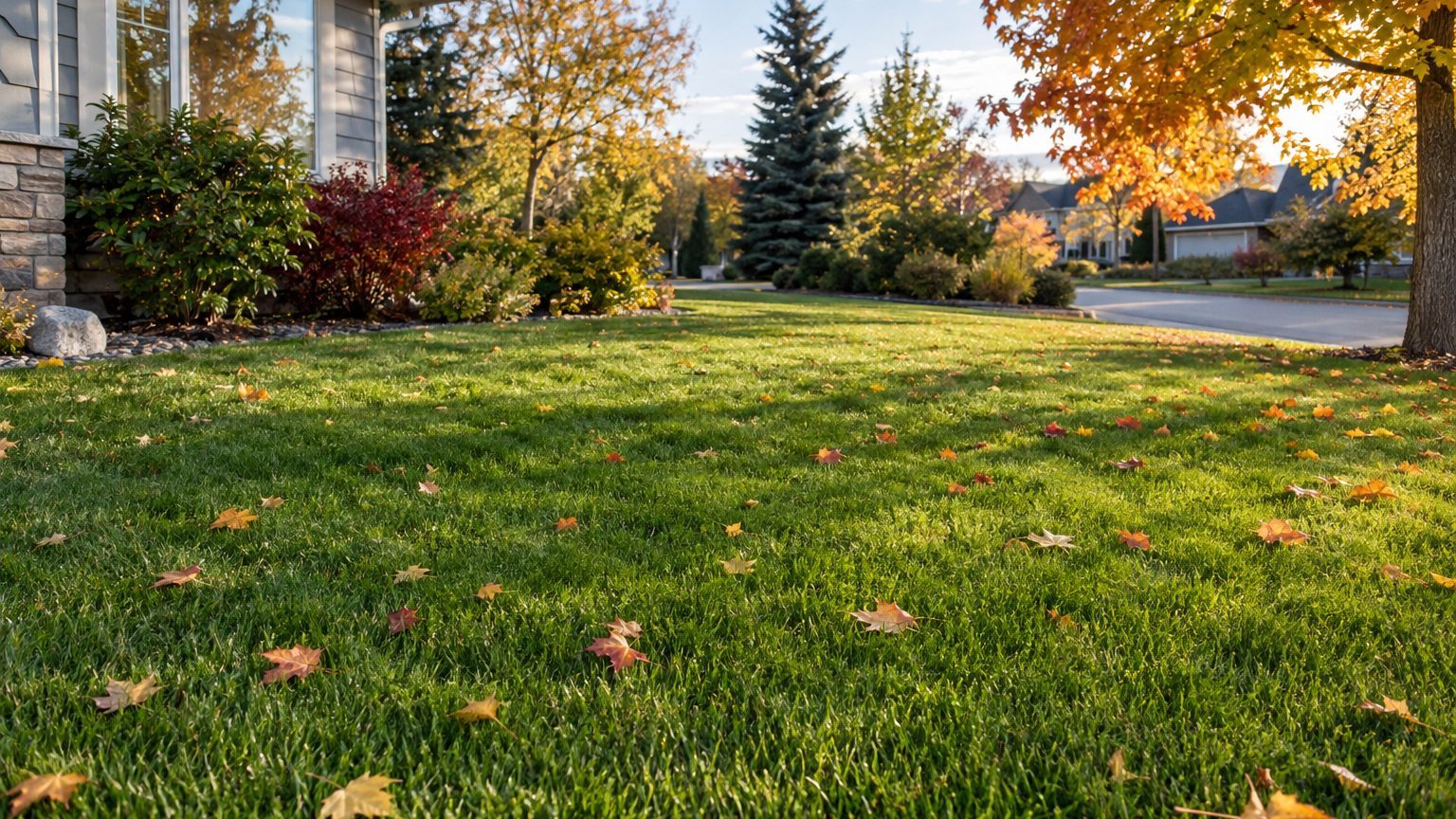
Snow lingers on a Northwest Territories lawn long after yards farther south have turned green, and then the grass gets a short summer to do everything. Lawn care here packs into June through September, with a long quiet stretch on either side. Matching each task to its month keeps that brief season working for you.
What to Do Each Month in a Northwest Territories Lawn

Most of the year the lawn rests under snow, so the work bunches into the short summer. Here is what each month asks of you.
| Month | In the lawn |
|---|---|
| January | Rest. The grass is dormant under snow, and the snow cover protects it, so leave it alone. |
| February | Rest. Keep foot traffic off the frozen turf, because dormant crowns bruise easily. |
| March | Rest. The grass is still dormant, and the thing to watch is where meltwater starts to collect. |
| April | Rest. The thaw makes the ground soggy, so stay off it and note any spots that stay wet. |
| May | Wait for the soil to firm up, then rake matted patches gently. Frost can still return, so hold off on seed and fertilizer. |
| June | The busiest month. Seed bare areas as soon as the ground has thawed, because the season is too short for fall seeding. Give the first feeding once the grass is growing, start mowing, and water regularly. |
| July | Mow and water. If June slipped past you, seeding in July still works. |
| August | Keep mowing and watering. A feeding in August works too, and it helps the grass go into autumn with some reserves. |
| September | Keep mowing while the grass still grows. Regular watering is finished; the days are cooling and growth is slowing. |
| October | Rest. Growth stops and the lawn heads into dormancy before the snow arrives. |
| November | Rest. The grass is dormant and the ground is freezing, so there is nothing to do. |
| December | Rest. Snow cover does the work now. |
Because the growing season is so compressed, a missed month leaves little time to catch up. Plan your seed, fertilizer and mower tune-up during the dormant months so you can start the day the ground allows.
Northwest Territories — the year and the numbers
- State
- Northwest Territories
- Hardiness zones
- 1b
- Last spring frost
- May 25
- First fall frost
- September 18
- Annual rain
- 11 in
- Lawn type
- cool-season
- Source
- Environment and Climate Change Canada — Canadian Climate Normals 1981-2010, station YELLOWKNIFE A · Yellowknife
When Does the Lawn Season Start and End in Northwest Territories?
Grass wakes up when the soil warms, and it stops when the soil cools again. Seed needs soil of 10 to 18 °C (50 to 65 °F) to germinate, which in the territory means early summer rather than spring. Cold-hardy grasses start growing at lower temperatures than most, but they still wait for the thaw.
Frost dates tell you about risk to young grass, not about when growth begins. In Yellowknife, the last spring frost falls on May 25 on average, which means that in one year out of two frost comes later. A seedling that sprouts before the last frost can be knocked back, so treat that date as the middle of a window, never as a safe date.
In fall in Yellowknife, the first frost arrives on September 18 on average, again with half of years running later. By then growth is already slowing, which is why seeding is a spring job here and why mowing tapers off through September.
How the Lawn Calendar Shifts Across Northwest Territories
The territory is huge, and the lawn months slide depending on how far north you live and how close you are to big water.
- Yellowknife: This is the reference climate for the calendar. The lake cools the shoreline in spring and softens the first fall chill a little, so lawns right at the water can thaw later and hold green slightly longer.
- Fort Smith and the South Slave: Closer to the Alberta border, spring comes earlier and the growing season stretches a bit longer, so the June tasks can start at the front of the window.
- Inuvik and the Mackenzie Delta: Thaw arrives later and cold returns sooner. Lawns here have a short season, so seeding belongs in the later part of June and mowing stops early.
Whichever town you live in, let the thaw in your own yard set the start date, not the calendar on the wall.
Lawn Care Timing Mistakes to Avoid in Northwest Territories
Seeding in Fall
Seed that goes down in late summer or fall has too little time to root before the cold arrives. Young seedlings freeze, and the bare patch you meant to fix is still bare in spring. Seed in June, or in July if you must, so roots form while the soil is warm.
Feeding Before Growth Starts
Fertilizer spread on cold or half-thawed ground just sits there, and meltwater or rain can carry it off the lawn. Dormant grass cannot use it. Wait until June, once the grass is visibly growing, then feed. August also works for a late feeding.
Watering After Growth Slows
Summer watering matters because the season is short and the grass is working hard from June through August. Keep soaking lawns into the cool days of autumn and you raise the chance of soggy turf going into freeze-up. After August, stop regular watering and let the grass slow down on its own.
Where to Get Lawn Advice in Northwest Territories
The territory has no county extension offices, so advice comes from the government’s agriculture staff and from local growers who garden in the same climate as you.
- The Government of the Northwest Territories agriculture services are the place to ask about grasses and soils that suit the territory, ideally in winter, before you buy seed.
- A local garden club or master gardener group in your community can tell you when the ground actually thaws where you live, so ask in May.
- A garden center in Yellowknife or your nearest town can point you to seed mixes sold for cold climates before June.
Common Questions
What Hardiness Zone Is Yellowknife?
Yellowknife sits in Canadian hardiness zone 1b. That is the Canadian system, which uses seven climate variables, so it does not convert to a USDA zone. Use it to judge how cold-hardy a grass or plant needs to be, not to compare with US numbers.
Why Is the Lawn Brown or Patchy After the Snow Melts?
Look at the pattern. A uniform straw color across the whole yard usually means the grass is still dormant and will green as the soil warms. Gray or pinkish, matted patches where snow lay deepest point to snow mold; once the soil is firm, light raking can help the turf dry and recover.
What Kind of Grass Seed Suits a Northwest Territories Lawn?
Choose a mix sold for cold climates and made of hardy cool-season grasses, and check the label for winter hardiness. Avoid warm-season grasses, which cannot survive the winters. Your garden center or the territorial agriculture office can confirm which mixes have done well locally.