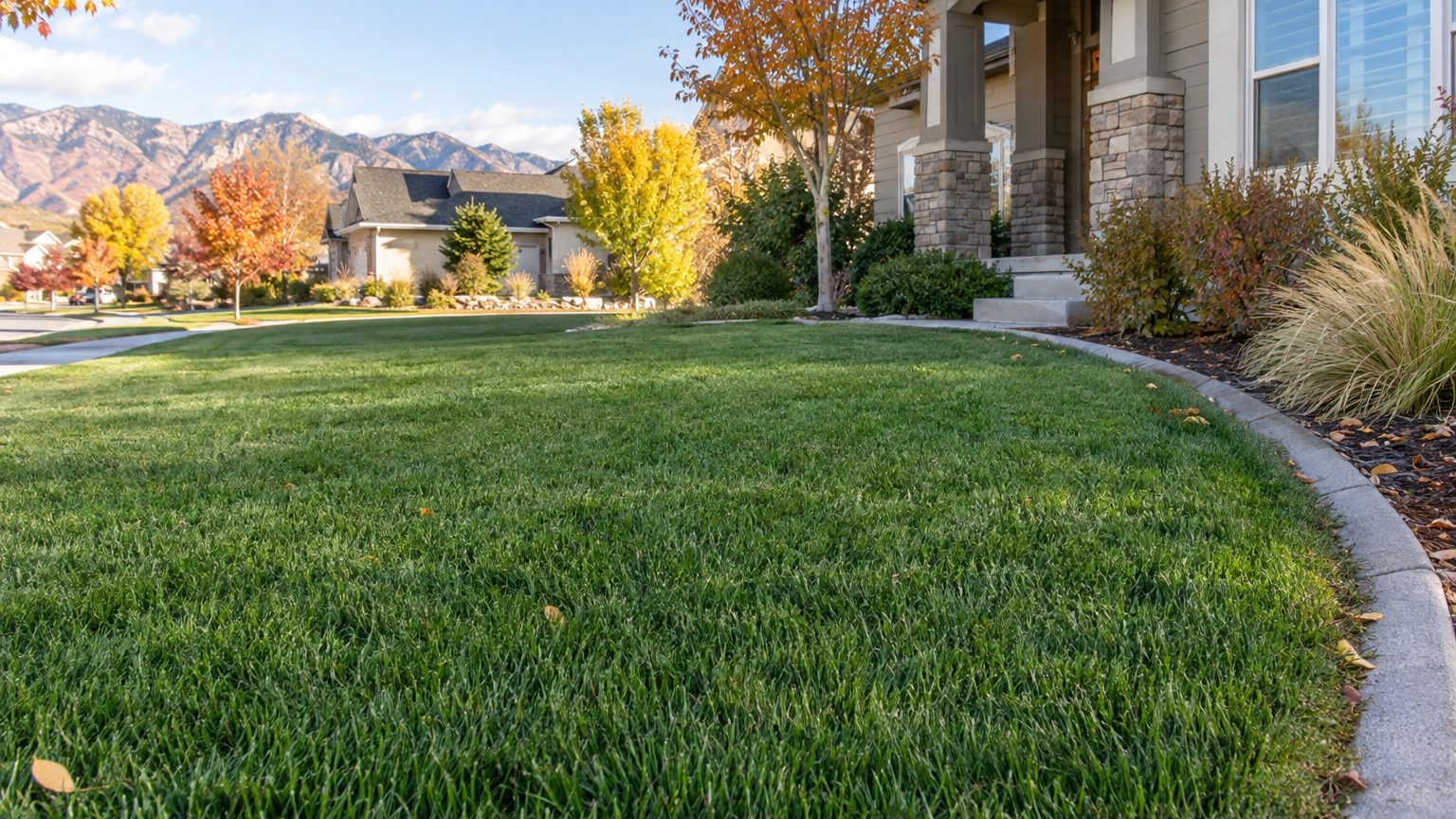
A Utah lawn spends the winter tan and flat, then greens up fast once April warms the soil and the mowing starts. Cool-season grasses dominate Utah lawns, with important work from spring through fall.
Frost Dates and Growing Season in Utah
In Salt Lake City, the last spring freeze usually lands between April 12 and April 29, and the first fall freeze arrives between October 18 and October 29. Most of Utah is higher and colder than that valley, while the south is warmer, so shift your own dates accordingly. Grass grows with soil warmth, not by the calendar, but those frost bounds still tell you when a young seedling is at risk and when seeding runs out of time. Utah spans USDA hardiness zones 4a to 9a, so the lawn year varies across the state.
- In early spring, the lawn greens up as the soil warms, and that is when crabgrass preventer goes down in April.
- In April and May, mowing begins, and seeding or core aeration also work if you missed the fall window.
- From June through August, the lawn needs regular watering, because summer heat and dry air pull moisture out of the soil quickly.
- In late summer, August and September, seed, dethatch and aerate so new grass roots before cold sets in.
- In autumn, September and November, a feeding helps the roots store energy, and mowing continues through November.
A seedling that sprouts just ahead of the first fall freeze has little time to establish, which is why late summer beats October for new grass.
Utah — the year and the numbers
- State
- Utah
- USDA zones
- 4a-9a
- Last spring frost
- April 12 to April 29
- First fall frost
- October 18 to October 29
- Annual rain
- 16 in
- Lawn type
- cool-season
- Source
- NOAA NCEI 1991-2020 Climate Normals, 32F freeze probabilities · Salt Lake City
Cool-Season or Warm-Season Grass in Utah?
Cool-season grass is the practical choice for lawns in Utah. It handles cold winters and grows actively in spring and fall, then slows or browns in midsummer unless you water it.
Warm-season grasses are mostly a southern Utah question, and seed for them is a separate topic from the grasses below, which are the ones sold for this region.
| Grass | How it does in Utah | Why |
|---|---|---|
| Kentucky bluegrass | Dense, classic lawn, needs summer water | Cold hardy and spreads to fill gaps |
| Tall fescue | Holds up well in heat | Deep roots cope with dry spells |
| Perennial ryegrass | Sprouts quickly, often mixed in | Fast cover for new seeding |
| Fine fescues | Fine texture, handles lighter care | Creeping red, chewings and hard types suit lower input lawns |
Many Utah yards use a blend, with bluegrass for density and ryegrass or fescue to speed up cover and add tolerance. Which blend fits your yard depends on sun, shade and how much you want to water.
When to Seed, Fertilize and Aerate a Lawn in Utah
Late summer is an active stretch for Utah lawns, because warm soil and cooler air let seed root well. Spring offers fallback timing for seeding, aeration, dethatching, and fertilizing.
If you miss the main window, use the fallback timing instead.
| Task | Timing in Utah | Why then |
|---|---|---|
| Seeding | August, September (April and May also work) | Warm soil helps seed sprout before cold |
| Core aeration | September (April and May also work) | Grass recovers quickly and fills the holes |
| Dethatching | August, September (April also works) | Growing grass bounces back from the raking |
| Fertilizing | September, November (May also works) | Roots store nutrients going into winter |
| Crabgrass preventer | April (May also works) | It must be down before weed seed sprouts |
| Watering | June, July, August | Summer heat dries the soil fastest |
Mowing runs from April through November, so the mower stays busy for most of the year.
Lawn Problems to Watch for in Utah
Brown Grass in Midsummer

Dry air and summer heat can turn a lawn tan, especially along driveways and south-facing slopes. If the grass feels crisp and springs back slowly when stepped on, it needs water. Watering regularly through June, July and August keeps cool-season grass from going dormant.
Thin Turf After Winter
Cold winters can leave bare or weak patches by spring. Look for matted, tan areas that stay patchy after the lawn greens elsewhere. Rake them lightly and overseed in April or May, or wait for late summer when seed establishes more easily.
Compacted, Hard Soil
Foot traffic packs the ground, so water runs off and roots stay shallow. If a screwdriver is hard to push in and the patch is thin, core aeration in September opens the soil and helps roots reach deeper.
How Lawn Care Dates Change Across Utah
Elevation and latitude shift the season across Utah, and the dates above are for the Salt Lake Valley.
- Salt Lake Valley: The milder valley floor sets the dates, with spring work starting in April.
- Park City and the mountain towns: Higher ground stays cold longer, so spring work and seeding start later and fall work should begin earlier.
- St. George: Warmer southern Utah greens up sooner and stays growing later, which pushes spring tasks earlier and fall tasks later.
Watch the soil and the weather in your own yard, and treat these dates as a starting point.
Where to Get Lawn Advice in Utah
Utah State University Extension offers lawn guidance written for the state’s climate, and your county office can help with local conditions.
- The extension website has lawn care guidance suited to Utah, useful before you choose seed or plan a fertilizing schedule.
- Your county extension office can advise on a soil test or help diagnose a patchy area, so call when a problem first appears.
Common Questions
Can You Grow a Green Lawn in Utah Without Much Water?
Tall fescue and fine fescues need less water than bluegrass. Even so, plan on regular watering from June through August to keep the lawn green.
Is Spring a Good Time to Seed in Utah?
Yes, April and May work, but late summer is better. Spring seedlings face summer heat before roots deepen.
How Long Does the Mowing Season Last in Utah?
Mowing runs from April through November, following the growth of cool-season grass.