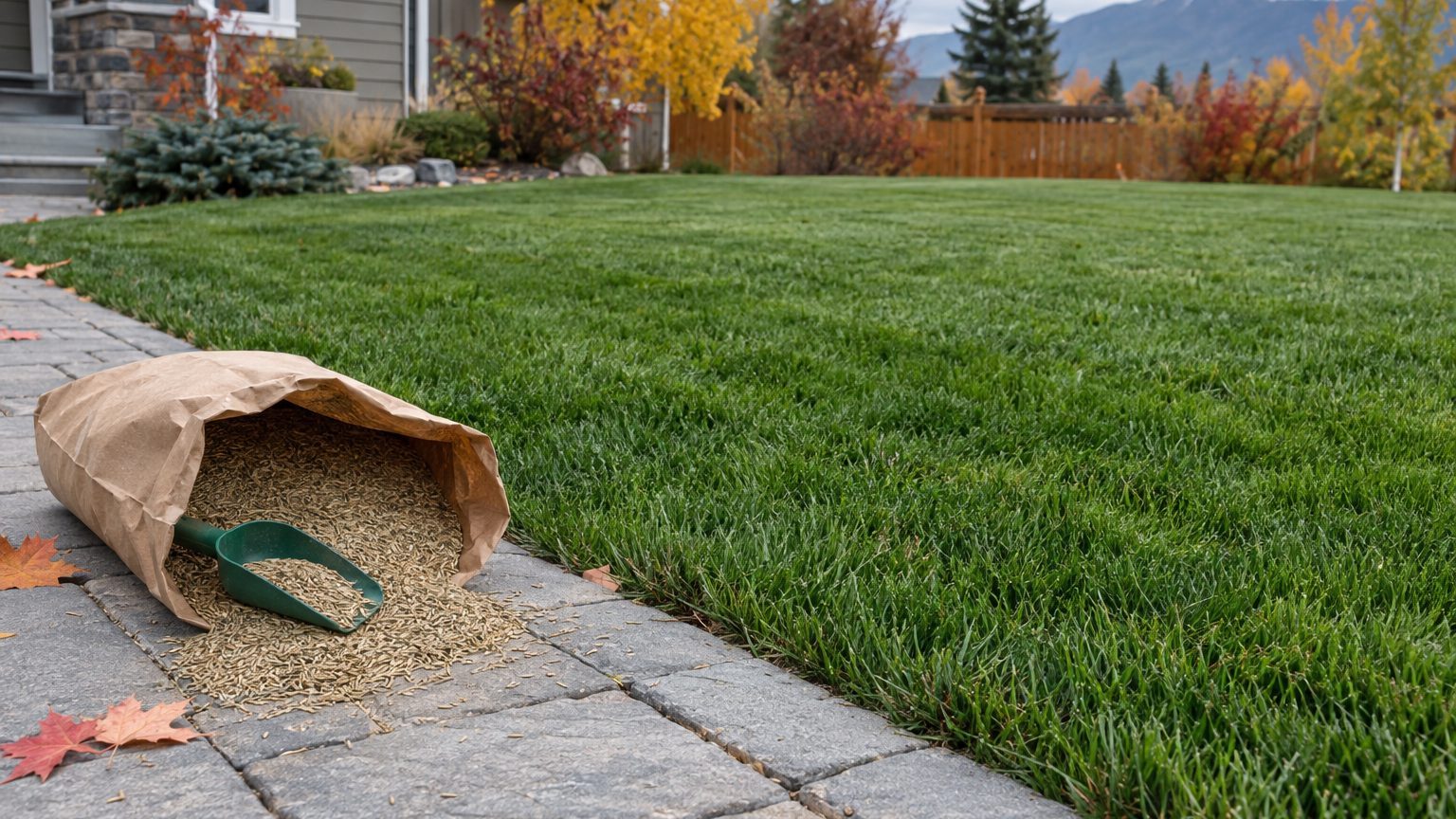
A good Yukon lawn starts with seed that was bred for cold winters and a short, bright summer. Kentucky bluegrass and fine fescues are the seeds that settle in around Whitehorse, Dawson City and Watson Lake, with perennial ryegrass as a minor partner. Sow them in June, once the ground has thawed.
Which Grass Grows Best in Yukon?
Cool-season grass is the only kind that makes sense here. Whitehorse sits in Canadian hardiness zone 1b (a Canadian rating, not a USDA zone), and warm-season grasses cannot survive winters that cold. Three cool-season species carry Yukon lawns, each with a different role.
Kentucky Bluegrass
Kentucky bluegrass is the backbone of cold-climate lawns across the northern continent, and Yukon is no exception. It tolerates hard winters and spreads by underground stems, so it slowly fills small bare spots without help.
The trade-off is patience. It germinates slowly, so a June seeding needs steady moisture to get through the long wait before green appears. It rewards that care with a dense, even turf in full sun.
Fine Fescues
Fine fescues (creeping red, chewings and hard) are the practical choice for yards that are not perfect. They put up with shade from spruce and birch, poor soil and low fertility better than bluegrass does.
They also stay fine-textured with less feeding and less water. If your lawn sits under trees or you would rather mow less, they deserve a large share of the seed mix. They blend well with bluegrass.
Perennial Ryegrass

Perennial ryegrass sprouts fast, which makes it handy as a quick cover on a bare patch. The catch is that it is short-lived in the coldest winters, and a Yukon winter qualifies.
Treat it as a helper rather than the foundation. A small share in a mix gives early green while the slower grasses catch up. Expect it to thin out over time, then let the bluegrass and fescue take over.
Yukon — the year and the numbers
- State
- Yukon
- Hardiness zones
- 1b
- Last spring frost
- June 5
- First fall frost
- August 25
- Annual rain
- 10 in
- Lawn type
- cool-season
- Source
- Environment and Climate Change Canada — Canadian Climate Normals 1981-2010, station WHITEHORSE A · Whitehorse
How to Choose Grass Seed for a Yukon Yard
Your own yard decides the mix more than the territory does. Look at how much sun it gets, how many feet cross it, and how much time you want to spend with a hose and a mower.
Most Yukon lawns do well with a blend of bluegrass and fine fescue, tilted toward whichever suits the harder part of the yard. The table gives the lean for each situation.
| Your yard | Grass | Why it fits |
|---|---|---|
| Open, sunny lawn | Kentucky bluegrass | Dense turf that recovers well from winter damage |
| Shade under spruce or birch | Fine fescues | Handles low light better than bluegrass |
| Little watering available | Fine fescues | Gets by with less water and feeding |
| Less mowing wanted | Fine fescues | Stays fine and slow-growing |
| Kids and dogs running across it | Kentucky bluegrass | Spreads to repair worn spots |
For a bare patch that needs green fast, a little perennial ryegrass mixed in helps, with the understanding that it will not last through the hardest winters.
Which Grasses Grow Where in Yukon
The same three grasses work across the territory, but the length of the growing season and the winter lows shift the odds from place to place.
- Whitehorse and the Southern Lakes: Bluegrass and fine fescue mixes suit lawns here. Bluegrass and fine fescue mixes grow well, and perennial ryegrass has a fair chance as a minor part of the blend.
- Dawson City and the Klondike: Winters are colder and the season shorter, so lean on bluegrass and fine fescue and leave ryegrass out. Seed in June, once the ground has thawed.
- Haines Junction and higher ground: Cooler soil warms later, so wait for a proper thaw before sowing. Hardy fescues are a safer bet than ryegrass.
Districts north and uphill of Whitehorse run weeks behind it, so give them extra time before you sow.
Grass Seed Mistakes to Avoid in Yukon
Buying the Wrong Mix
A bargain bag built for milder regions can include grasses that never survive a Yukon winter. Read the label and look for Kentucky bluegrass, fine fescues, and at most a modest share of perennial ryegrass.
If the bag relies on species other than Kentucky bluegrass, fine fescues, or perennial ryegrass, put it back. A local garden centre can point you to seed suited to the cold.
Seeding at the Wrong Time
Spring is the season for seed here, because the summer is too short for a fall seeding to root before freeze-up. June is the target, once the ground has thawed. If June slips away, July still works.
Whitehorse averages its last spring frost around June 5, and in one year out of two the frost comes later than that. Treat the date as the middle of a window, not a safe date. First frost arrives around August 25 on average, which is why a late sowing leaves little time to establish.
Burying or Skimping the Seed
Grass seed is tiny and needs light and contact with soil. Cover it with no more than 6 mm (0.25 inch) of soil, or just rake it in lightly. Deeper than that, and many seedlings never reach the surface.
Spreading too thinly leaves room for weeds, while piling it on makes seedlings crowd and weaken one another. Follow the rate printed on the bag and spread it evenly.
Where to Get Lawn Advice in Yukon
Canada has no county extension offices, so advice comes from the federal and territorial agriculture departments, local growers, and garden centres. Each can tell you what has worked in your own corner of the territory.
- Agriculture and Agri-Food Canada publishes general guidance for cold-climate growing, and Yukon’s own agriculture branch can answer questions about local conditions before you buy seed in spring.
- A local garden club or master gardener group knows which yards in your neighbourhood have held up, so ask them at the start of the season.
- A garden centre in Whitehorse can show you seed mixes suited to the territory, so stop in before the June sowing window opens.
Common Questions
When Should You Fertilize a Yukon Lawn?
June is when the first feeding goes down, once the grass is actively growing. August also works for a second feeding. Skip fertilizer on frozen or barely thawed ground, since the grass cannot use it yet.
When Can You Start Mowing a New Lawn?
Mowing runs from June through September in Yukon. Wait until the new grass has clearly taken hold before mowing it, and keep the mower blade sharp so seedlings are cut rather than torn out.
How Long Should You Water Newly Seeded Grass?
Water from June through August, and keep the top layer of soil moist while the seed sprouts. Short, regular watering suits the shallow roots better than an occasional soaking. Ease off as the lawn thickens.