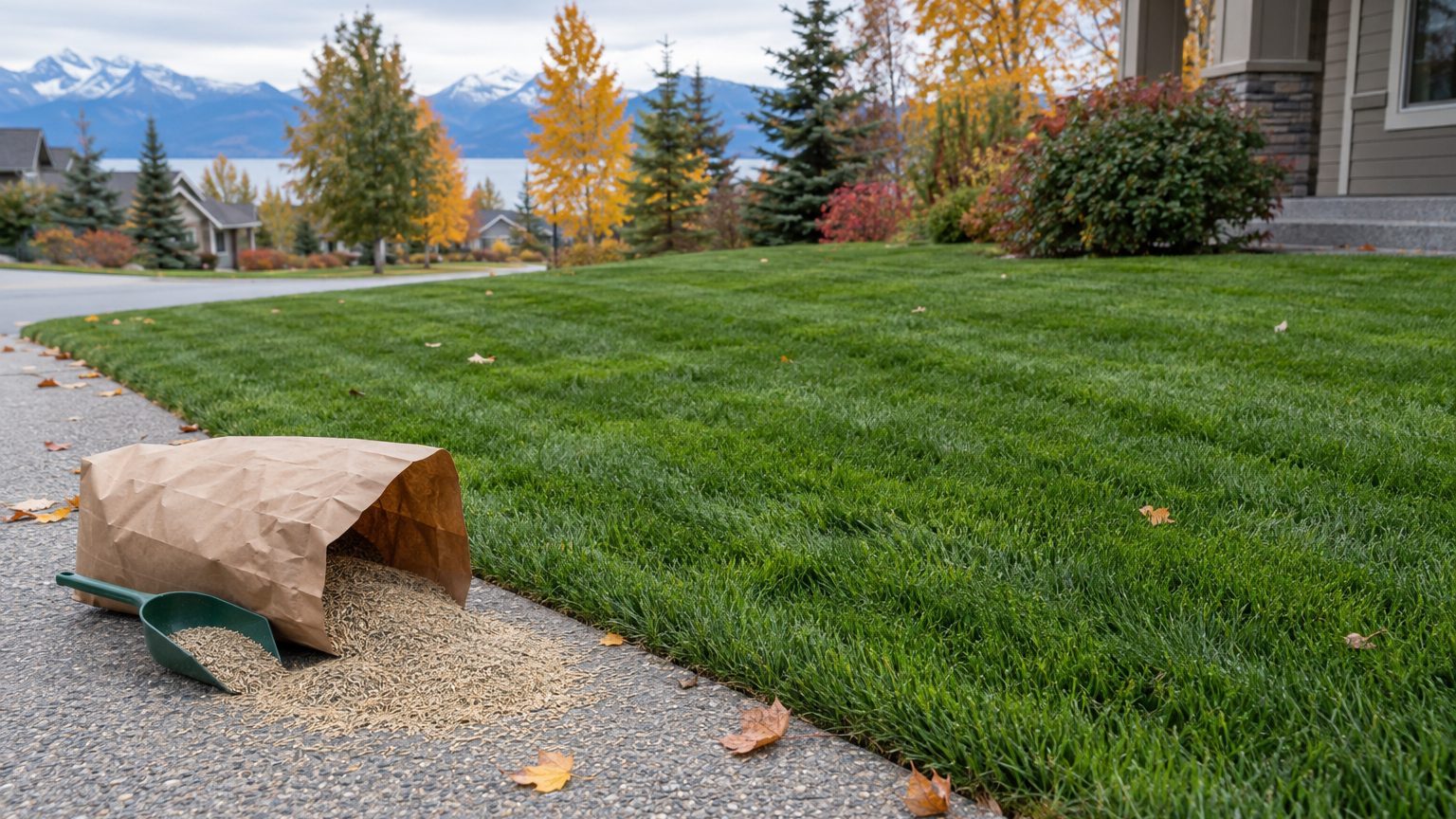
Choosing seed for a warmer climate can leave an Alaska lawn thin and patchy. Cool-season grasses are the answer here: Kentucky bluegrass and fine fescues anchor most lawns, with perennial ryegrass as a quick helper. The short season and hard winters decide which ones last.
Which Grass Grows Best in Alaska?
Cool-season grasses are the only sensible choice in Alaska, because warm-season types such as Bermudagrass or zoysia need heat and a long season this state does not offer. Around Anchorage, the frost-free stretch is fairly short, and the Interior and the north have far shorter ones. Long summer daylight helps the grass catch up, but only the hardy species keep going through winter.
Kentucky Bluegrass
Kentucky bluegrass is the dependable foundation for Alaska lawns. It handles the cold well and spreads by underground stems, so it fills thin spots over time. It is slow to sprout, so expect patience after seeding.
Creeping Red Fescue
Creeping red fescue is a fine fescue that suits cool, lean conditions and tolerates shade better than bluegrass. It spreads gently by its own stems and needs little fuss. Blend it with bluegrass where trees cast part-day shade.
Chewings Fescue
Chewings fescue grows in tidy clumps and stays fine-textured with modest mowing. It does well in lower-fertility soil and dappled light. It fills in less than creeping types, so use it as a partner in a mix.
Hard Fescue
Hard fescue is a tough, slow-growing fine fescue for yards where you would rather mow less. It tolerates dry, poor soil and some shade. The leaves are narrow and a bit stiff, giving a natural look rather than a manicured one.
Perennial Ryegrass
Perennial ryegrass sprouts fast, which makes it handy for quick cover in a short season. The risk is winter, because it is short-lived in the coldest winters. Keep it as a small share of a mix, never the whole lawn.
Alaska — the year and the numbers
- State
- Alaska
- USDA zones
- 1a-8a
- Last spring frost
- May 3 to May 12
- First fall frost
- September 22 to October 1
- Annual rain
- 16 in
- Lawn type
- cool-season
- Source
- NOAA NCEI 1991-2020 Climate Normals, 32F freeze probabilities · Anchorage
How to Choose Grass Seed for a Alaska Yard
Start with how the yard is used and how much light it gets. Most Alaska lawns do best with a blend rather than a single species, since each grass covers a weakness in another.
Shade, foot traffic, watering and mowing habits all point toward a different mix. Read the species on the bag, not the marketing name.
| Your yard | Grass to look for | Why it fits |
|---|---|---|
| Full sun, regular play | Kentucky bluegrass with a little perennial ryegrass | Bluegrass repairs itself, ryegrass gives fast cover |
| Shade under spruce or birch | Creeping red fescue and chewings fescue | Fine fescues cope with low light |
| Dry, poor soil, little watering | Hard fescue | Needs less water and feeding |
| Low mowing, natural look | Hard fescue and chewings fescue | Slow growth means fewer passes |
| Neat, dense lawn | Kentucky bluegrass dominant mix | Spreads into a thick, even turf |
In milder parts of Alaska, perennial ryegrass can add quick cover to a sunny mix, though it may thin out after a hard winter. St. Augustinegrass is never sold as seed and does not belong in Alaska anyway.
Which Grasses Grow Where in Alaska
Alaska is huge, and the lawn you can grow shifts with the climate of your corner. The Anchorage area is one of the mildest inhabited parts of the state, so use its conditions as the baseline.
- Anchorage and the Mat-Su Valley: Bluegrass-and-fescue blends do well, with a season long enough for spring seeding to root. Around Anchorage, the last spring frost usually falls between May 3 and May 12.
- Fairbanks and the Interior: Winters are harsher and summers shorter, so lean on bluegrass and hardy fescues and skip ryegrass.
- Southeast and the Kenai Peninsula: Cooler, wetter coastal air keeps grass green but invites moss, so favor fescues in shady, damp spots.
Whatever your region, a cold-hardy blend beats a bargain bag that was never meant for the north.
Grass Seed Mistakes to Avoid in Alaska
Buying Warm Season Seed
Seed meant for southern lawns will not survive an Alaska winter. Check the label for Kentucky bluegrass, fine fescues or a small share of perennial ryegrass, and skip anything built around heat lovers.
Seeding at the Wrong Time
The season is too short for fall seeding, so sow in spring once the ground has thawed. June is the best month for it, and July still works if you miss it. Seed sown late has little time to root before winter.
Burying or Skimping on Seed
Cover seed with no more than 0.25 inch of soil and press it down so it touches the ground firmly. Buried seed struggles to come up, and sparse sowing lets weeds and moss move in. Follow the rate on the bag and rake lightly.
Where to Get Lawn Advice in Alaska
Local conditions vary a great deal across the state, so a nearby expert can fine-tune any seed choice. Start with the state extension service and the office closest to your yard.
- The University of Alaska Fairbanks Cooperative Extension Service offers lawn and soil guidance, so check in before you buy seed in spring.
- Your local extension office can speak to conditions in your own area, which is worth a call before sowing in June.
Common Questions
Can You Grow a Lawn in Alaska at All?
Yes. Hardy cool-season grasses such as Kentucky bluegrass and fine fescues form good lawns across the milder parts of the state, including the Anchorage area. Colder Interior sites need the toughest species.
When Should You Fertilize a New Alaska Lawn?
Wait until the grass is actively growing. June is the usual first feeding, since late spring comes late this far north, and August also works.
When Does Mowing Start in Alaska?
Mowing runs from June through September. Start once the grass has grown enough to need a trim, and keep going through the growing months.