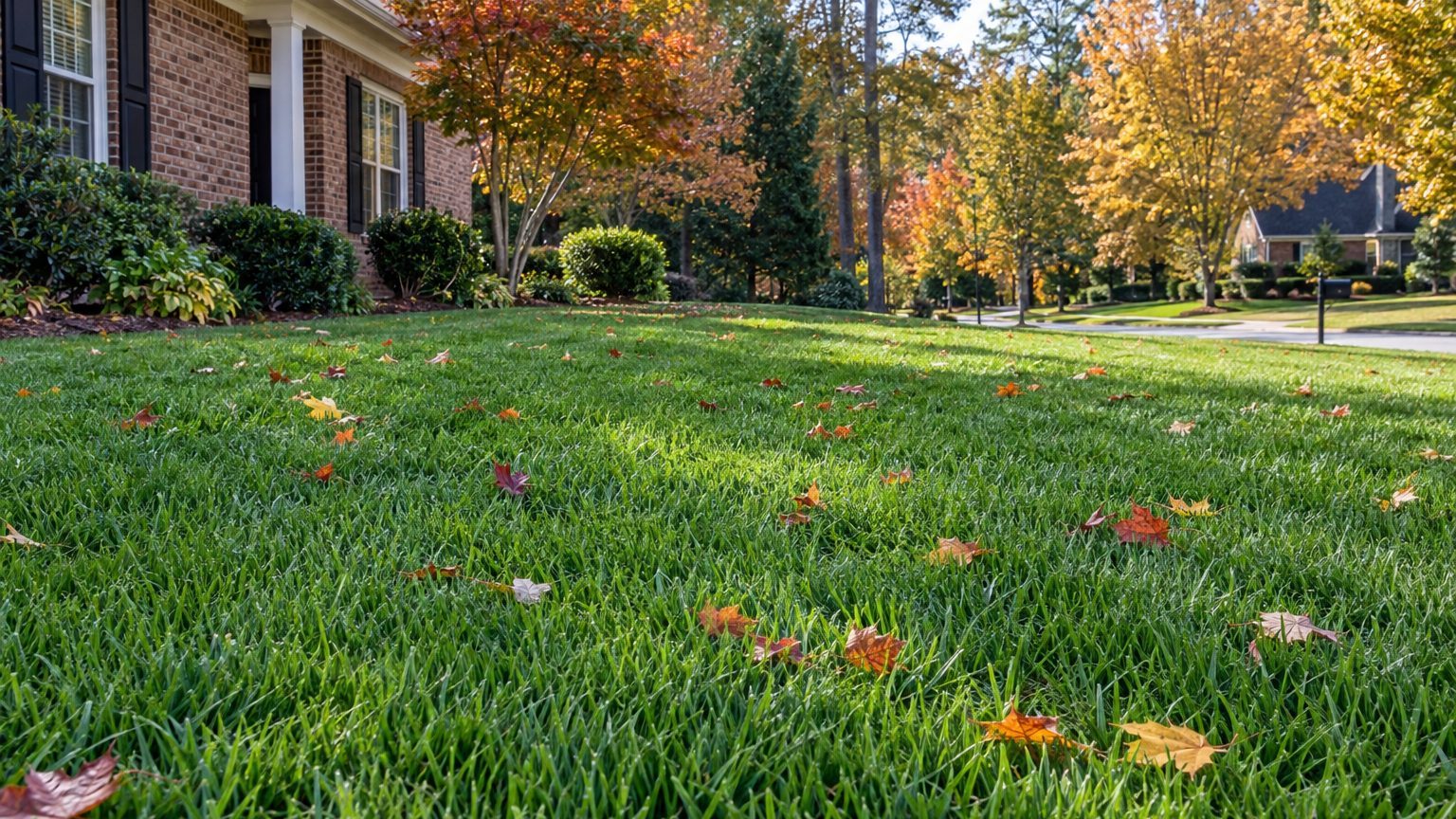
Tall fescue greens up in the cool of fall and spring, while bermuda and zoysia wait for warm weather and turn tan in winter. A North Carolina lawn follows one of those two rhythms, and nearly every chore depends on which grass you own.
What to Do Each Month in a North Carolina Lawn
Tall fescue does its heavy work in late summer and fall, and warm-season grasses (bermuda, zoysia) do theirs from late spring into midsummer. Each month below says which grass the job is for.
| Month | In the lawn |
|---|---|
| January | Rest. Warm-season grass is dormant, while tall fescue grows slowly; keep foot traffic light on frosted turf and leave the mower in the shed. |
| February | Still quiet. If a mild spell tempts you, crabgrass preventer already works now, though March is the better time to apply it. |
| March | Apply crabgrass preventer before the weed seed sprouts. Feed tall fescue in early spring and start mowing as growth picks up. |
| April | Mow regularly now that warm-season lawns are waking up. Preventer still works, and tall fescue can still take a light feeding if March slipped by. Dethatching bermuda or zoysia also works late in the month. |
| May | Warm-season lawns are ready for seed, sod, dethatching and their first feeding. Preventer can still go down. |
| June | Water deeply as heat builds and keep feeding bermuda and zoysia. Seed and sod for warm-season grass still take if May got away from you. |
| July | Feed warm-season lawns and water through the heat. Leave tall fescue unfed, because summer fertilizer pushes weak growth on a stressed lawn. Sod still roots for bermuda and zoysia. |
| August | Core aerate and seed tall fescue, and dethatch cool-season turf. Keep watering through the heat, since new seed cannot dry out. |
| September | Feed tall fescue and keep mowing. If August passed, tall fescue can still be aerated, seeded and dethatched now. |
| October | Feed tall fescue again so roots store energy before winter. Warm-season lawns get their last mowing as growth fades. |
| November | Keep mowing tall fescue until growth stops. Warm-season grass is already dormant, so watch for leaf buildup smothering the turf. |
| December | Rest. Warm-season grass is dormant and tall fescue has slowed, so the lawn needs nothing but a light rake of fallen leaves. |
Treat these months as a pattern rather than fixed dates. A cold spring or a hot September can shift a task, but the order of jobs stays the same.
North Carolina — the year and the numbers
- State
- North Carolina
- USDA zones
- 5b-8b
- Last spring frost
- March 23 to April 5
- First fall frost
- October 30 to November 8
- Annual rain
- 44 in
- Lawn type
- cool- and warm-season
- Source
- NOAA NCEI U.S. Climate Normals 1991-2020, 32F freeze probabilities · Charlotte
When Does the Lawn Season Start and End in North Carolina?
Growth follows soil warmth and grass type, not the calendar. Cool-season seed such as tall fescue germinates in soil at 50 to 65 °F, while warm-season seed wants 65 to 70 °F. That is why fescue is seeded in late summer and fall, and why bermuda seed waits for late spring.
Frost dates only tell you how risky it is for tender new grass. In Charlotte, the last spring freeze usually falls between March 23 and April 5, so a seedling started too early can be nipped. Spring frost is the main hazard for warm-season seed sown ahead of its window.
In Charlotte, the first fall freeze arrives between October 30 and November 8. Fescue seeded in late summer has time to root before then. Warm-season lawns slow and fade well before that freeze, because cooling soil, not frost, sends them toward dormancy.
How the Lawn Calendar Shifts Across North Carolina
Charlotte sits in the Piedmont, and the calendar above is built around it. Elsewhere in the state, expect the work to slide earlier or later in the direction below.
- Blue Ridge mountains and Asheville: Spring arrives several weeks later and fall comes sooner. Tall fescue is the usual lawn here, so late-summer seeding should lean toward the early end of its window so seedlings root before cold.
- Piedmont, including Charlotte, Greensboro and Raleigh: This is the middle of the state, where tall fescue and warm-season lawns both grow and where the monthly pattern fits as written.
- Coastal plain, from Wilmington to the Outer Banks: Spring comes earlier and winters are milder. Warm-season lawns green up sooner and stay active later, so spring jobs such as preventer can move up and warm-season work can begin earlier.
Between those zones, shift the work by what your own lawn is doing. A lawn that is still tan and sleepy is not ready for seed, whatever the date says.
Lawn Care Timing Mistakes to Avoid in North Carolina
Crabgrass Preventer Applied Too Late

Preventer stops seeds from sprouting but does nothing to plants already up. Once crabgrass has germinated, the product has lost most of its value and you are left pulling weeds all summer. Put it down in March, with April and May as fallback months, before the weed starts.
Warm-Season Seed Sown Too Early
Bermuda and zoysia seeded in a cool, wet spring sit dormant, rot or get hit by a late freeze. You pay for seed that never establishes. Wait until May for seed and sod, and use June if the weather has stayed cold.
Dethatching at the Wrong Season
Dethatching tears up the turf and leaves it open to stress. Doing it to bermuda or zoysia in fall pulls them apart just as they head into dormancy. Warm-season lawns recover in May and June, while tall fescue handles the work in August and September.
Where to Get Lawn Advice in North Carolina
Soil, shade and grass variety differ from one yard to the next, and local help can fit the schedule to your lot. Useful lawn advice is close by.
- NC State Extension publishes turfgrass guidance for the state, and it is the place to look when you need grass-type advice before you buy seed or fertilizer.
- Your county extension office can help arrange a soil test and identify problems, so contact it in late summer, before the seeding window.
Common Questions
How Can You Tell If Your Lawn Is Warm-Season or Cool-Season Grass?
Start with the lawn’s seasonal color pattern. Warm-season grass such as bermuda or zoysia stays green through summer heat and turns tan in winter, while tall fescue stays green most of the year and struggles in hot, dry stretches. Blade width and a quick check at a garden center can confirm it.
Why Does Tall Fescue Struggle in a North Carolina Summer?
It is a cool-season grass growing near the warm edge of its range. Heat and humidity thin it and invite disease, so it earns its keep in fall and spring. That is why aeration, seeding and feeding are planned around cooler months and why summer feeding is skipped.
Does a Dormant Lawn Need Water in Winter?
Dormant warm-season grass needs very little, and tall fescue slows down in the cold. Save regular watering for the hot months, and give new seed steady moisture only while it is establishing.