Skip to content

Rose Leaves Curling and Twisting: Causes and How to Fix It

Rose Leaves Curling and Twisting: Causes and How to Fix It

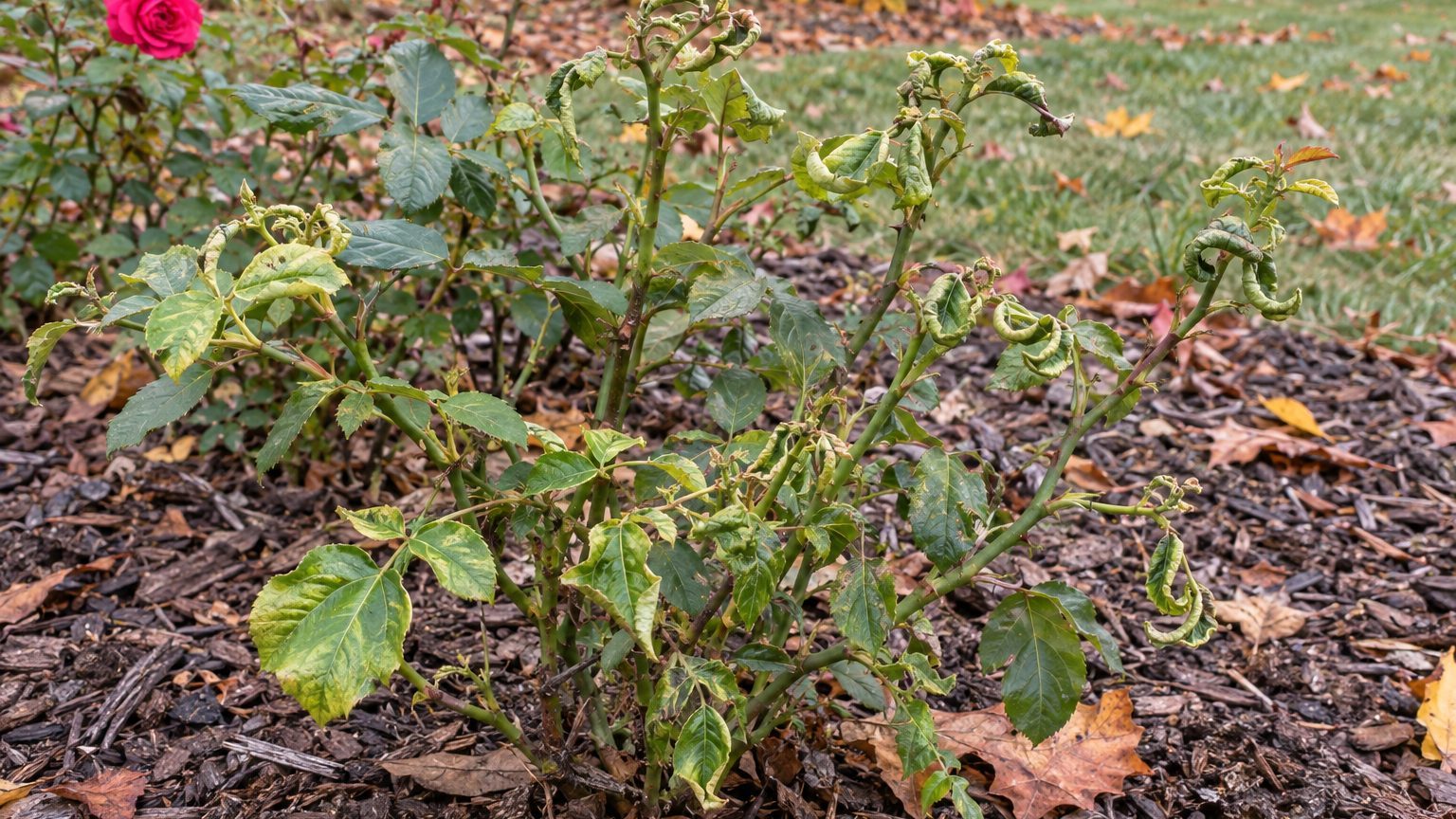
Curled, twisted leaves on a rose can point to powdery mildew, a fungus that coats and bends new growth, or to the rose leaf-curl mite, a tiny pest that can carry rose rosette virus. Telling them apart changes what you do next, because one can be managed and the other cannot be cured.

Rose Leaves Curling and Twisting: What You See

Rose Leaves Curling and Twisting on a rose

Start with the leaf itself, because the color and texture of the distortion separate the likely causes.

  • Leaves are twisted or bent, and orange lesions show on them, which points away from a simple mildew problem.
  • A white, powdery coating sits on the leaf surface while the leaf curls beneath it.
  • Leaves feel leathery, wrinkled or distorted rather than smooth and supple.
  • Twisting is often worst at the spot where the infection began, so one curved patch can sit beside a healthy leaf.
  • New terminal growth turns red, and the stems thicken and feel more succulent than the older parts of the plant.

Check the newest growth at the tips of the canes first, since infected branches show reddened terminal growth.

Rose Leaves Curling and Twisting or Something Else?

Several problems bend rose foliage, and a single clue can mislead. Pair what you see with where it sits on the plant and a simple check, such as rubbing the leaf or comparing new growth with old.

Whatever the cause, look at the tips and undersides before you decide.

Looks like How to tell them apart
Powdery mildew A white powdery film on the leaf surface that can also cover stems, petals and buds, with curling on the same leaves.
Rose rosette virus Reddened terminal growth with stems thicker and more succulent than the rest of the plant, and twisted, distorted leaves on the same shoots.
Rust Orange lesions on the leaves, with twisted or bent leaves around them.

Leaves that look leathery or wrinkled without any powder, red tips or orange spots deserve a closer look at the stems before you name a cause.

What Causes Rose Leaves Curling and Twisting, and Where It Is Worst

Fungi such as powdery mildew leave a white coating on the leaf and make it curl. The rose leaf-curl mite is an extremely small eriophyid that feeds on sap from tender stems and leaf petioles, and it can carry rose rosette virus.

The mite alone does little harm while feeding. If it carries the virus, symptoms typically appear within one to three months, which is why a healthy-looking rose can turn distorted later in the season.

In Arizona, leaves may become twisted and distorted, so the symptom is not limited to humid climates.

How to Treat Rose Leaves Curling and Twisting

Work from the simplest check to the hardest decision, and confirm the cause before you cut or spray anything.

  1. Inspect the newest growth for red tips and thick, succulent stems, so that you can tell a virus from a fungus before acting.
  2. Look for a white powdery coating on leaves, stems, petals and buds, because powdery mildew can attack all of them.
  3. Remove and discard badly affected leaves, so that fungal material does not stay on the plant or in the bed.
  4. Clean up fallen and old leaves after pruning and throw them away, so that they do not carry trouble into the next season.
  5. Because there is no cure for rose rosette virus and no vaccine against plant viruses, confirm the diagnosis before making a final decision about the rose.

How to Prevent Rose Leaves Curling and Twisting Coming Back

Good gardening habits lessen the incidence of powdery mildew considerably, and most of them follow the calendar.

  • At planting time, give bushes enough space so air and sunlight move through the plants.
  • During the growing season, check new growth regularly for red tips, thickened stems and twisted leaves.
  • After pruning, clean up old leaves from around the roses and discard them.
  • Through the following season, keep the bed clear of debris so fungal material has fewer places to settle.

Prevention cannot guarantee safety from the virus, since it is not always preventable, but open spacing and tidy beds remove the easy openings for mildew.

Where This Comes From

Curling can come from powdery mildew or from rose leaf-curl mites associated with rose rosette virus.

Common Questions

Can You Save a Rose with Rose Rosette Virus?

No cure exists for the virus, and no vaccine protects plants against it. Confirm the diagnosis before making a final decision about the rose.

Does Powdery Mildew Only Affect the Leaves?

No. It can attack stems, leaves, petals and buds, so check all of them when you see curling.

Do Mites Cause Damage on Their Own?

The pest alone causes little damage while feeding. The concern is that it can carry the virus, and symptoms then begin to appear.
Rose Dropping Leaves: Causes and How to Fix It

Rose Dropping Leaves: Causes and How to Fix It

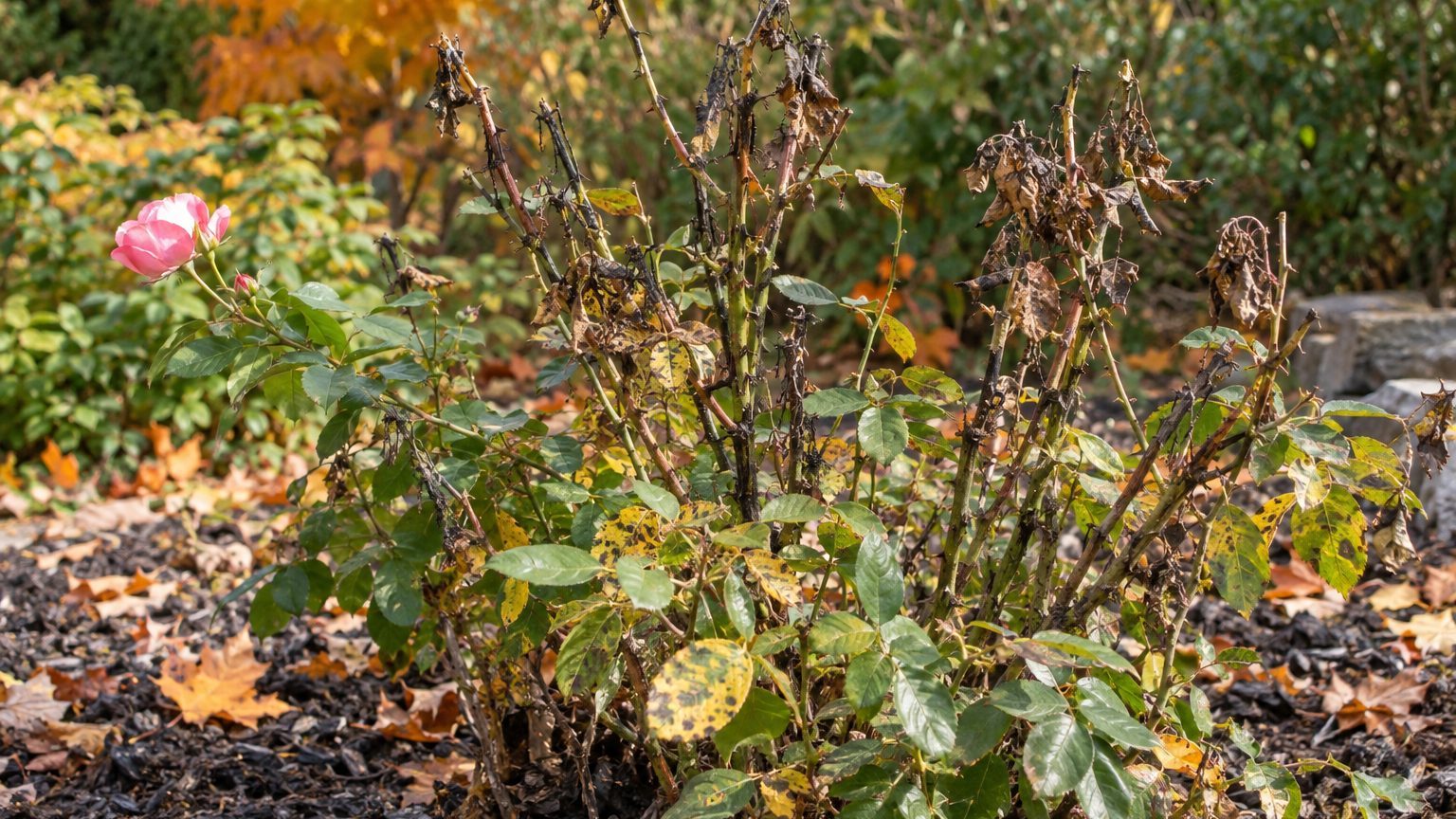
Yellow leaves with dark blotches can pile up under a rose bush, leaving the canes looking thin. Black spot is a fungus that spreads on wet foliage and makes leaves fall early. Removing fallen leaves and keeping the foliage dry can help limit the conditions black spot needs.

Rose Dropping Leaves: What You See

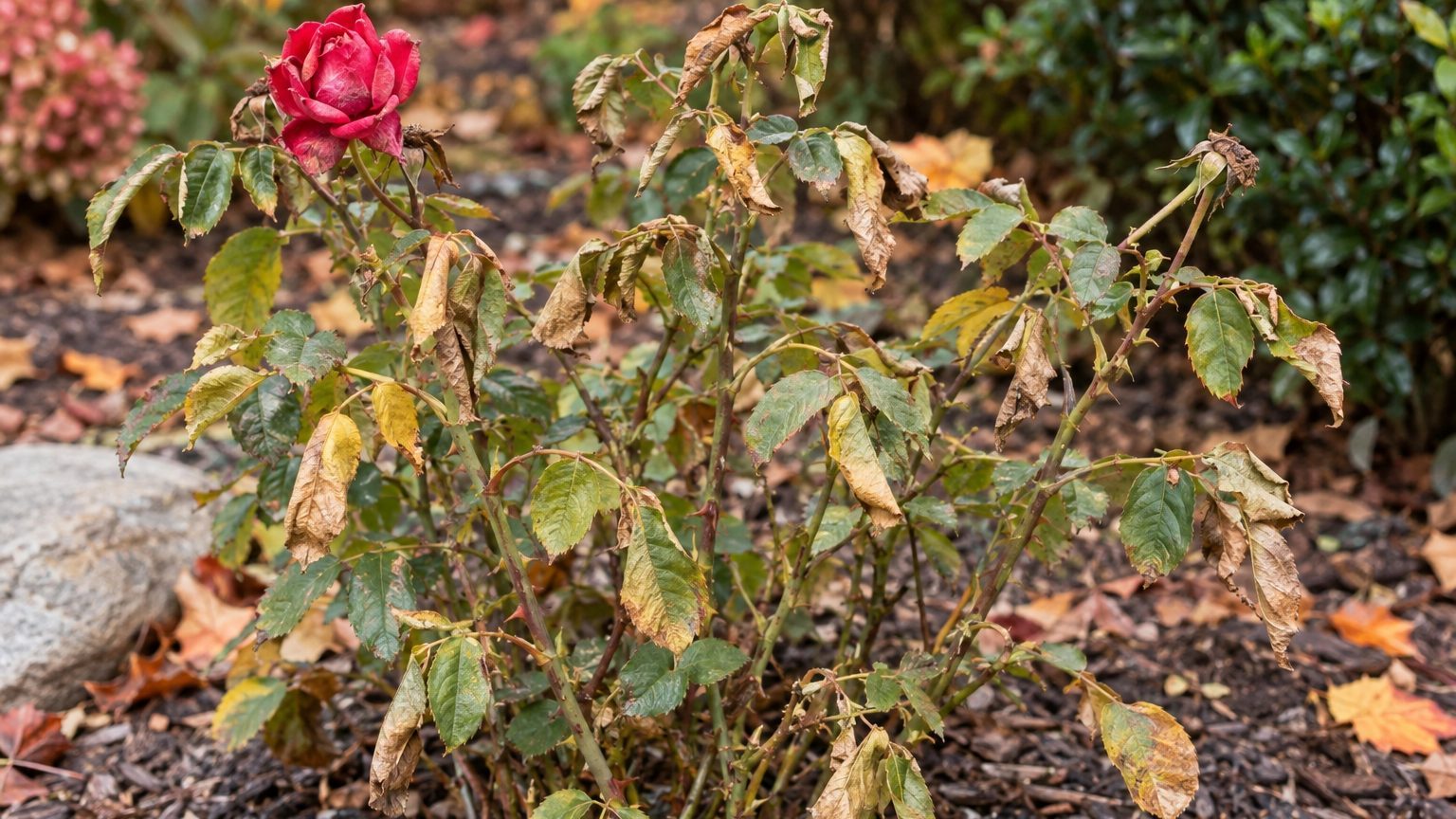
Rose Dropping Leaves on a rose

The leaves tell the story before they fall, so look at them closely while they are still on the bush.

  • Purplish red to dark brown irregular spots appear on the leaf, often with angular edges between the veins.
  • Leaves turn yellow around the spots, and yellow leaves drop from the plant, even when only a few lesions are present.
  • In Minnesota, the leaves fall in spring or early summer, so a bush can look thin before the main bloom is over.
  • In South Carolina, severely infected plants may have lost all of their leaves by mid-summer.
  • In Tennessee, canes may end up bare except for the growing tips, and fresh leaves may appear and then drop again once spots show on them.

Bare lower canes with a tuft of green at the top are the classic late look of a bush that has been fighting this for a while.

Rose Dropping Leaves or Something Else?

Several problems make a rose shed foliage, and a yellow leaf alone does not tell you which one you have. Check the underside of the leaf and the shape of the new growth too.

Looks like How to tell them apart What else shows
Rust Small orange pustules on the undersides, while the upper sides discolor (described in California) Infected leaves drop early
Nutrient shortage Yellowing between the veins or along the veins, with dead leaf tips and margins Leaves drop early, but without the dark spots of black spot
Rose rosette Witch’s broom clusters of leaves, red leaves and succulent stems Stems carry an excessive number of thorns, and the distortion can mimic herbicide damage

Powdery mildew also distorts leaves and can leave flower buds that never open. Downy mildew can strip leaves too, so a bush that sheds without spotted leaves deserves a closer look.

What Causes Rose Dropping Leaves, and Where It Is Worst

The fungus Diplocarpon rosae causes black spot. It overwinters in diseased canes and in infected fallen leaves beneath the plant, which is why last year’s litter matters so much this year.

In Indiana, the spores germinate in spring and are splashed up onto leaves and stems by water. Infection needs long periods of moisture in spring and summer, so a dry stretch slows the disease while a rainy one speeds it up.

Black spot is most severe after long, wet, warm periods in spring, a pattern described in North Carolina. In Tennessee, plants may lose all their leaves when conditions favor the disease.

Each lost leaf costs the bush some of its energy reserves. In Indiana, that loss is tied to fewer flowers and to a plant that is more likely to suffer winter damage.

How to Treat Rose Dropping Leaves

Start with cleanup and watering, since those steps cut off the fungus where it lives and spreads.

  1. Rake and remove fallen leaves under the bush so that spores overwintering in the litter cannot splash back onto healthy foliage.
  2. Cut out canes that look diseased to reduce the infected tissue where the fungus can overwinter.
  3. Water at the base of the plant and avoid wetting the leaves, because the disease needs moisture on the foliage to take hold.
  4. Use a protective fungicide to prevent spread to uninfected leaves, but do not expect it to cure leaves that are already infected.
  5. Keep checking new growth regularly, so that fresh spots are caught early and the bush does not go through the strip-and-regrow cycle again.

Spotted leaves that are still on the bush will not turn green again. The goal is to protect the leaves that have not yet been infected.

How to Prevent Rose Dropping Leaves Coming Back

Prevention follows the fungus through the year, from the litter it winters in to the damp spells that wake it up.

  • In Utah, rake and remove fallen leaves in fall so that infected foliage does not sit under the bush all winter.
  • Look over the canes and remove any that are diseased, since the fungus overwinters in them.
  • Clear any leaves that were missed before spores germinate and splash upward.
  • During wet weather, keep irrigation off the leaves and water at the soil line, because infection needs extended moisture.
  • During long, warm, wet spring weather in North Carolina, check the leaves regularly and consider a protective spray before spots spread.

Removing fallen leaves and keeping irrigation off the foliage help reduce the disease cycle.

Where This Comes From

Black spot survives in diseased canes and infected fallen leaves beneath the plant.

Common Questions

Will a Rose Grow New Leaves After Losing Them All?

It often does, but susceptible plants may refoliate only to drop the new leaves once black spot appears on them. This defoliation and regrowth cycle can occur several times in a growing season, and each round drains the bush.

Can a Rose Die from Dropping Its Leaves?

Repeated loss can kill it. Severe leaf loss on susceptible cultivars can lead to dead plants over several seasons, and in Indiana the weakened bush is also more exposed to winter damage.

Are Black Spot Resistant Roses Safe from Leaf Drop?

Not entirely. In Maryland, roses resistant to black spot are often susceptible to Cercospora leaf spot and may defoliate during warm, rainy summers.

Rose Canes Dying Back: Causes and How to Fix It

Rose Canes Dying Back: Causes and How to Fix It

Brown, shriveled stems on a rose bush can point to stem canker, a fungal disease that kills cane tissue beyond the infected spot. The fix is to cut the cane back to healthy wood, and the habits that keep it from returning center on healthy plants and clean pruning cuts.

Rose Canes Dying Back: What You See

Rose Canes Dying Back on a rose

The first thing to look for is a dead or discolored patch on a cane, because that patch is where the trouble starts.

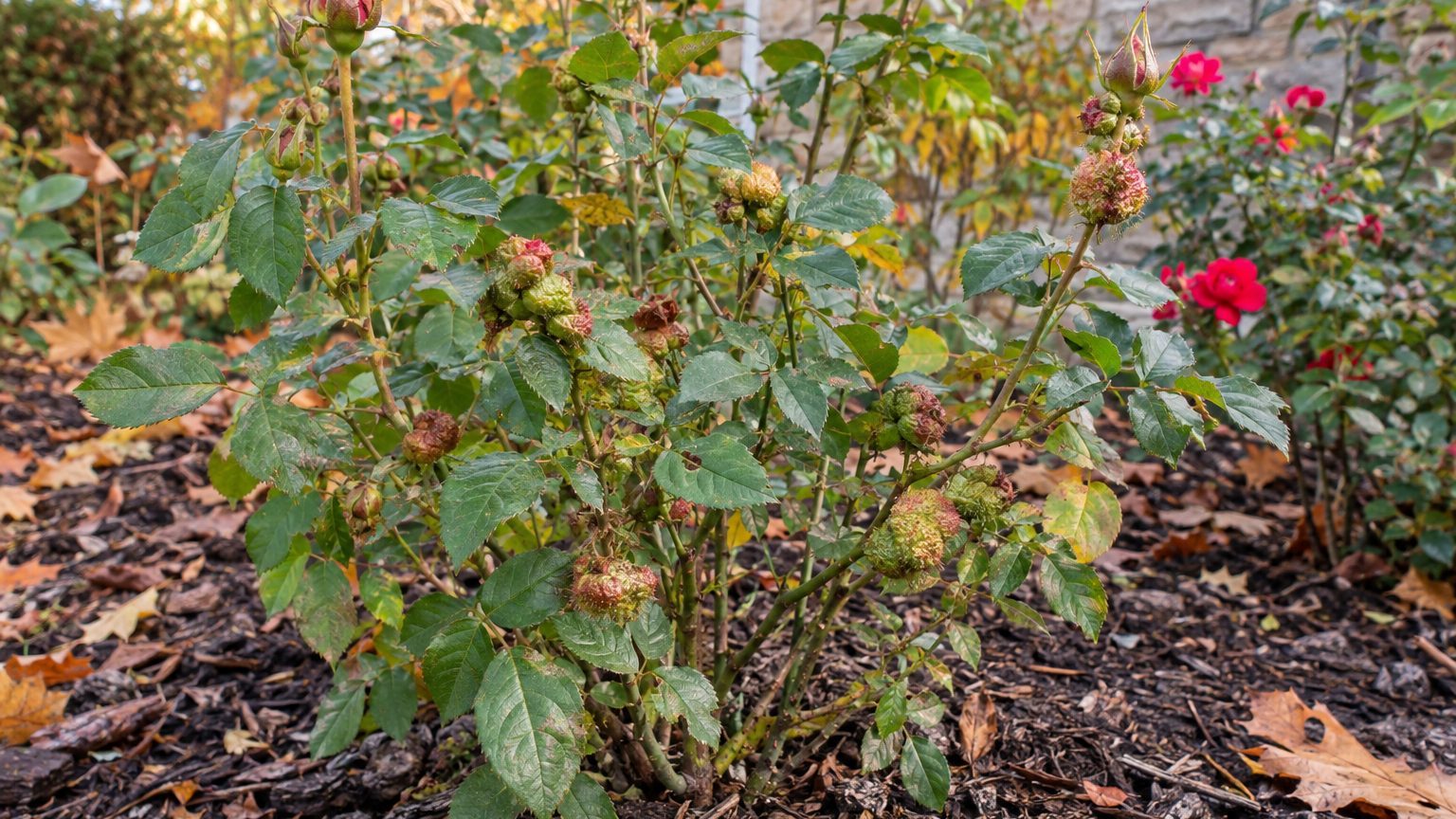
  • A sunken, often elliptical area on the cane, colored black, brown, dark red or purple, is the sign that sets this problem apart.
  • The color of the patch can run anywhere from light tan to dark purplish brown.
  • Small yellow, dark red or purple spots on the bark grow slowly and may circle part or all of the cane.
  • The bark over the canker may crack open, or the cane may snap at that point.
  • Everything above a fully ringed spot wilts, browns or stops growing, while the cane below stays green.

In Tennessee, purple-to-black lesions can show up on canes in fall, while in California infections that start in spring often stay hidden until fall or the next growing season.

Rose Canes Dying Back or Something Else?

Several rose problems brown or distort stems, and each calls for a different response. Matching the look of the stem with where it happens on the plant and what the tissue does sorts them out quickly.

Looks like How to tell them apart
Cane borer damage Canes brown and die back, and cutting a few inches at a time down the cane reveals the damaged wood before you reach clean, healthy tissue.
Rose rosette disease Mites carrying the virus feed on tender stems, and the disease moves through the whole plant, roots and shoots included, so it never stays on one cane.
Crown gall Wart-like growth shows at the base of the plant, not as a sunken patch farther up a cane.

Rose rosette has no treatment, and a plant with crown gall is removed and destroyed. A sunken, colored patch partway up a cane, with healthy green wood below it, points back to stem canker.

What Causes Rose Canes Dying Back, and Where It Is Worst

Various fungi cause the cankers, including Botryosphaeria, Leptosphaeria, Coniothyrium and Cryptosporella. They enter healthy canes through wounds, so a bush that has been cut, cracked or battered gives them a way in.

Those wounds come from winter injury, improper pruning, wind, hail damage, thorn abrasions, insects, rodents and flower cutting. Roses already weakened by black spot, poor nutrition or winter injury are the ones where cankers commonly take hold.

The fungus overwinters in infected canes and roots, and in leaf litter under the plants, which is why debris left beneath a bush keeps the problem alive.

How to Treat Rose Canes Dying Back

Control comes down to pruning out cankers as soon as you see them, since no fungicide is specifically available for stem canker.

  1. Find the canker on the cane, so that you know how far the dead or discolored wood reaches.
  2. Prune out the cankered wood as soon as you find it.
  3. Make each cut just above an outward-facing bud, so that new growth heads away from the center of the bush.
  4. Remove the cut canes and the fallen leaves beneath the plant, so that the fungus has nowhere to overwinter.
  5. Seal the cut end with wood glue, so that the fresh wound does not become a new entry point.
  6. Check the bush again later for new discolored spots, so that any new canker comes out while it is small.

Move fast, because a canker can grow until it surrounds the cane or reaches the crown, spreading to other canes or killing the plant.

How to Prevent Rose Canes Dying Back Coming Back

Prevention rests on keeping the plant healthy and keeping wounds to a minimum, and the timing follows the rose year.

  • Whenever you prune, make clean cuts above an outward-facing bud and seal them with glue, since wounds are a major way the fungus enters.
  • Keep black spot, powdery mildew, and insects under control, because weakened plants are more prone to canker.
  • Keep the bush adequately nourished so poor nutrition does not weaken it.
  • When cutting flowers, make clean cuts rather than tearing stems, since flower removal is one of the wounds the fungus uses.
  • Remove leaf litter beneath the plants, where the fungus can overwinter.

Check regularly for cracked or damaged canes, because wounds give the fungus a way in.

Where This Comes From

Canker control centers on pruning out diseased wood and limiting wounds.

Local rose-care timing can differ.

Common Questions

Will a Rose Recover After the Canes Die Back?

Often it can, when the canker is cut out early. If the canker reaches the crown, the fungus spreads into other canes and the whole plant may wilt and die.

Can You Stop Rose Cankers with a Spray?

No fungicide is specifically available to control stem canker, so pruning out the cankers is the main control.

Can You Replant a Rose Where Another One Died?

If the cause was crown gall, do not put another rose in that spot for several years.

Rose Buds Not Opening: Causes and How to Fix It

Rose Buds Not Opening: Causes and How to Fix It

Roses that form fat, healthy-looking buds and then stall can have several causes. Opening one affected bud is a quick way to check whether thrips are the problem. Dry soil, wet weather and fungus can also hold buds closed.

Rose Buds Not Opening: What You See

Rose Buds Not Opening on a rose

A useful clue is a bud that sits closed while its neighbors open, and the details around it can point to the cause.

  • A bud that stays shut or droops, and when you pull it apart, yellow or black insects run between the layers of petals.
  • Buds that look deformed or fuse together, which can follow weather that was unusually cold and wet while they were forming.
  • Buds that turn brown or black, wither, or drop before they are fully developed, often on new growth that looks distorted.
  • Spotted petals with woolly gray fuzz on decaying tissue, or blotched petals and drooping buds in warm weather.
  • Small holes or tunnels in the petals of a bud that will not open.

Check whether every bud is affected or only some, because that detail narrows the cause quickly.

Rose Buds Not Opening or Something Else?

Several problems leave a bud shut or ruined, and they call for different fixes. Look at the bud’s color and texture, then at where on the plant the damage sits and what the weather has been doing.

Looks like How to tell them apart
Rose midge damage Buds blacken, wither and fall, and shoots may be blind with no buds at all; tiny white maggots feed in the tips of new growth.
Botrytis blight Gray-brown fuzzy growth on decaying tissue with blotched petals, mostly in spring and fall in most of California, or in summer along cool, foggy coasts.
Beetle feeding Tunneling or holes in the petals, and no insects running between the petal layers when you open the bud.

Herbicide drift from your own spraying or a neighbor’s can also distort buds, so think about what has been applied near the bushes. Aphids and mites are worth a look too.

What Causes Rose Buds Not Opening, and Where It Is Worst

Thrips can interfere with a bud opening. These insects live inside the bud and can keep it from opening, and in some cases the plant gives no other obvious reason. Weather, thirst and fungus are the other common contributors.

Rose midge is a tiny fly whose females lay eggs in developing buds. The white larvae feed on the tissue, and there are several generations per year. The insect overwinters in cocoons in the soil, and once it infests a garden it can be hard to get rid of.

Dry conditions slow things down as well. Where a plant relies only on rainfall and precipitation runs short, blooms can develop and open slowly. Poor nutrition is not the usual reason buds stay closed. Buds that fail to open often come with poor-quality flowers on the ones that do.

How to Treat Rose Buds Not Opening

Work from the simplest check to the larger cleanup, and verify that any treatment is approved where you live.

  1. Open a bud, pulling it apart or cutting it in half, to see whether yellow or black insects are moving between the petals, so that you know whether thrips are the cause.
  2. Clip off the buds if insects are there, so that the plant sends up a fresh batch that will hopefully carry few or no thrips.
  3. Feel the soil several inches deep, and soak the root zone well when it is dry to the touch, so that rain-dependent plants are not slowed by drought.
  4. Remove and dispose of fallen leaves and petals, and prune out infested canes, buds, and flowers as part of fungal cleanup.
  5. Lower the humidity around the plant by adjusting irrigation, pruning and thinning ground cover, so that gray mold has less chance to spread.

In Maryland, remove old mulch in late winter and put down fresh mulch in early spring to target midges in the soil. After disbudding for thrips, watch the next batch of buds to see whether they open normally.

How to Prevent Rose Buds Not Opening Coming Back

Prevention follows the year, with the soil work done while midges are dormant and the watering and cleanup done during the growing season.

  • In Maryland, remove the mulch under and around the shrubs in late winter.
  • In early spring, lay fresh mulch to bury any remaining midges even deeper, again following Maryland advice.
  • Prune for open airflow and keep ground cover thin so humidity around the canes stays lower.
  • Through dry spells in the growing season, check the soil by hand and soak the root zone rather than waiting for buds to stall.
  • Remove fallen leaves and petals as part of fungal cleanup.

Inspect half-open buds regularly, since thrips can cause damage at that stage as well.

Where This Comes From

Local timing and treatment options vary. Confirm which treatments and dates fit your yard before you act.

Common Questions

Can You Cut Off Rose Buds That Will Not Open?

Yes. If insects are inside, clipping off the buds makes the plant produce another batch that will hopefully carry few or no thrips.

Do Buds Fail to Open Because of Poor Feeding?

A lack of nutrients is not the usual issue. Check for insects, dry soil and fungus first.

Can a Neighbor’s Spraying Affect Your Roses?

It can. Herbicide that drifts onto the bushes is one potential cause of distorted buds, so think about what has been applied nearby.

Thrips on Roses: How to Spot Them and Get Rid of Them

Thrips on Roses: How to Spot Them and Get Rid of Them

A rosebud that swells, colors up, and then refuses to open is the classic sign that thrips have been feeding inside it. These slender insects work out of sight in the folds of the petals, which is why the damage often shows up before the pest does. The good news is that the harm is mostly to looks.

Thrips: What You See

Thrips on a rose

Thrips are hard to catch in the act, so you read the bloom and the bud for clues, starting with the one that gives them away.

  • A bud that stays closed and never opens is the sign gardeners notice first, and heavily infested buds in particular may fail to open.
  • The outer petals carry brown edges, and the petal itself is often malformed, because the insect chews and sucks the juices.
  • Brown spots dot the petals of flowers that do open, and they show up best on lighter colored blooms.
  • Tiny brownish-yellow insects with fringed, feathery wings sit at the base of the petals, at less than 1/16 inch long.
  • Leaves can look distorted too, since thrips also feed in leaf buds.

In North Carolina, roses are most susceptible in June, so that is when to look closely.

Thrips or Something Else?

Petal browning and stalled buds have other causes, so a single clue is not enough to name thrips. Pair what you see with where it is happening, and add a quick test before you reach for any treatment.

Peel back the outer layer of petals on a healthy blossom and look at the base. Blowing lightly into a bloom makes thrips move, which makes them easier to spot.

Looks like How to tell them apart
Browned petal edges from a stressed or damaged bloom No tiny insects appear at the petal base when you peel back the first layer, and a light puff of breath produces no insect movement.
Distorted new leaves from sap feeders such as aphids Aphids cluster visibly on tips and buds, while thrips hide inside the bud and the petal base.

Unopened buds can also come from weather or watering stress, so check inside the bud for the narrow, fast-moving insects before you decide.

What Causes Thrips, and Where It Is Worst

Thrips are tiny flying insects, and the wind carries them into your garden on warm, sunny days. They arrive on their own, so a clean yard can still get them. Roses are one of several hosts, along with strawberries, bell pepper, and white clover.

Warm weather speeds them up. In North Carolina they reproduce through the year, with most of their 12 to 15 generations falling in the warmer months, and in summer the adult stage arrives in about 11 days. Populations can build quickly once the weather turns warm.

Other species feed on roses too. Chilli thrips are a nuisance to rose growers because their feeding damages both foliage and flowers. Various thrips species feed on roses, so do not rule them out without checking the buds.

How to Treat Thrips

Because the damage is cosmetic and will not harm the bush, start with the gentlest steps and decide how far to go based on what you see.

  1. Check a few buds as they start to form, so that you catch thrips before the blooms are ruined.
  2. Pick one healthy blossom and peel back the first layer of petals, looking at the base for tiny brown-to-orange insects.
  3. If thrips are present, decide whether the cosmetic damage warrants treatment.
  4. Leave beneficial insects alone, since some gardeners report thrips are eaten by the same insects that consume aphids.
  5. Decide whether a spray is worth it for you, because in Arizona gardeners growing show-quality blooms may spray buds before they open with an insecticide labeled for thrips on roses.

If you consider spraying, check which products are approved for roses where you live. Buying predatory mites is not a reliable fix, since they typically do not establish well on roses. Smooth rose leaves lack the protective structures underneath that the mites need for shelter. Interestingly, when pepper plants were added as a home for the mites, thrips damage to the roses decreased significantly.

How to Prevent Thrips Coming Back

Thrips arrive by wind, so you cannot keep them out, but timing your checks and cleanup shrinks the damage.

  • As flower buds begin to form, start looking inside a few of them regularly, because that is when thrips move in.
  • Keep checking buds through the warmer months, when most thrips generations occur.
  • In June in North Carolina, when roses are most susceptible, check lighter colored blooms first because browning shows there.

Where This Comes From

Local timing and approved treatments vary.

Common Questions

Will Thrips Kill a Rose Bush?

No. The damage is cosmetic and will not harm the bush, though it can spoil the look of the blooms.

Why Do Rosebuds Turn Brown and Not Open?

Thrips chewing and sucking the petals cause brown edges and malformed petals, and heavily infested buds may fail to open. Check inside the bud for tiny insects to confirm.

How Big Are Thrips on Roses?

They measure less than 1/16 inch and are barely visible without a magnifying glass. Blowing lightly into a bloom makes them move so you can spot them.

Spider Mites on Roses: How to Spot Them and Get Rid of Them

Spider Mites on Roses: How to Spot Them and Get Rid of Them

Rose leaves that turn gray or speckled in hot, dry weather, often with fine webbing underneath, usually point to spider mites. These pests feed on the underside of the leaf, so the damage shows from above before the culprit is easy to find. Washing the plant is a useful first move, and regular watering helps keep the rose from becoming drought-stressed.

Spider Mites: What You See

Spider Mites on a rose

The first sign is on the leaf surface, and the mites themselves are harder to spot.

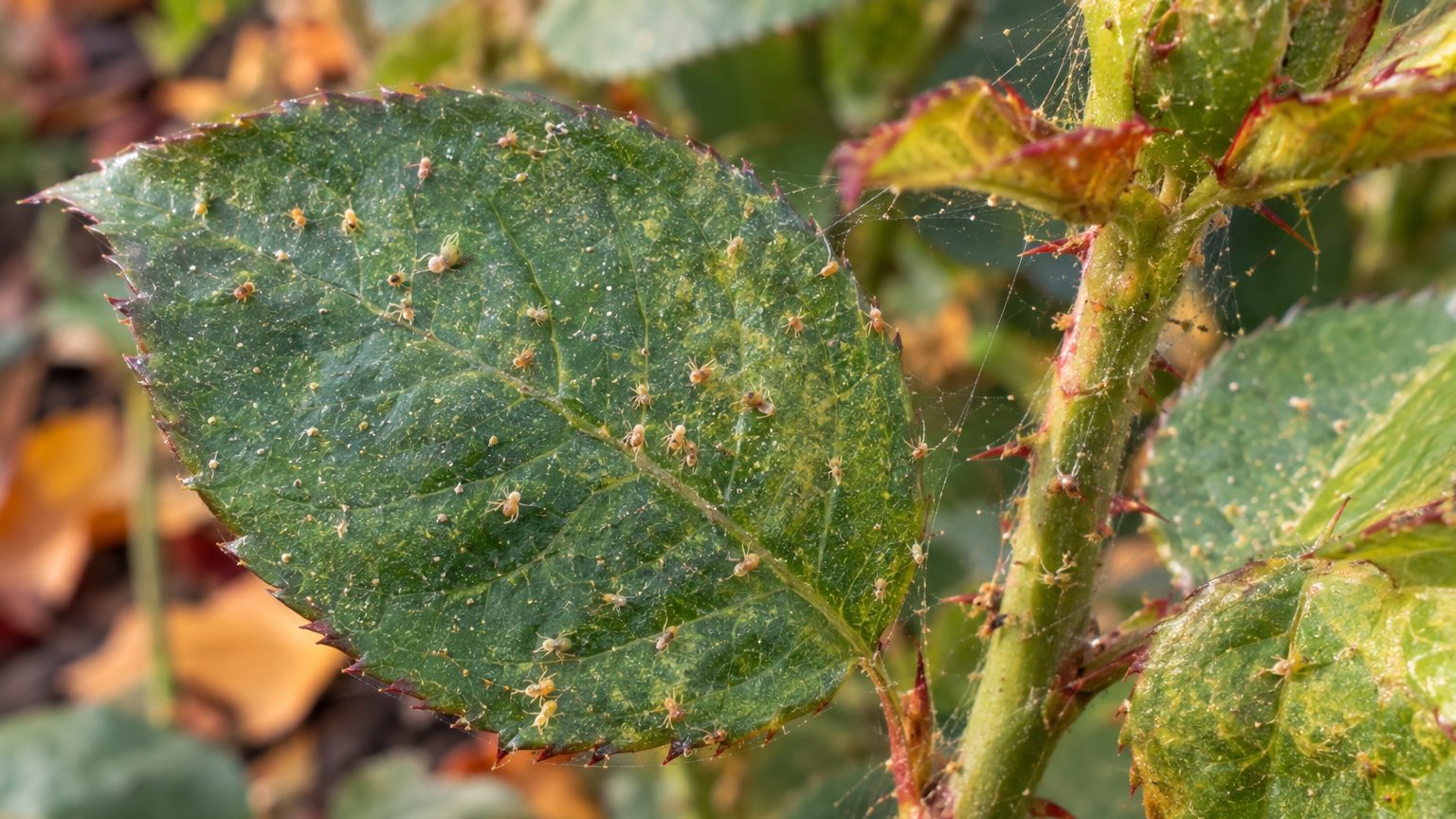
  • Tiny pale spots crowd together on the leaf, a pattern called stippling, and the leaf can look gray or finely speckled.
  • Webbing appears on the underside of the foliage, though some species produce none.
  • Lower leaves turn a fuzzy yellow with red specks, and those specks are the mites.
  • Each mite is about the size of the period at the end of this sentence, so a magnifier helps.
  • In California, mites usually appear first on the undersides of leaves and may move to the upper surfaces as their numbers grow.
  • Shaken over a sheet of white paper, the leaves drop mites that can be seen scurrying around.

In Arizona, hot and dry weather from May through September is the time to look.

Spider Mites or Something Else?

Speckled, off-color leaves have more than one cause, and a speck on the leaf is not enough to name the culprit. Check where the speckling sits and whether anything moves when you shake a leaf over white paper.

Southern red mites are the closest lookalike on roses, and they follow a different seasonal pattern.

Looks like How to tell them apart
Southern red mites, with the same speckled leaves In South Carolina, southern red mite numbers climb in cool spring and fall weather and drop in summer, while two-spotted spider mites build in hot, dry spells.

Powdery mildew is a disease, not a mite. It also troubles roses, especially in greenhouses, but nothing scurries across the paper when you shake a mildewed leaf.

What Causes Spider Mites, and Where It Is Worst

Mites settle where conditions suit them. Dry, dusty air favors them, and females lay more eggs and develop faster at lower relative humidity. A rose that is short of water is more susceptible, which is why a dry summer spell hits so hard.

Warmth speeds the whole cycle. Development from egg to adult shortens as temperatures climb:

  • At 54F, it takes 40 days.
  • At 70F, it drops to 14 days.
  • At 86F, it is only 7 days.

Hot, dry weather is the usual trigger. In Arizona the watch runs from May through September, and in South Carolina two-spotted spider mites flare in hot, dry spells while southern red mites take over in cool spring and fall weather. Roses are among their favored hosts, and a low-level mite population may do no harm.

How to Treat Spider Mites

Confirm the mites first, then start with water, which is the gentlest tool you have.

  1. Shake leaves over white paper, so that you know you are dealing with moving mites and not another leaf problem.
  2. Decide whether to treat at all, since a low-level population may not harm the rose.
  3. Wash the plant with a strong stream of water, aiming at the undersides of the leaves, because that is where the mites feed.
  4. Try soapy water if plain water does not do enough, since in Arizona it may be more effective.
  5. Repeat the washing regularly, because mites that survive keep laying eggs and the numbers rebound.
  6. If washing is not enough, get local advice about treatments registered where you live.

Watch how the numbers behave after any treatment. In North Carolina trials, a high kill that declined within 2 or 3 weeks pointed to surviving mites or eggs, while a high kill soon after treatment meant all stages were hit.

How to Prevent Spider Mites Coming Back

Prevention follows the season, because mites build with heat and dryness and a roughly timed routine keeps them in check.

  • Look at the undersides of the lower leaves, where mites usually show up first.
  • Before the hot, dry stretch, water the roses well to reduce drought stress.
  • Through the hot months (May through September in Arizona), rinse the foliage regularly, which also washes off the dust mites favor.
  • In cool spring and fall weather in South Carolina, keep checking, since southern red mites peak then.

Regular checks catch a problem while it can still be washed away.

Where This Comes From

Some timing and treatment details apply only in the states named above. Timing and treatment rules vary by place, so seek local advice before acting.

Common Questions

Can Spider Mites Harm a Rose?

They can. Mites suck the contents of leaf cells and remove chloroplasts, which weakens the leaf’s ability to turn sunlight into food. Heavy feeding can dry leaves up and drop them, as reported in California.

Do Spider Mites Always Leave Webbing?

No. Some species produce webbing and others do not, so a rose can be infested without any silk. Stippling and the white-paper shake test are steadier signs.

What Other Plants Do Spider Mites Favor?

Roses share the list with bee balm, butterfly bush, catmint, dahlia, marigolds, Russian sage, verbena and New Guinea impatiens. Mites are less common on woody trees and shrubs than on semi-woody shrubs like roses, so plants beside your roses are worth a look.

Roseslugs (sawfly larvae): How to Spot Them and Get Rid of Them

Roseslugs (sawfly larvae): How to Spot Them and Get Rid of Them

In Oregon, rose leaves held up to the light in late spring can glow as if someone had scraped off the green with a fingernail. Those pale, papery patches usually mean roseslugs, small larvae that feed on the underside of the leaf.

Roseslugs (sawfly larvae): What You See

Roseslugs (sawfly larvae) on a rose

The damage shows up before the pest does, so start with the leaf and then turn it over.

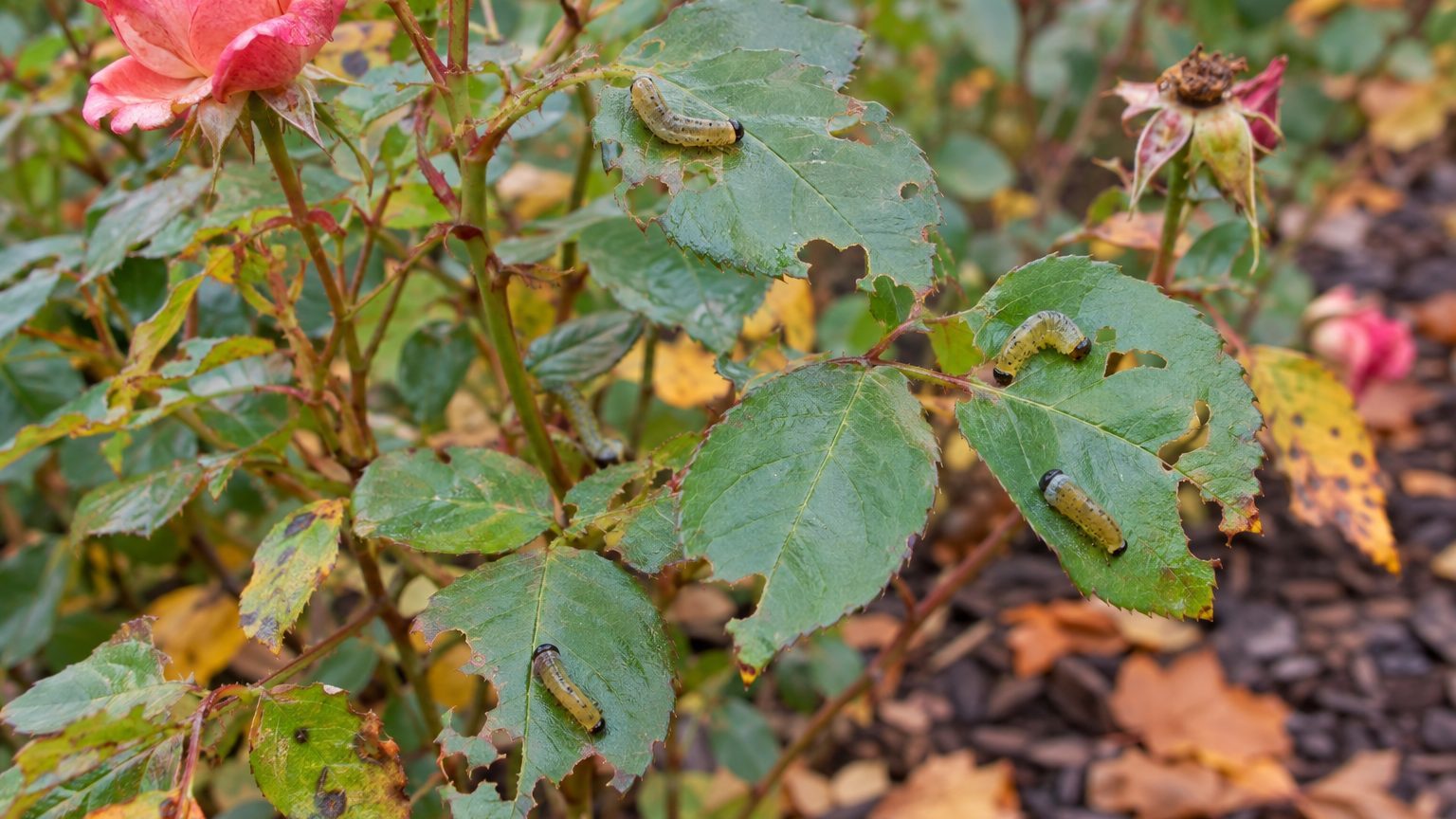
  • Windowpane patches, small areas of thin, papery leaf tissue you can nearly see through, are the sign that sets roseslugs apart from other leaf chewers.
  • Held up to the sun, an affected leaf lets light shine through the scraped areas.
  • Small, wormy, slug-like larvae sit beneath the leaves, and they are easy to miss.
  • Larvae of the bristly kind are about 5/8″ long, greenish-white, with long, stout bristles.
  • In heavy infestations, leaves skeletonized down to the veins can turn brown and curl.
  • In Maryland, the greenish-yellow larvae are worth looking for in May and June, and in Kentucky the first damage appears in April.

Early damage can look like tiny clear patches, so check the undersides before the leaf looks ragged.

Roseslugs (sawfly larvae) or Something Else?

Several leaf problems on roses leave ragged or discolored foliage, and a quick look is not enough to separate them. Pair what the leaf looks like with what you find on its underside.

Black spot and powdery mildew are diseases, while aphids are sap-feeding insects, so none of them scrape leaves into skeletons.

Looks like How to tell them apart
Black spot Dark blotches on the leaf surface, with no clear papery windows and no larvae underneath
Powdery mildew A dusty coating on the leaf, and the tissue stays intact rather than thinning to see-through patches
Aphids Clusters of small sap feeders on new growth, with no veins left behind after feeding

Roseslug damage is the one that leaves the veins standing and the tissue between them thin as paper. If you see that pattern together with small larvae below, you have sawflies.

What Causes Roseslugs (sawfly larvae), and Where It Is Worst

These are insect larvae, not true slugs, and they belong to the sawflies. An adult female lays eggs on rose stems and leaves, and the eggs hatch into the little larvae that do all of the feeding. Bristly roseslug females insert eggs into the leaf stalks in three rows.

Once the tiny larvae hatch, they move to the underside of the leaf and feed on its surface layer. Fully grown larvae drop from the plant and pupate in a cocoon in the soil.

Timing depends on where you garden. In Oregon, the common roseslug skeletonizes leaves in late spring and early summer. The common roseslug has one generation and the curled roseslug two, so the damage in Ohio was fleeting and roses recovered without spraying even with high populations. Kentucky and Maryland describe a longer season, with activity into the fall in Maryland. Roses of every type are fair game.

How to Treat Roseslugs (sawfly larvae)

Treatment starts with finding the larvae, since they hide under the leaves.

  1. Turn leaves over and look underneath regularly, so that you catch the larvae while the damage is still small patches.
  2. Pick off the larvae you find by hand.
  3. Check badly skeletonized leaves and remove the larvae you find.
  4. Keep watching, because there may be several generations a year in some places and new larvae can follow the first group.
  5. Get local advice before using any spray, so that you choose a product approved where you live.

Where only one or two generations occur, as in Ohio, roses have recovered on their own without spraying, so a light infestation is no reason to rush.

How to Prevent Roseslugs (sawfly larvae) Coming Back

Prevention follows the insect’s year: eggs on the plant, larvae on the leaf, cocoons in the soil.

  • In Kentucky, start checking leaf undersides in April, when damage may first appear.
  • In Oregon and Maryland, look closely in May and June for early feeding and larvae.
  • Through summer, keep monitoring, since later generations may follow in places with more than one.
  • In the fall, keep looking where roseslugs stay active, as they do in Maryland.
  • Keep checking leaf undersides so you can remove larvae before they drop to the soil to pupate.

Roseslugs can also be reported on strawberries and raspberries, so check those plants nearby too.

Where This Comes From

The timing here varies among Oregon, Ohio, Kentucky and Maryland. Timing differs from state to state, so seek local advice about dates and approved treatments.

Common Questions

Are Roseslugs Actually Slugs?

No. They are insect larvae in the sawfly group, not slugs.

Will Roseslugs Kill a Rose?

In Ohio, roses recovered without spraying even when populations were high because the damage was brief in spring.

Do Roseslugs Prefer Certain Roses?

They do not discriminate on the type of rose they feed on, so any rose in the yard can be affected.

Rose Scale on Roses: How to Spot Them and Get Rid of Them

Rose Scale on Roses: How to Spot Them and Get Rid of Them

Run a hand along a bare rose cane in winter and you may find small gray-white crusts that look like flecks of old paint. Those crusts are rose scale, an insect that spends nearly its whole life stuck in place, feeding on sap. Knowing what the crusts look like, and when the insect moves, tells you when to act.

Rose Scale: What You See

Rose Scale on Roses: How to Spot Them and Get Rid of Them

Look on the canes first, since that is where this insect settles and feeds.

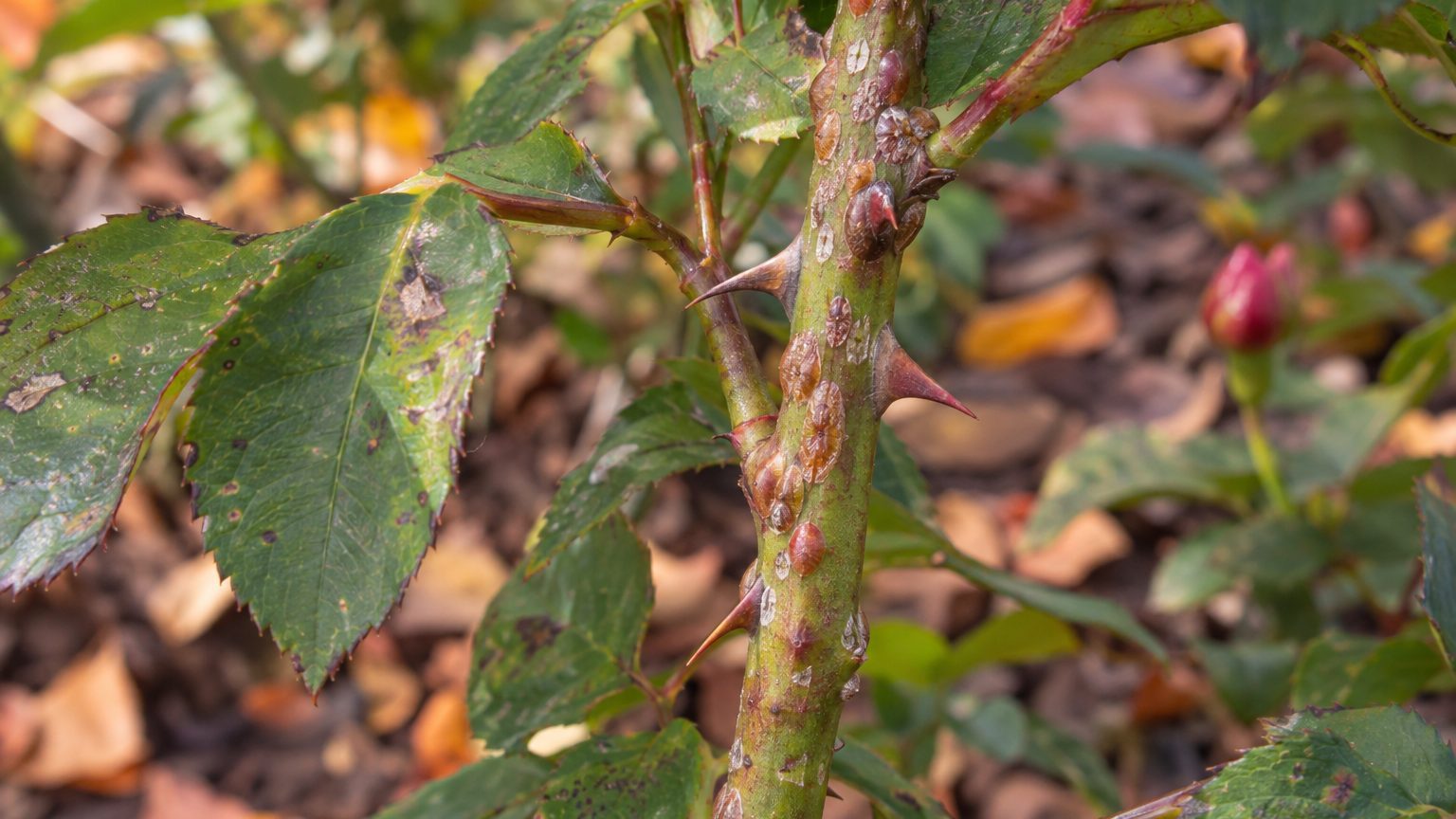
  • Round, gray to white crusts on the canes are the females, each about 1/16 inch long.
  • Much smaller, narrow white shapes among them are the males, which are elongate rather than round.
  • In Virginia, orangish crawlers wander over the bark after temperatures warm in spring, before they settle and begin to build a covering.
  • Leaves that yellow or wilt, and growth that looks stunted, show up when the canes are heavily coated.
  • A sticky film on the lower leaves, often turning black with sooty mold, comes from the honeydew the insects leave behind.

A cane that looks crusty and a plant that looks tired on the same bush point to scale rather than a passing stress.

Rose Scale or Something Else?

Several rose problems leave marks on leaves and stems that get blamed on scale. A quick look at the canes and the leaves together sorts most of them out.

Sooty mold and plain plant stress are the usual mix-ups, and both can sit on a bush that has scale as well.

Looks like How to tell them apart
Sooty mold, a black film on lower leaves Scale is behind it when the leaves feel sticky and ants are around, and gray-white crusts sit on the canes above.
Yellowing or wilting leaves from plain stress Scale is likely when the canes carry round crusts and the stunting follows the crusty stems rather than the whole plant.

In California, San Jose scale is a different armored scale that can also attack roses.

What Causes Rose Scale, and Where It Is Worst

The cause is the insect’s own life cycle. Females lay eggs under the waxy covering of the mother, and the eggs overwinter there, protected on the cane. In Virginia, the crawlers roam freely after temperatures warm in spring, then settle to feed.

Once a crawler settles, it loses its legs and antennae and stays put. Older nymphs begin secreting the waxy cover that makes the insect hard to reach. Adult males are tiny and winged, so they fly in search of females, while the females stay under their scales until they lay eggs and die.

Rose scale is most active in the warmer months. In Virginia, a second generation may appear in August when conditions favor the population. Wherever you garden, check a rose with crusty canes for scale.

How to Treat Rose Scale

Treatment follows the insect’s calendar, because the crawler stage is the one time the insect is mobile and unprotected.

  1. Inspect the canes closely in winter, when the leaves are gone, so that every crusty stem is easy to find.
  2. In California, cut back and destroy infested canes in winter, which removes eggs sheltered under the covering.
  3. Judge the population on the canes that remain. An oil treatment is suggested on remaining infested canes only when the scale population is high.
  4. If the population stays high, get local advice before choosing a treatment.
  5. In Virginia, watch the canes after temperatures warm in spring, when orangish crawlers wander before settling.
  6. Recheck in August, because a second generation may occur in Virginia under good conditions for scale.

Armored scales sit under a hard cover once they settle, so a late treatment reaches less than an early one. Pruned canes should leave the yard rather than sit in a pile near the roses.

How to Prevent Rose Scale Coming Back

Prevention is mostly looking at the right time, since this insect shows itself on the canes before it harms the leaves.

  • After leaf drop, check the bare canes for gray-white crusts, because the eggs overwinter under the mother’s covering.
  • In Virginia, look for unprotected orangish crawlers moving across the bark after temperatures warm in spring.
  • Through the warmer months, glance at the canes regularly, because rose scale is most active then.
  • In August, if you garden in Virginia, check again for a second generation on canes that looked clean earlier.
  • When lower leaves turn sticky or black at any point in the season, trace the film up to the canes and look for crusts.

A short look at the canes each time you walk past the bed catches the first crusts before they spread.

Where This Comes From

The timing varies by place, so use the state-specific guidance above only where it applies. For dates and approved products that fit your yard, seek local advice.

Common Questions

Can Rose Scale Kill a Rose Bush?

It can. In Iowa, heavy infestations are described as causing death of all or part of the plant, and in California, high numbers may cause cane decline or dieback.

Do Rose Scale Insects Move from Plant to Plant?

The crawlers wander freely over the bush before settling, and adult males are winged and can fly in search of females. The adult females stay put under their scales.

What Do Rose Scale Eggs Look Like?

The eggs are reddish-orange, and they sit hidden under the waxy covering of the mother. This is how the insect gets through winter on the cane.

Rose Midge on Roses: How to Spot Them and Get Rid of Them

Rose Midge on Roses: How to Spot Them and Get Rid of Them

Rose buds that turn black at the tip and never open are a sign worth checking on before you blame the weather. Tiny flies called rose midges lay eggs in new growth, and their larvae do the damage from inside. The pest is uncommon, but where it settles, it can wreck a flush of bloom.

Rose Midge: What You See

Rose Midge on a rose

Damage on new growth is often easier to spot than the insect, so start with the buds and shoot tips.

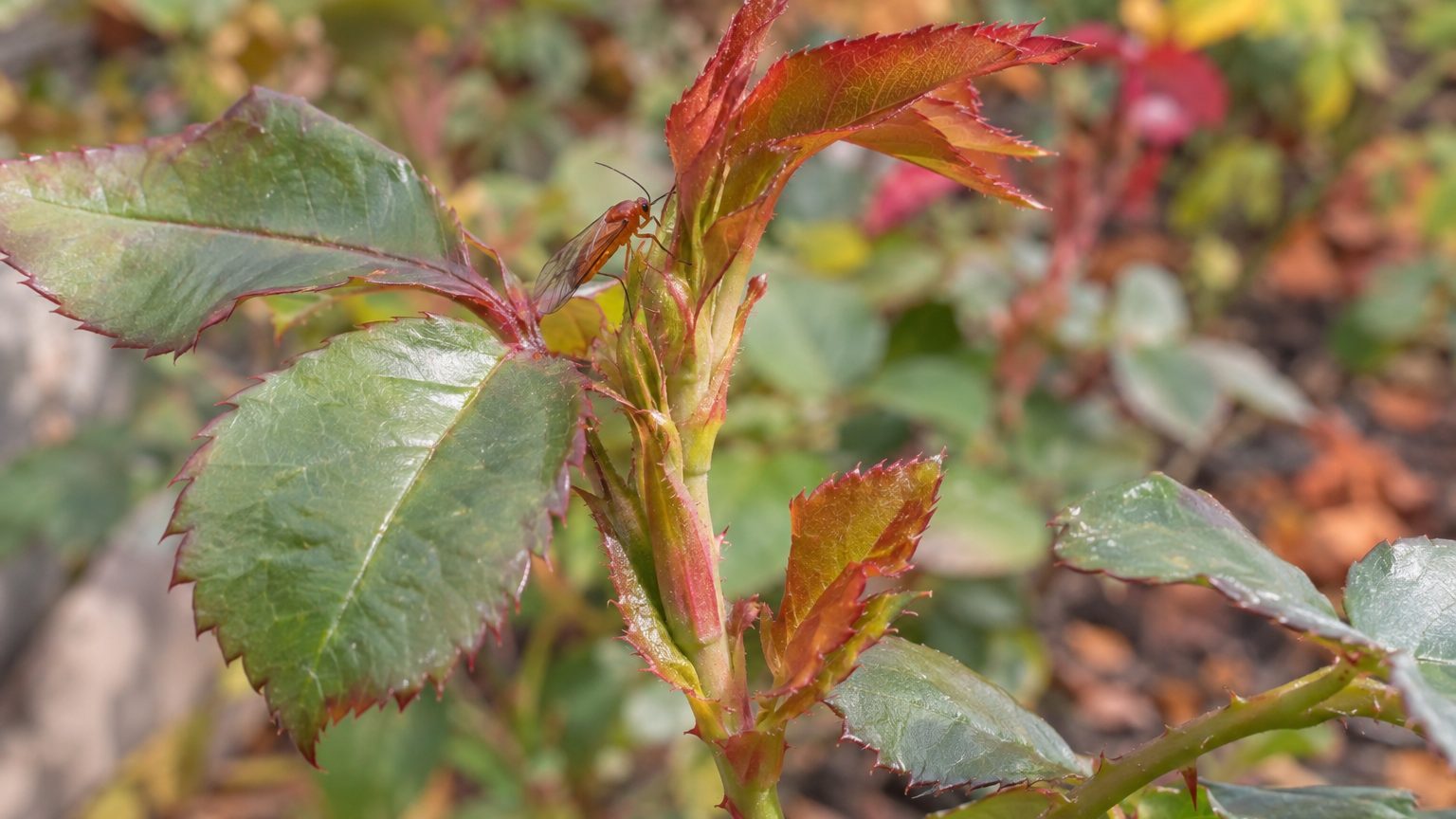
  • Flower buds come out distorted, bent or misshapen, and some never open at all.
  • Shoot tips and bud tips turn black, then wither and die back.
  • Injured buds may turn brown or black and drop off before they are fully formed.
  • Inside the sepals and the tight new growth, tiny white maggots feed, and in California they grow to only 1/16 inch long.
  • The adults are very tiny flies, easy to miss around the plant.

Damage usually appears in July in Illinois, while Oregon and North Carolina report other local timing patterns.

Rose Midge or Something Else?

Blackened, deformed buds can have other causes, so look at the larvae and the pattern of damage together. A hand lens helps, since the maggots are so small.

Rose curculio can look similar because its larvae resemble those of the rose midge.

Looks like How to tell them apart
Rose curculio damage Rose midge larvae are tiny white maggots, but appearance alone may not separate them from rose curculio larvae.
Buds that fail to form for other reasons Deformed buds alone prove nothing. Check whether the tips are also blackening and withering, and whether maggots are inside the sepals.

Rose midge damages developing buds and plant terminals.

What Causes Rose Midge, and Where It Is Worst

The cause is a tiny fly, Dasineura rhodophaga. In North Carolina, adults emerge from pupae in the soil early in spring, about when roses begin new growth. Females lay eggs inside the sepals of new flower and leaf buds, and the maggots that hatch feed there.

Several generations can occur in a year, since 2 to 4 generations can occur annually. Damage tends to increase through the season.

The pest is established in Oregon and Washington, and it can be severe there. In Oregon, sampling in 2004 found two peaks of damage, in late June and early July and again in late August and early September. North Carolina reports a similar pattern, with peaks in late June and late August. Maryland describes it as uncommon but possible in rose plantings. In California it was found in a Petaluma nursery in August 1996 and has not been reported since, so it is rarely a problem there.

How to Treat Rose Midge

Treatment starts with removing the infested tissue, because the maggots live inside it.

  1. Inspect new buds and shoot tips for blackened tissue and distortion.
  2. Prune out blackened, distorted buds and withered tips, so that the maggots inside are removed from the plant.
  3. Damage tends to increase through the season.
  4. If the problem persists, insecticide may be needed.

Control includes pruning out damaged buds. If the problem persists after pruning, insecticide may be needed.

How to Prevent Rose Midge Coming Back

Rose midges emerge from the soil about when roses start new growth.

  • In North Carolina, begin checking buds and shoot tips in early spring as new growth starts.
  • Look closely at new shoots in late June in North Carolina and in late June and early July in Oregon.
  • Check for another peak in late August in North Carolina and in late August and early September in Oregon.
  • Whenever you buy new roses, inspect the plants for blackened tips and distorted buds before planting, since the pest can arrive on nursery stock.

Where This Comes From

Common Questions

Can Rose Midge Kill a Rose Bush?

Rose midge damages buds and shoot tips, causing blackened tissue and tip abortion. Repeated damage can still cost you bloom.

Where Do Rose Midges Spend the Winter?

Pupation happens in the soil; in North Carolina, the midges emerge early in spring, about when roses start new growth.

Should You Worry About Rose Midge in California?

It was found in a Petaluma nursery in August 1996 and has not been reported in California since, so it is rarely a pest there.

Rose Leafhopper on Roses: How to Spot Them and Get Rid of Them

Rose Leafhopper on Roses: How to Spot Them and Get Rid of Them

Pale, speckled rose leaves, with tiny wedge-shaped insects flicking away when a cane is touched, usually point to rose leafhoppers. They feed on leaf undersides and lay eggs in the canes, while the wounds they leave can admit fungi that cause stem canker.

Rose Leafhopper: What You See

Rose Leafhopper on a rose

Start with the insect itself, because the leaf damage alone can fool you.

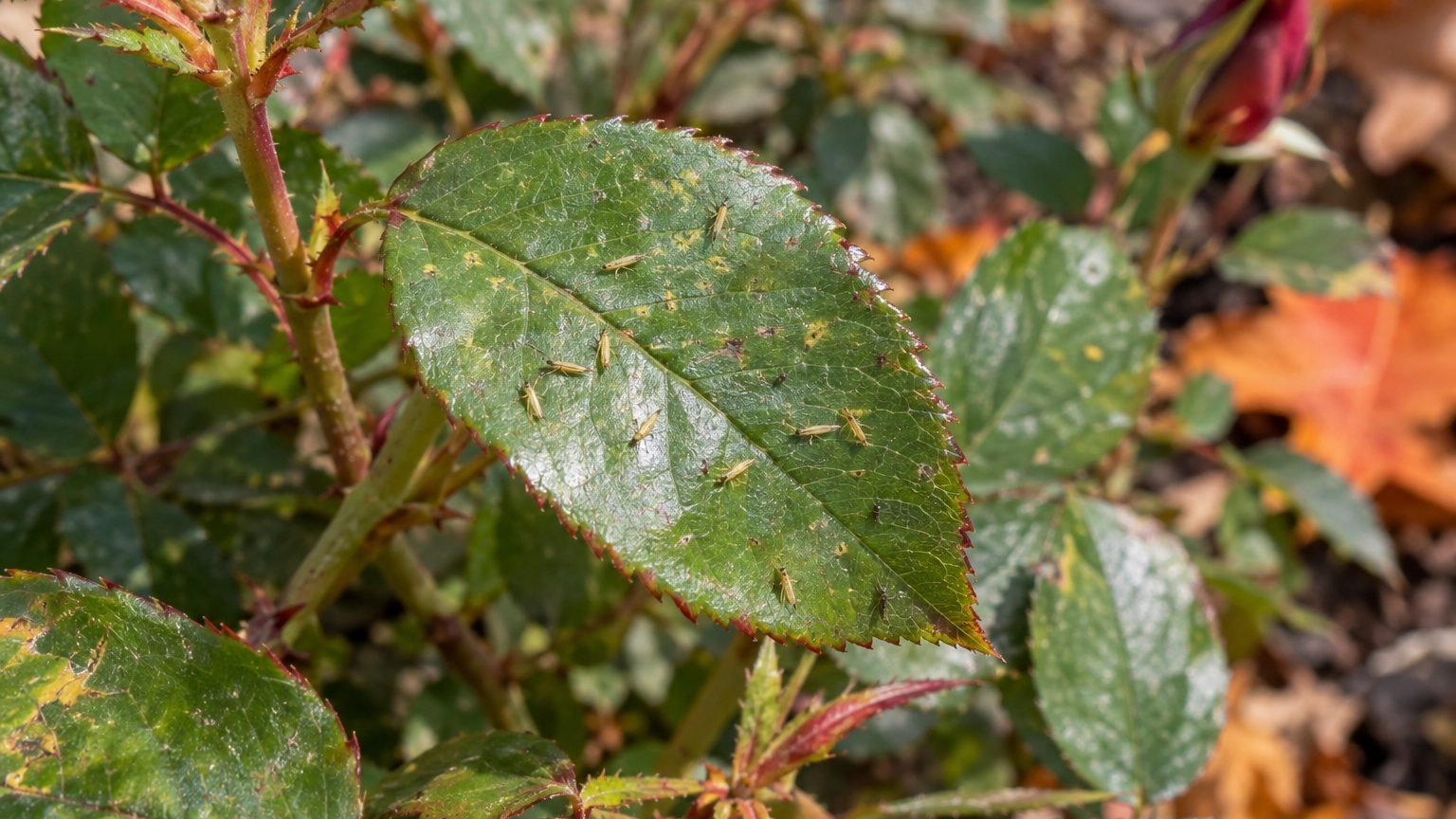
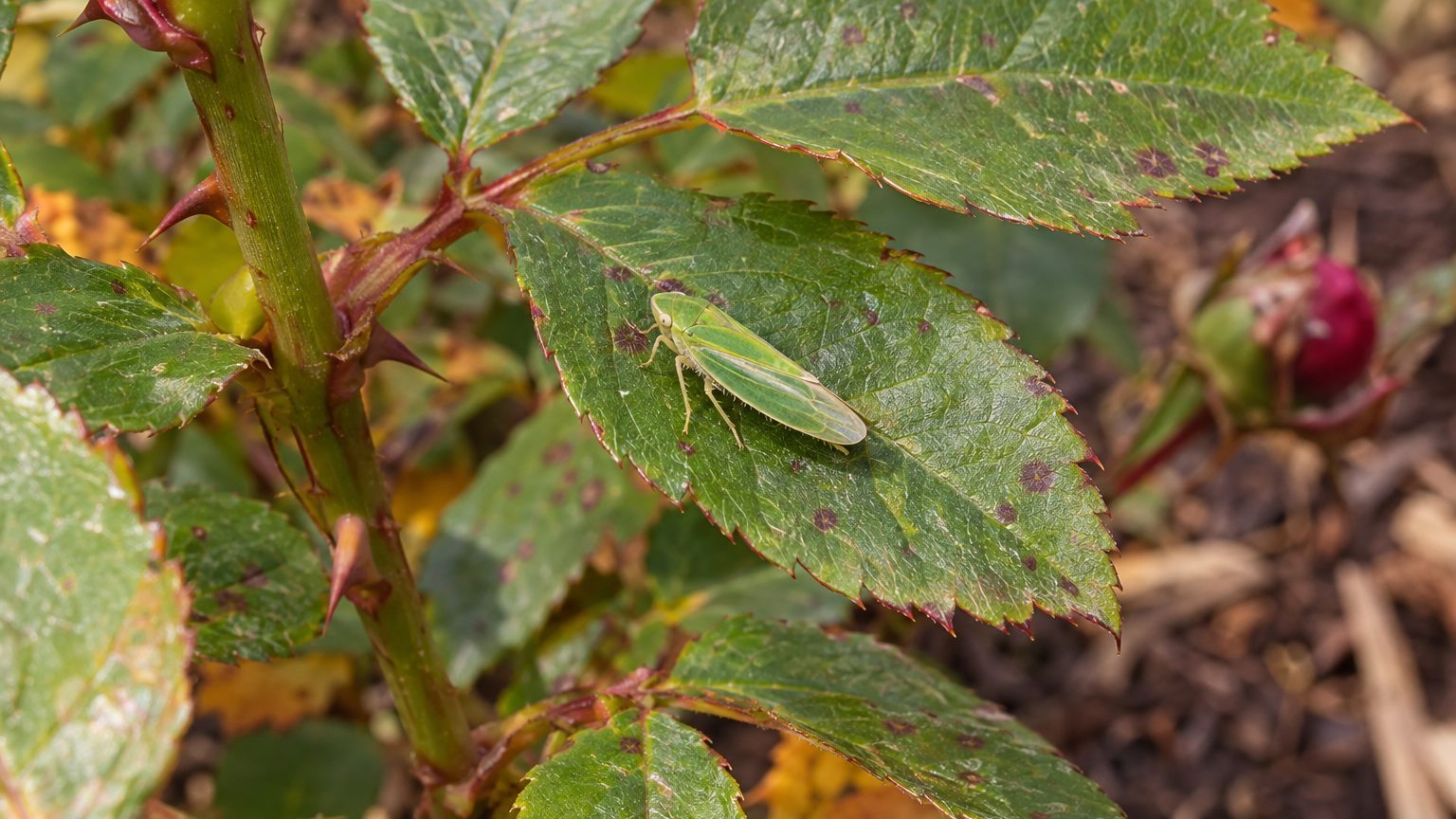
  • The adults are wedge-shaped and between ¼- to ½-inch long, and they hop or fly away quickly when the plant is disturbed.
  • The nymphs are white with red eyes, and older ones show rows of dark spots on the back of the thorax.
  • Leaves develop white or pale blotches that look like spider mite stippling, only larger.
  • Cast skins cling to the underside of the leaves, where the feeding happens.
  • Dark, purple, pimple-like spots on the bark mark the places where eggs have been laid.

Heavy feeding can leave leaves browning and dropping, and a sticky honeydew film may grow sooty mold when numbers climb.

Rose Leafhopper or Something Else?

Stippled, blotchy leaves have several culprits, and a single clue is not enough to name one. Look at the underside of the leaf and at the timing before you reach for any treatment.

Leafhoppers are not common problems in most areas, so find the insects themselves before deciding that is what you have.

Looks like How to tell them apart
Spider mites Stippling is smaller than leafhopper damage, and webbing shows on the leaf underside, while leafhoppers leave cast skins and no webbing.
Roseslug sawfly Larvae up to ¾ inches long eat the soft leaf tissue and leave the veins, and damage shows in May and June in Wisconsin.
White apple leafhopper Adults match in size and color, but this one has two generations a year, while rose leafhopper has three.

Sawfly damage looks like lace, with the veins left standing, which is quite different from the pale flecks of a leafhopper. The adults are the same size and color, and differences in their genitalia distinguish rose leafhoppers from white apple leafhoppers.

What Causes Rose Leafhopper, and Where It Is Worst

The cause is a cycle that starts on the cane. In South Carolina, the adult female lays eggs inside the bark of rose canes in the fall, and in spring the young nymphs emerge from them. That is the pattern described for the species.

Rose is the only plant this leafhopper appears to overwinter on, as described for Washington. During summer generations it can move to other hosts, and the nymphs also feed on dogwood, hawthorn, plum and oak.

Wounds from egg laying and from emerging nymphs can let stem canker fungi in, and stem canker can result in plant death.

How to Treat Rose Leafhopper

Plants tolerate moderate stippling, so begin with the gentlest tools and step up only if the infestation is severe.

  1. Check the leaf undersides for insects and cast skins, so that you treat leafhoppers and not a mite problem that looks alike.
  2. Knock the insects off with a water spray, since adults and nymphs feed on the undersides.
  3. Use an insecticidal soap on the nymphs if the infestation is severe, because the immature stage is the one this treatment is aimed at.
  4. Inspect the canes for dark, pimple-like spots that indicate the presence of eggs.
  5. Look at the bark for egg-laying wounds, which can provide openings for fungi that cause stem canker.

If sprays are not enough, a garden store product must list leafhoppers on the label and be clearly labeled for roses. Follow the label directions carefully.

How to Prevent Rose Leafhopper Coming Back

In South Carolina, females lay eggs in rose canes in fall and young nymphs emerge in spring.

  • In South Carolina, females deposit eggs in the bark in fall; dark, purple spots indicate their presence.
  • In South Carolina, watch for wingless nymphs as they emerge from the cane in spring.
  • Cast skins on leaf undersides are a useful sign that leafhoppers are present.
  • Rinse the leaf undersides with water when you see insects feeding there.
  • Nymphs can also feed on dogwood, hawthorn, plum and oak.

Where This Comes From

Common Questions

Do Rose Leafhoppers Kill Roses?

Plants can tolerate moderate stippling. Egg-laying and emergence wounds can admit fungi that cause stem canker, which can result in plant death.

Why Are There Sticky Leaves and Black Film on My Roses?

Leafhoppers secrete honeydew, and with enough of them, sooty mold fungus grows on it. Look under the leaves for the insects or cast skins to confirm the cause.

Can Rose Leafhoppers Live on Other Plants?

Yes. In Washington, the species appears to overwinter only on rose but can use other plants in summer. The nymphs also feed on dogwood, hawthorn, plum and oak.

The almanac, state by state. Every date on this site comes from a state’s own frost facts and its extension service’s calendar — and says where it comes from.