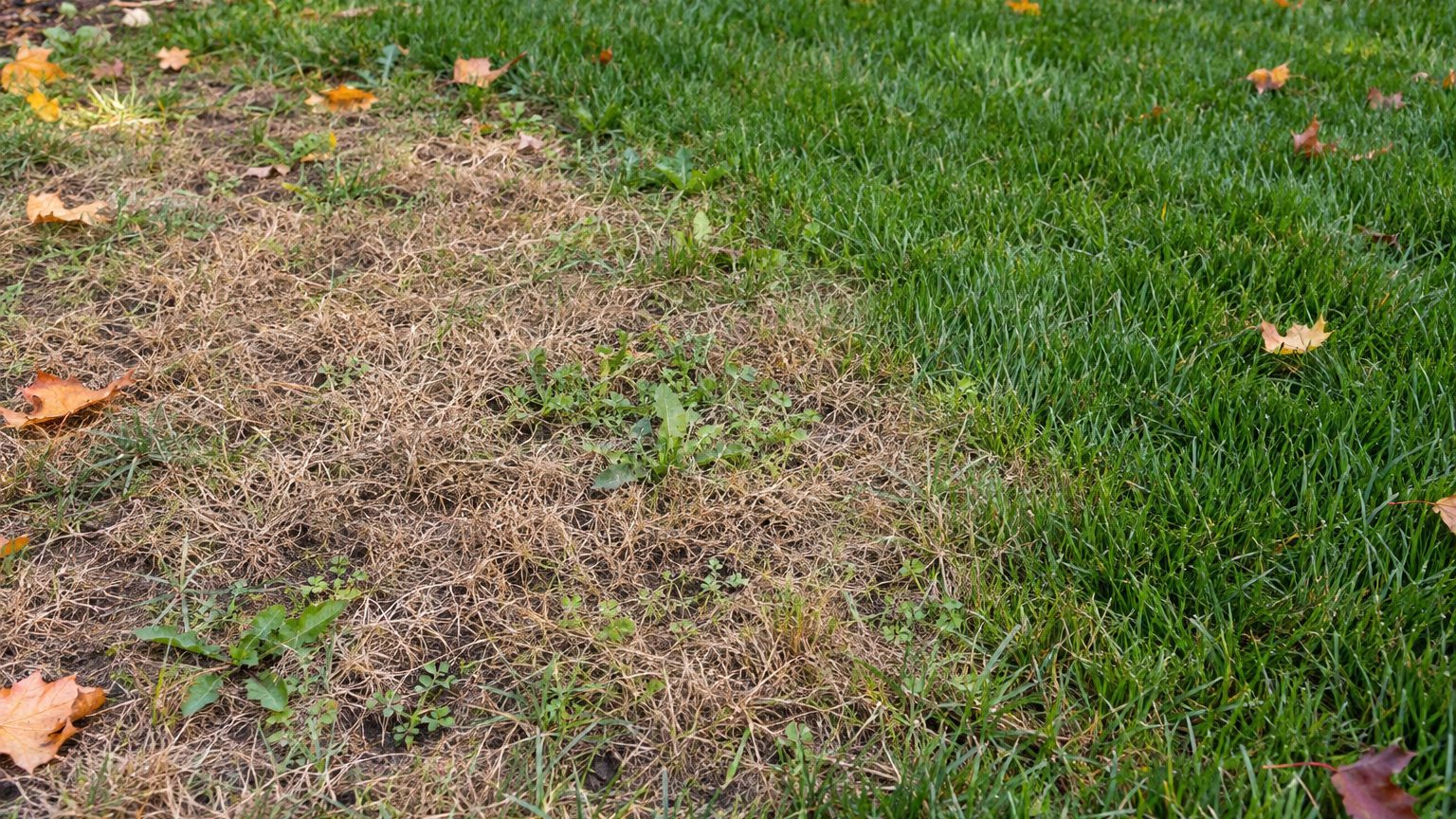
Pale, matted patches after the snow melts, crabgrass fingers in the driveway edge, a lawn gone straw-colored in August: Ontario yards show the same handful of troubles year after year. Most trace back to a few causes, and most can be fixed with timing and habits rather than a spray, since the province limits what you can apply to turf.
Lawn Pests and Diseases in Ontario

Snow Mold

Once the snow melts, circles of flattened, grayish or pinkish grass may appear where drifts sat longest. The blades are stuck together in a crust. Most of the time the grass underneath recovers. Rake the patches gently to let air in and dry the surface, then wait for growth before deciding on seed.
Dandelions and Other Broadleaf Weeds

Spring brings dandelions, plantain and clover into thin turf, where they take the gaps. Ontario’s Cosmetic Pesticides Ban, in force since 2009, keeps most weed killers and insecticides off home lawns, so only products on the province’s allowable list may be used. That makes thick grass your main tool, along with pulling weeds by hand when the soil is damp.
Crabgrass
Crabgrass is a coarse, pale green annual that sprawls flat from a center point and turns purple, then dies at the first hard frost. It leaves bare, weedy ground behind. It sprouts in warm soil wherever grass is thin, so a lawn mowed tall and seeded in thin spots gives it little room.
Brown Patches in Midsummer
Tan patches in July can come from drought dormancy, from a fungal disease such as dollar spot, or from grubs. Dollar spot leaves small, straw-colored spots that merge and often appears on lean, dry turf. Water deeply in the morning and keep grass from staying wet overnight.
White Grubs
Fat, C-shaped, cream-colored larvae chew grass roots from late summer into fall, including those of the European chafer, which is established in parts of southern Ontario. The sign is turf that peels back like a carpet. Raccoons and skunks tearing up the lawn at night usually mean grubs are present, so lift a square of sod and look.
Ontario — the year and the numbers
- State
- Ontario
- Hardiness zones
- 7a
- Last spring frost
- April 30
- First fall frost
- October 16
- Annual rain
- 31 in
- Lawn type
- cool-season
- Source
- Environment and Climate Change Canada — Canadian Climate Normals 1981-2010, station TORONTO LESTER B. PEARSON INT'L A · Toronto
How to Tell Which Lawn Problem You Have
Start by examining the patch’s shape and timing, how easily the grass pulls up, and whether the spot is sunny or shaded. Check the soil as well, because a short dig tells you more than the blades do.
Thatch is worth checking in any spongy lawn. A layer up to 1.3 cm (1/2 inch) is healthy, and above that you should dethatch in August or September or core aerate in September.
| What you see | When it shows | Likely cause |
|---|---|---|
| Matted gray or pink circles | Early spring | Snow mold |
| Coarse pale clumps spreading flat | Summer, after warm soil | Crabgrass |
| Small straw-colored spots that merge | Midsummer | Dollar spot |
| Turf rolls back, roots missing | Late summer to fall | White grubs |
| Whole lawn tan, roots alive | Dry spells | Drought dormancy |
| Thin grass in shade, moss | Any season | Too little light or compaction |
Wet patches that stay soggy usually point to compaction, which core aeration relieves best in September, though May also works.
Where Lawn Problems Are Worst in Ontario
The province stretches from the Great Lakes shoreline to the boreal north, and what hurts a lawn changes along the way.
- Greater Toronto Area and the Golden Horseshoe: Summer heat can bring drought stress, while dollar spot and grubs can cause separate patches of damage.
- Niagara Peninsula: The long, mild season lets crabgrass and grubs get a longer run, while lake moisture keeps disease pressure high.
- Ottawa Valley: Winters are colder and snow lingers, so snow mold is common in spring and the growing season starts later.
- Northern Ontario (Sudbury, Thunder Bay): A short season and thin soils make recovery slow, and spring cleanup and seeding run behind the south.
Shaded lots anywhere in the province often struggle, since thin turf under mature maples invites moss and weeds.
Lawn Care Mistakes That Invite Problems in Ontario
Mowing Too Short
Scalped turf has shallow roots and lets sunlight reach weed seeds, which is how crabgrass gets started. Keep the mower on a high setting and cut regularly from May through October. April and November also work when grass is still growing.
Watering Lightly and Often
Frequent, shallow sprinkling keeps the surface wet, which favors fungus and keeps roots shallow. Water deeply and less often during June, July and August, early in the morning, so blades dry before dark. A lawn left to go dormant can survive a dry spell.
Feeding at the Wrong Time
Heavy spring feeding pushes soft top growth that disease likes. September is the best time to fertilize, but May and October work too. Fall feeding builds roots rather than leaves.
Where to Get Lawn Advice in Ontario
Canada has no county extension office, so provincial and local sources do that work. Start with a ministry page, then ask someone who knows your soil.
- Browse Ontario Agriculture and Food for provincial guidance, and check the allowable products list before buying anything for weeds or insects.
- Contact a local master gardener group in spring or fall, when most lawn questions come up.
- Take a turf sample to a garden centre when you see damage, and bring photos plus a plug of grass with its roots.
Common Questions
When Should You Seed a Lawn in Ontario?
August and September are the best months, when warm soil and cooler air help seedlings root. May works too. Dormant seeding in November is another option, where seed sits on cold soil and sprouts in spring.
Is Spring or Fall Better for Aerating an Ontario Lawn?
September is the better time for core aeration, because grass recovers quickly and seed or fertilizer can follow right away. May is possible if compaction is bad and you cannot wait.
Can You Fix a Dead Patch Without Reseeding the Whole Lawn?
Yes. Rake out the dead grass, loosen the soil, and sow seed on that spot in August or September. Keep the area evenly damp until the new grass has filled in.