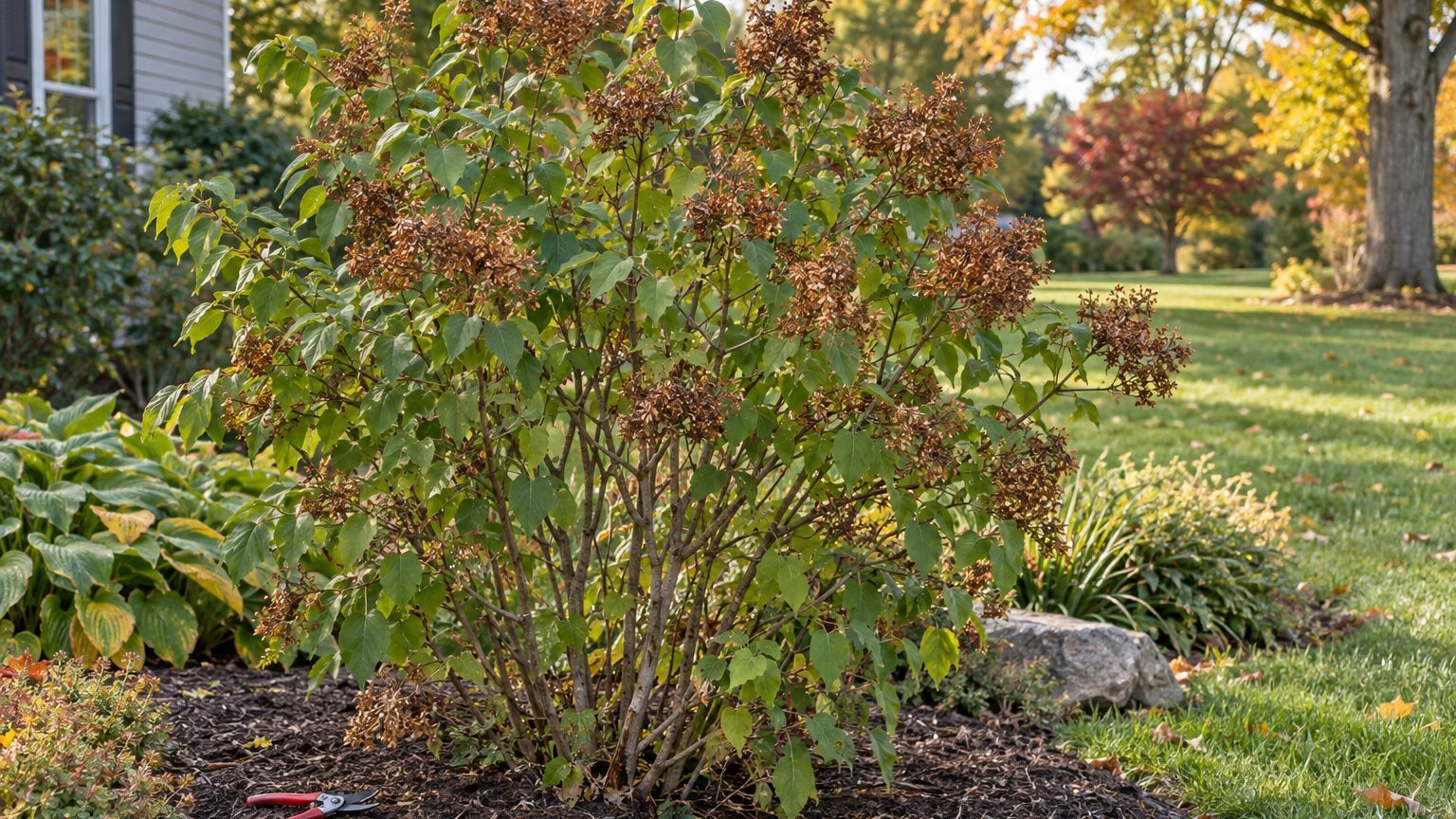
A lilac that looks tired in June, with brown flower clusters hanging on, is telling you the pruning window has just opened. Ontario gardeners protect next spring’s flowers by cutting soon after the blooms fade, because the new buds start forming in summer. Cut too late and they go with the clippings.
When to Prune Lilacs in Ontario

Prune lilacs in Ontario right after the flowers fade, which means May and June. The dates here follow the nearest comparable climate, since Ontario has no local guidance on lilac timing, so confirm local timing with a garden centre, a garden society or a provincial gardening group.
Lilacs flower on last year’s wood and set their next buds soon after blooming. Pruning in May or June leaves the whole summer for that new growth to ripen.
| Type of pruning | When in Ontario | Why |
|---|---|---|
| Routine pruning after bloom | May to June, right after the flowers fade | The next flower buds form in summer, so later cuts remove them |
| Hard renovation cut of an overgrown lilac | March to April, in late winter | Cutting the plant back hard renews it but costs the next flowers |
Lilacs bloom from April into May, and later cultivars carry on into June, so the pruning window opens at different moments depending on the plant. A renovation cut is a bigger decision. An overgrown lilac cut back hard in late winter will not flower for a few years afterward, so reserve it for shrubs that have grown leggy and bare at the base. Treat reblooming lilacs like other lilacs in Ontario and prune them soon after the main flush fades.
Ontario — the year and the numbers
- State
- Ontario
- Hardiness zones
- 7a
- Last spring frost
- April 30
- First fall frost
- October 16
- Annual rain
- 31 in
- Lawn zone
- cool-season
- Source
- Environment and Climate Change Canada — Canadian Climate Normals 1981-2010, station TORONTO LESTER B. PEARSON INT'L A · Toronto
How to Tell When Your Lilacs Are Ready to Prune
The plant gives useful timing signals, especially in a year when spring runs early or late.
- Petals turn brown and the flower clusters droop, which tells you the show is over and cutting can begin.
- Faded clusters still hang on the stem, so snipping them off just below the head is a useful place to begin.
- Fresh leaves are fully open around the spent flowers, which means you can see which branches are healthy and which are bare or dead.
- Keep cuts close to the spent flowers so you leave the new growth below them intact.
- Late June arrives with no pruning done, and the window is closing, so make the cuts soon and keep them light.
If the old blooms are gone and new growth is pushing, the lilac is ready.
Should You Prune Lilacs in Fall or Winter in Ontario?
No, not for routine pruning. Cutting in late summer, fall or winter removes the flower buds that formed after last season’s bloom, and the shrub then skips flowering the following spring. Those buds overwinter on the stems, so a tidy-up in fall quietly trades away the following spring’s flowers.
Late winter is an exception, and it is a deliberate trade. In March or April, while the plant is still dormant, an overgrown lilac can be cut back hard to renew it. That cut costs the next flowers, and the shrub will not bloom for a few years afterward. It suits a lilac that is crowded with thick, old stems and flowering poorly anyway, not one that merely looks a bit scruffy.
How Lilac Pruning Time Shifts Across Ontario
Ontario is not one climate, so the same shrub fades at different moments depending on where it grows. The signs on the plant matter more than any fixed date. Spring frost on average falls around April 30 in the Toronto area (Canadian hardiness zone 7a), and that is a midpoint, with frost arriving later in one year out of two.
- Toronto and the Lake Ontario shore: Use the May to June window as a guide, but let the fading flowers set the date.
- Northern Ontario: Spring arrives later, so blooms open and fade later, and pruning often falls toward the end of the window in June.
- Higher inland districts: These run behind the lakeshore, so wait for the flowers to brown before you reach for the pruners.
Whatever your district, let the fading blooms set the day.
Where to Get Lilac Advice in Ontario
Ontario has no county extension offices, so help comes from the province and from local growers. The Ontario Ministry of Agriculture, Food and Agribusiness is a starting point for general plant questions.
- A local master gardener group can answer questions about your own shrub, and spring is a good time to ask.
- A neighbourhood garden centre knows which lilacs thrive nearby, so visit before you buy a new one.
- A garden society often holds spring walks where you can see lilacs in bloom and compare pruning results.
Common Questions
Can You Cut Lilacs for a Vase Without Hurting Next Year’s Flowers?
Yes, cutting flowering stems while they bloom is a form of pruning, and it happens at the right time. Take stems with the flower clusters and cut just above healthy leaves, leaving the rest of the shrub intact.
Why Is a Lilac Not Flowering After a Hard Cut?
A lilac blooms on last year’s wood. A hard renovation cut removes that wood, so the shrub spends the next few years rebuilding stems before it flowers again.
Do Lilacs Like the Ontario Winter?
They do. Lilacs need a cold winter rest to mature their flower buds, which is why they do best in cold-winter climates and struggle in hot, humid summers.