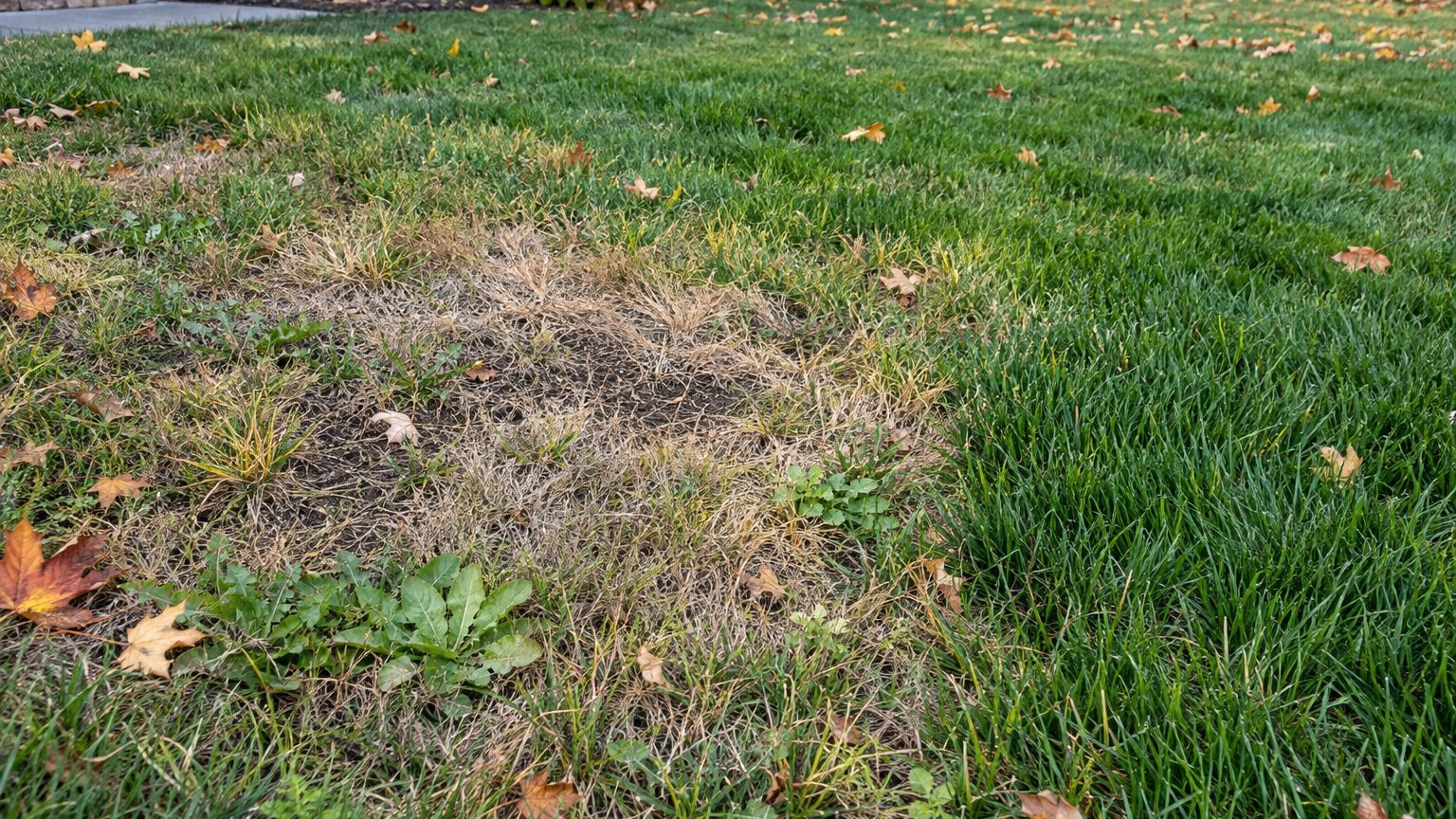
Snow mold matting the grass in April, crabgrass filling thin spots in July, brown patches after a dry August: Minnesota lawns run through a predictable sequence of troubles, and most of them trace back to cold, short seasons and a few mowing, watering and feeding habits. Knowing which problem shows up when makes the fix far easier.
Lawn Pests and Diseases in Minnesota
Snow Mold in Early Spring

As the snow melts you may find circular, matted patches of grayish or pinkish grass. The cause is a fungus that thrives under long snow cover on unfrozen ground. Rake the patches gently to lift the mat and let air in. Most lawns recover without help once the grass starts growing.
Crabgrass in Thin Turf
Crabgrass looks like pale green, sprawling clumps that spread flat along the ground, usually in thin spots and along driveways. It sprouts as soil warms in spring. Preventer goes down in April or May, before the seeds germinate. A thick lawn is the long-term answer, since dense turf shades out seedlings.
Dandelions and Broadleaf Weeds
Dandelions, clover and plantain show up in open spots and compacted soil. Pulling works on a small yard if you get the taproot. For larger infestations, treat broadleaf weeds in September or October, when they are pulling energy down into their roots. May and June also work.
Grubs Under Pulled-Up Turf
Grubs are fat, white, C-shaped larvae that chew grass roots. The sign is turf that lifts like a loose carpet, often with skunks or birds tearing at the lawn. Check by cutting a square of sod and peeling it back. A healthy, well-watered lawn tolerates a few grubs, and heavy numbers call for targeted treatment.
Dollar Spot and Summer Patches
Small, sunken, straw-colored spots about the size of a silver dollar appear in warm, humid weather, especially on lawns short on nitrogen. Water deeply in the morning so the blades dry by evening, and feed in September or October so the lawn goes into the next summer with more reserves.
Thatch Buildup
Thatch is the spongy layer of stems and roots between the green blades and the soil. A layer up to 1/2 inch is healthy. Above that, dethatch or core aerate in August or September, when the grass can fill in quickly afterward.
Minnesota — the year and the numbers
- State
- Minnesota
- USDA zones
- 3a-5a
- Last spring frost
- April 17 to April 30
- First fall frost
- October 11 to October 23
- Annual rain
- 32 in
- Lawn type
- cool-season
- Source
- NOAA NCEI 1991-2020 Climate Normals, 32F freeze probabilities · Minneapolis
How to Tell Which Lawn Problem You Have
A clue rarely settles the diagnosis on its own. Pair what the patch looks like with when it appeared and where it sits, then test it by tugging the grass or peeling back a small piece of sod.
Shade versus full sun matters as much as shape. A ragged patch that pulls up easily points below the surface, while a patch that stays rooted points to disease or stress.
| Sign | When and where | Likely problem |
|---|---|---|
| Gray or pink matted circles | Right after snowmelt, low or shaded spots | Snow mold |
| Sprawling pale clumps | Summer, thin turf near pavement | Crabgrass |
| Turf peels back like carpet | Late summer, animals digging | Grubs |
| Small straw-colored spots | Warm humid weather, hungry lawn | Dollar spot |
| Spongy feel underfoot | Anywhere, older lawns | Thatch |
| Thin grass, bare soil | Under trees, in shade | Too little light |
Dandelions and clover are easy to name on sight, and they tend to mark compacted or thin areas rather than cause the thinness themselves.
Where Lawn Problems Are Worst in Minnesota
The state is long, so problems arrive at different times depending on where you live.
- Twin Cities: The mild south gets the earliest spring, so crabgrass and weeds start sooner, and the last spring frost lands between April 17 and April 30.
- Northern Minnesota, including Duluth and the Iron Range: Seasons run tighter, so snow mold lingers longer under deep snow, and seeding and fertilizing need to fit a shorter window.
- Red River Valley: Heavy clay soils compact easily and hold water in spring, which favors weeds and shallow roots.
Wherever you are, shade from mature trees can thin turf even when pests are absent.
Lawn Care Mistakes That Invite Problems in Minnesota
Mowing Too Short
Scalping the lawn exposes soil to sunlight, which wakes weed seeds, and it weakens roots going into hot spells. Mow regularly from May through October and keep the blades tall enough to avoid scalping.
Shallow, Frequent Watering
Light daily sprinkling keeps roots near the surface and keeps the blades damp, which favors fungus. Water deeply and less often from May through October, and do it in the morning so the grass dries during the day.
Feeding at the Wrong Time
Fertilizer in hot mid-summer pushes soft growth that stresses in heat and feeds weeds and disease. University of Minnesota Extension advises against it, so feed in September or October, with May or early August as a fallback. Fall feeding builds roots and thickens turf for spring.
Where to Get Lawn Advice in Minnesota
Local help is easy to reach, and it fits your soil and shade better than general advice does. Start with the state extension service.
- University of Minnesota Extension has lawn care guides, including dormant seeding and a seasonal calendar, so check it before planning a project.
- Your county extension office can look at a sample of damaged turf, so bring one when a problem is spreading.
Common Questions
Can You Seed a Lawn in Minnesota After the Growing Season Ends?
Yes. Dormant seeding in November works, with seed sitting on cold soil and sprouting in spring. December through March also works if you missed it.
Why Does Grass Thin Out Under Trees?
Shade and root competition limit light and water. Thin grass that stays bare year after year, even with good care, usually means too little sun rather than disease.
When Is Sod a Better Choice than Seed?
Sod suits bare, erosion-prone areas because it can go down from May through October, including August and September. Seed is cheaper but more limited, with August and September as the main window.