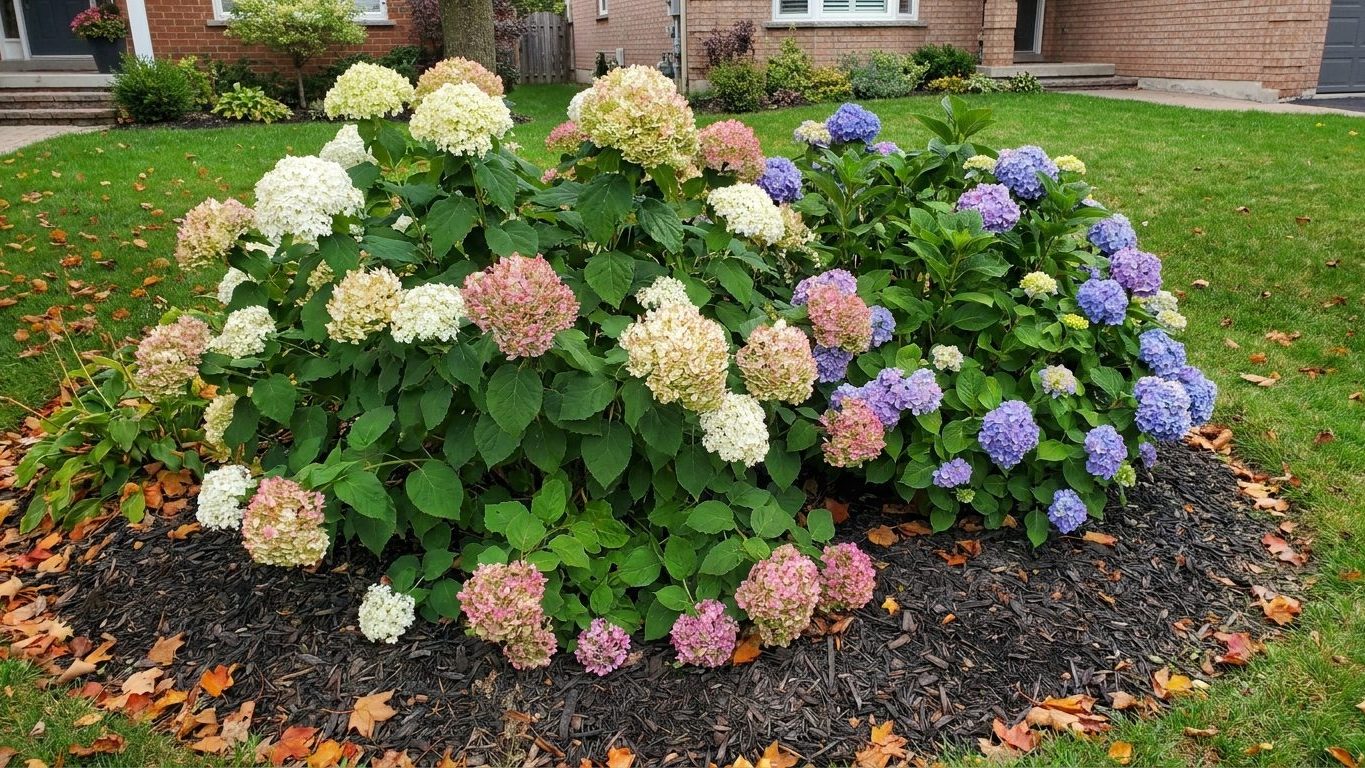
Ontario hydrangeas face a fairly short list of repeat offenders: aphids and slugs early in the season, then powdery mildew, botrytis blight and leaf spot once summer humidity settles over the Great Lakes basin. In Toronto, the reference city for this guide, the frost window sets when each threat actually shows up on your shrub.
Hydrangea pests and diseases Ontario: The Short Answer
Environment and Climate Change Canada’s Canadian Climate Normals puts Toronto’s average last spring frost at April 30, and that date is the hinge the whole pest calendar swings on. Tender new hydrangea growth pushes out right around then, soft and wet, which is exactly what early insects are waiting for.
The list below runs in the order these problems typically appear through an Ontario growing season.
Aphids
Small green or black insects cluster on new growth tips and leaf undersides right after the spring thaw. They leave curled, sticky foliage and a black sooty mold that grows on their honeydew. A strong spray of water every few days usually breaks the cycle before ladybugs finish the job.
Slugs

Slugs move in on cool, wet soil in late spring and chew irregular holes edged with slime trails along lower leaves. They leave ragged foliage and silvery trails visible at dawn. Beer traps or a ring of coarse grit around the base keep them off young growth.
Powdery mildew
A gray-white dust settles over leaf surfaces once June humidity sets in, usually starting on the shadiest side of the shrub. It leaves stunted, curled leaves that drop early without killing the plant outright. Spacing shrubs for airflow, and watering the soil instead of the leaves, keeps it from spreading.
Botrytis blight
Mushy, brown patches spread across flower clusters and soft new shoots during long stretches of humid, still weather. It leaves flowers that collapse into a slimy mass instead of drying naturally. Deadheading spent blooms promptly and improving air movement around the plant are what actually stop it.
Cercospora leaf spot
Small brown circles ringed with yellow appear on lower, older leaves by mid to late summer and slowly work upward. Left alone, it strips a shrub of most of its lower foliage by fall. Raking up and discarding fallen leaves each autumn breaks the fungus’s overwintering cycle.
Scale insects

Tiny brown bumps cling flat against woody stems late in the season, easy to mistake for bark texture at first glance. They leave sticky honeydew and weakened, yellowing stems if left unchecked. A dormant oil application in late winter smothers overwintering scale before new growth resumes.
Ontario — the year and the numbers
- State
- Ontario
- Hardiness zones
- 7a
- Last spring frost
- April 30
- First fall frost
- October 16
- Annual rain
- 31 in
- Lawn zone
- cool-season
- Source
- Environment and Climate Change Canada — Canadian Climate Normals 1981-2010, station TORONTO LESTER B. PEARSON INT'L A · Toronto
How to Work Out the Dates for Your Own Yard
Matching a symptom to the right culprit takes a little detective work, but the calendar does most of it for you.
- Check the date first: if damage shows up before Toronto’s average last spring frost of April 30, it is almost always slugs or overwintering aphid eggs hatching, not a fungal disease.
- Look at the leaf, not just the flower: a powdery white coating means mildew, brown rings with yellow halos mean Cercospora leaf spot, and mushy brown flower clusters after wet weather point to botrytis.
- Time it against pruning: bigleaf hydrangeas get pruned here in June and July, so dieback showing up outside that window is more likely winter injury than an active pest.
- Cross-check with the fertilizing months: weak, pale growth right after a March or May feeding usually points to a nutrient or watering problem, not disease.
- Rule out zone stress: Natural Resources Canada’s Canada’s Plant Hardiness Site places Toronto in zone 7a on the Canadian scale, and shrubs pushed past that limit show scorch and dieback that can look like disease but is not.
- Call in a second opinion: when two problems overlap on the same shrub, a local extension office can confirm which one is actually driving the damage.
None of this replaces a close look at the actual leaf or stem, but narrowing the timing window first saves a lot of guessing before you treat anything.
Ontario North to South: How the Dates Shift
Toronto’s numbers are the starting point, but Ontario stretches across several distinct climates, and pest and disease timing shifts with them.
- Niagara Peninsula and the Lake Erie shore (Ontario’s warmest fruit-growing belt): the season runs longer here, giving aphids and mildew extra weeks compared with Toronto.
- Greater Toronto Area and the Lake Ontario shoreline (the reference zone for this guide): the lake keeps spring frost lingering a little later than inland spots at the same latitude.
- Ottawa Valley and Eastern Ontario (colder winters, drier summers): fungal pressure tends to be lighter here, but winter dieback on bigleaf varieties shows up more often.
- Northern Ontario (Sudbury and Thunder Bay area): frost lingers well into what counts as late spring farther south, compressing the whole pest season into a shorter stretch.
- Southwestern Ontario (London and Windsor): milder and more humid than Toronto, which favors slug pressure and leaf spot earlier in the year.
Check the province guide for the zone and frost figures behind each of these regions before assuming Toronto’s calendar applies exactly to your yard.
Mistakes Ontario Punishes
Watering the leaves at night
Evening watering leaves foliage wet through Ontario’s cool, humid nights, and that damp window is exactly what powdery mildew and botrytis need to take hold. Water the soil in the morning instead, and let the sun dry any splashed leaves before dusk.
Leaving fall debris under the shrub
Fallen leaves and spent flower heads left over winter shelter slug eggs and leaf spot spores until they hatch or spread right when spring growth starts. Clear the base of the plant before the ground freezes so nothing overwinters underneath it.
Pruning bigleaf hydrangeas outside June and July
Cutting old wood outside the June and July window removes next year’s flower buds and opens fresh wounds just as sap-feeding insects are most active. Stick to that window, and only remove wood that is clearly dead.
Ontario Extension Offices and County Contacts
Provincial hardiness and frost figures are a starting point, not the full picture for your address, and local extension staff fill in the rest.
- Ontario Ministry of Agriculture, Food and Rural Affairs: the provincial hub for pest alerts and horticulture advisories.
- The Ontario hydrangea guide: the province-wide hardiness zone and frost dates behind every date.
- Which hydrangeas hold up here: variety by variety, from the safest choice for Ontario winters to the riskiest.
Check the pruning and fertilizing calendar next to line up any treatment with the right month.
Common questions
Is powdery mildew dangerous to hydrangeas in Ontario?
Rarely fatal on its own. It mostly costs the plant some leaves and some vigor, not the whole shrub. Improving airflow between plants and watering at the base does more than any spray applied after the fact.
Should I spray hydrangeas preventively every spring?
Not as a rule. Watching for the first symptom on the right timeline, using the pest order above, catches most problems early enough that a preventive spray schedule adds cost without adding much protection.
How do I tell winter damage from disease?
Winter injury shows up as dead tips following a clean line, often just above where snow cover protected the lower stem. Disease tends to show irregular spots or fuzzy growth on leaves and flowers during the growing season, not a straight dieback line on bare wood.