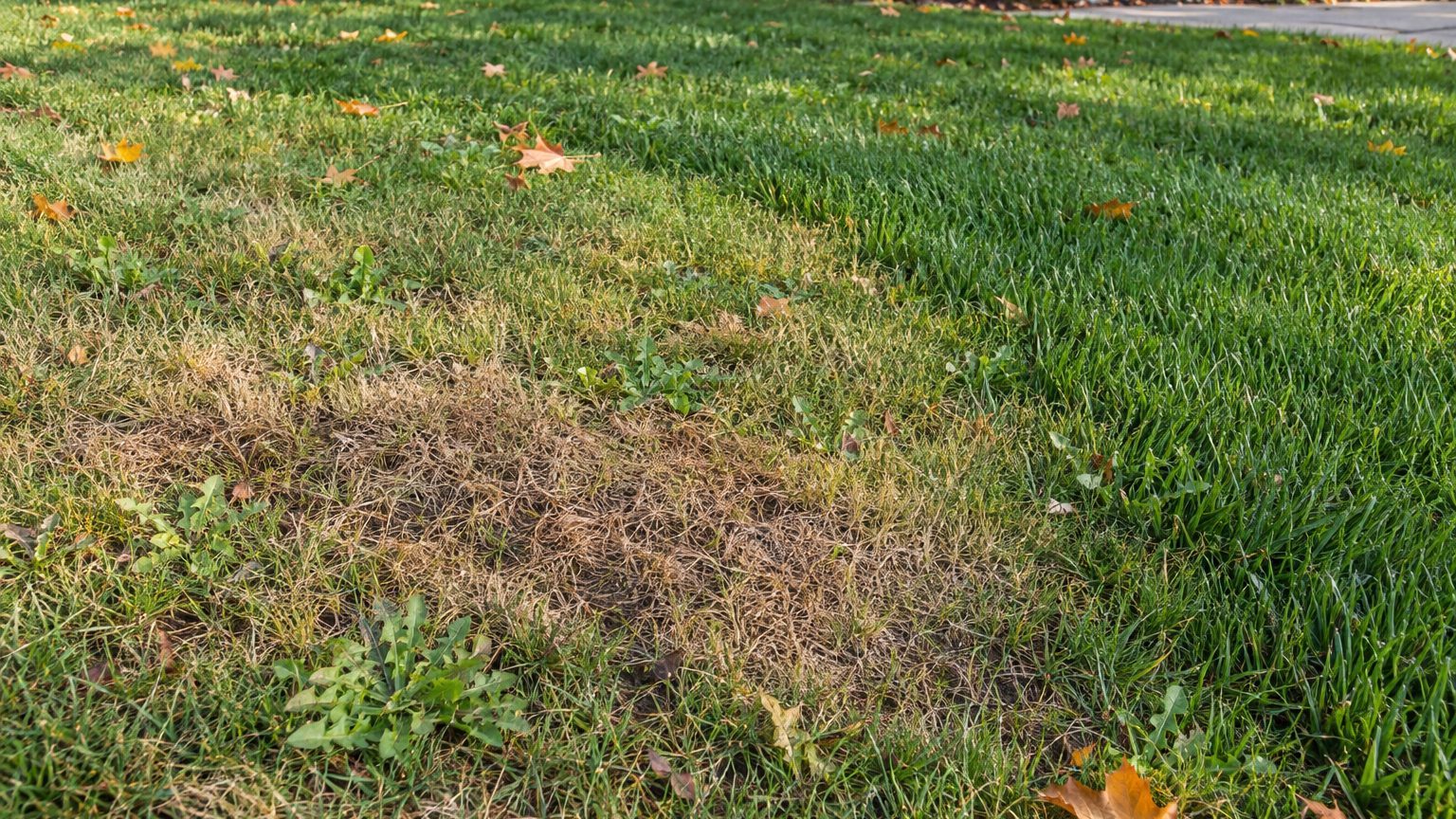
Tan circles where the last snow melted, pale crabgrass along the driveway edge in July, a spongy patch that pulls up like carpet in late summer: Wisconsin lawns show their troubles on a fairly predictable schedule. Most problems come from a handful of causes. The timing and pattern of damage can help narrow down the cause and the right response.
Lawn Pests and Diseases in Wisconsin
Snow Mold After the Melt

Matted gray or pinkish circles show up where deep snow sat on unfrozen ground, which happens often across Wisconsin winters. The grass looks flattened and crusty, not dead. Rake the patches gently to lift the blades and let air dry the surface, and new growth usually fills them in.
Crabgrass in Thin Spots
Pale green clumps that sprawl flat and spread outward from sunny, thin areas, often beside pavement, are crabgrass. A preventer goes down in April or May, before the seeds sprout. Pull what escapes before it sets seed, then thicken the turf so less light reaches the soil.
Dandelions and Other Broadleaf Weeds
Dandelions, clover and plantain are easy to spot, and September and October are the months to deal with them, when the plants are sending energy down to the roots. May and June also work if you missed fall. Spring spraying only catches what is already up.
Dollar Spot in Summer
Small straw-colored spots, roughly the size of a silver dollar, appear in warm, humid weather. On a dewy morning you may see fine cobweb-like fuzz across them. Water deeply in the morning so the blades dry by evening, and leave the mower blade sharp so cuts heal cleanly.
White Grubs in Late Summer
Irregular brown patches that lift like a loose rug mean the roots have been chewed. Birds, skunks or raccoons tearing at the turf point the same way. Tug a patch and look for C-shaped, creamy white grubs. The number of grubs matters, so ask your county office whether treatment is warranted.
Thatch Buildup
A spongy feel underfoot and a dark, matted layer between the green blades and the soil mean thatch. A layer up to 1/2 inch thick is healthy, and anything thicker calls for dethatching or core aeration. Dethatch in August or September. Core aeration works then too, and it extends into October.
Wisconsin — the year and the numbers
- State
- Wisconsin
- USDA zones
- 3b-6a
- Last spring frost
- April 16 to April 29
- First fall frost
- October 17 to October 29
- Annual rain
- 35 in
- Lawn type
- cool-season
- Source
- NOAA NCEI 1991-2020 Climate Normals, 32F freeze probabilities · Milwaukee
How to Tell Which Lawn Problem You Have
Start with the shape of the damage and the season you are in. Then give the grass a tug and see whether it comes up with roots. No clue settles the diagnosis by itself, so pair what you see with when and where it appears.
| What you see | Where and when | Likely problem |
|---|---|---|
| Matted gray or pink circles | Right after snowmelt, under old drifts | Snow mold |
| Pale clumps spreading flat | Summer, in thin sunny spots near pavement | Crabgrass |
| Straw-colored spots with cobwebby fuzz | Humid summer mornings with heavy dew | Dollar spot |
| Brown patch that rolls back like carpet | Late summer, roots missing when you tug | White grubs |
| Spongy turf over a dark mat | Any season, felt when you walk or push a finger in | Thatch |
Thin grass under trees is usually shade or compacted soil, not disease, so check how much sun the spot gets before you treat anything. Broadleaf weeds like dandelions identify themselves on sight.
Where Lawn Problems Are Worst in Wisconsin
Wisconsin stretches from Lake Michigan to the Northwoods, and the problems shift with the length of the season and the depth of the snow.
- Lake Michigan shoreline: Milwaukee, Racine and Door County get a later first freeze, so the lawn grows longer into fall. Weeds and dollar spot have more time to run, and fall tasks can stretch later.
- Southern Wisconsin inland: Around Madison and Rock County, freezes typically arrive in early October. Crabgrass pressure is strong on sunny, thin turf, and the fall window for seeding and weed control closes sooner than at the lakeshore.
- The Northwoods: In Vilas, Oneida and nearby counties, frost comes far earlier and snow sits long. Snow mold is more common, and recovery is slower because the growing season is short.
Wherever you live, the same lawn can sit in a different microclimate from your neighbor’s, so shade and drainage matter as much as the map.
Lawn Care Mistakes That Invite Problems in Wisconsin
Mowing Too Short
Scalped grass has little leaf to feed its roots, and bare soil lets crabgrass and dandelions move in. Raise the mower deck and keep mowing through the growing season, from May through October, leaving the clippings to feed the lawn.
Watering Shallow and Often
Frequent light sprinkling keeps the surface wet, which favors dollar spot and keeps roots shallow. Water deeply and less often, early in the morning, from May through October. A screwdriver should slide easily into soil that has been soaked.
Feeding in Midsummer Heat
Fertilizer in hot weather pushes soft growth that stresses the lawn and feeds disease. Wait for September and October, when roots are building for winter. If the lawn needs a lift earlier, a light feeding in May or early August is the fallback.
Where to Get Lawn Advice in Wisconsin
Local grass conditions vary from the lakeshore to the Northwoods, so advice from nearby beats general rules.
- University of Wisconsin Extension offers research-based guides on lawn diseases, weeds and soil. Check them before you buy a treatment.
- Your county extension office can help identify a sample and arrange a soil test. Go in spring or late summer, when problems show.
Common Questions
When Should You Seed Bare Patches in a Wisconsin Lawn?
August and September give new grass warm soil and time to root before winter. May also works if you missed fall.
Is November Too Late to Seed?
Not if you seed dormant. Sow in November on cold soil and the seed sprouts in spring. December through March also works when the ground is not covered in deep snow.
When Should You Lay Sod in Wisconsin?
May, June, August, September and October all suit sod. July works, but needs close watering.