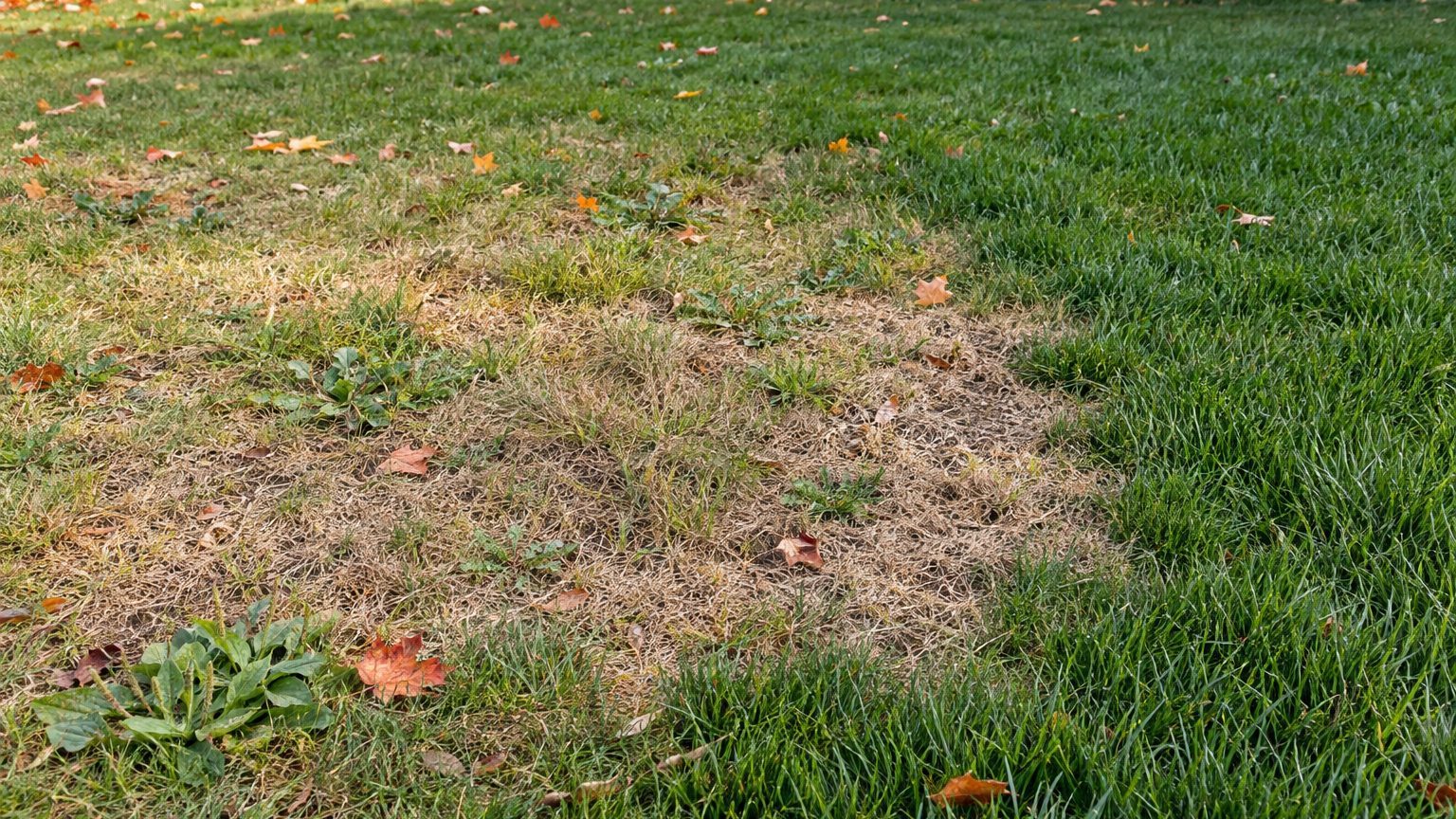
Brown patches that appear after a hot stretch, grass that thins out under maples, and weeds that fill bare spots are familiar complaints on Michigan lawns. Most trace back to a few causes tied to the state’s cold winters, humid summers and shade from mature trees. Each one shows itself in a different way, and each has a fix.
Lawn Pests and Diseases in Michigan
Crabgrass in Thin Spots

Crabgrass is a pale green, sprawling annual that fills bare or thin areas once the soil warms. It dies with the first frost, which arrives October 6 to October 21 around Detroit, but leaves seed behind. Apply a pre-emergence preventer in April, or in May if you missed it.
Dandelions and Clover
Dandelions show a rosette of toothed leaves and a deep taproot, and clover forms low mats of divided leaves. These weeds move into thin turf. Pull dandelions when the soil is damp so the whole root comes out, and thicken the lawn with seed in August or September.
Thatch Buildup
Thatch is the spongy brown layer between green blades and soil. Up to 1/2 inch is healthy, but more than that blocks water and shelters pests and disease. Dethatch in August or September, or in April, and core aerate in September if the layer is thick.
Brown Patches in Midsummer
Humid Michigan summers invite fungal disease, which shows as tan or brown patches that grow outward, sometimes with a darker ring in the morning. Mow with a sharp blade, water early in the day so the grass dries quickly, and avoid heavy feeding in hot weather.
Grubs and Chewed Roots
Grubs are C-shaped white larvae that chew roots, leaving turf that feels loose and lifts like a carpet. Skunks and birds digging at the lawn are another sign. Healthy, deeply rooted grass tolerates some feeding, so aerate in September and keep up regular watering from June through August.
Snow Mold After Winter
When snow melts in spring, matted gray or pinkish circles may appear where it lay longest. Snow mold usually looks worse than it is. Rake the patches gently to lift the blades and let air in, and the grass typically recovers as mowing begins in April.
Michigan — the year and the numbers
- State
- Michigan
- USDA zones
- 4a-6b
- Last spring frost
- April 30 in the Detroit area; early to mid May across most of the Lower Peninsula
- First fall frost
- October 6 to October 21
- Annual rain
- 34 in
- Lawn type
- cool-season
- Source
- MSU Extension — Frost-Free Dates · Detroit
How to Tell Which Lawn Problem You Have
A symptom rarely settles the diagnosis. Pair the shape of the damage with where it sits and when it showed up, then try a simple test: tug the grass and see whether it stays rooted or lifts away.
Walking the yard can sort common problems into a short list of likely causes.
| What you see | Where and when | Likely problem |
|---|---|---|
| Grass lifts like a rug | Late summer into fall, in irrigated sunny areas | Grubs |
| Matted gray or pink circles | Spring, where snow piled up | Snow mold |
| Tan patches with dark edges | Humid midsummer mornings | Fungal disease |
| Coarse sprawling blades | Open thin spots, summer | Crabgrass |
| Spongy turf, brown layer at base | Any season, firm underfoot | Thatch |
Thin grass under trees is a different case. Shade and root competition usually explain it, so lasting improvement often depends on more light or a shade-tolerant seed mix.
Where Lawn Problems Are Worst in Michigan
Conditions shift across the state, and so do the problems you are most likely to meet.
- Detroit area: The last spring frost falls around April 30 in the Detroit area, so watch for warming soil as crabgrass season approaches. April is the main month for crabgrass preventer.
- Northern Lower Peninsula: Frost lingers into May and snow cover stays long, so snow mold is more common and seeding often shifts later.
- Upper Peninsula: Winters are harsher and the growing season shorter, which favors hardy grasses and slows recovery from any damage.
- Lakeshore towns: Lake influence moderates temperature swings, but humid air keeps fungal disease active in summer.
Check your own conditions first, because the USDA zone range of 4a to 6b means a nearby lawn may face a different season.
Lawn Care Mistakes That Invite Problems in Michigan
Mowing Too Short
Scalped grass weakens roots and lets sunlight reach weed seeds. Raise the mower and cut often, since mowing runs from April through November. Leave the clippings to return nutrients.
Shallow Daily Watering
Frequent light sprinkling keeps the surface wet, which feeds disease and keeps roots shallow. Water deeply and less often, mostly from June through August, and do it in the morning so blades dry by evening.
Fertilizing at the Wrong Time
Heavy summer feeding pushes soft growth that disease likes. Feed in September and again in November, with May as a fallback, so roots build strength going into winter.
Where to Get Lawn Advice in Michigan
Michigan State University Extension offers research-based guidance on turf problems, and your county office can help with local conditions.
- Visit the extension site when a patch looks unfamiliar, to compare symptoms before you treat anything.
- Contact your county office in spring or late summer, when most seeding and weed decisions are made.
- Bring a small cut sample of the affected turf, roots and soil included, for a clearer diagnosis.
Common Questions
Why Does My Michigan Lawn Have Dead Patches After Winter?
Matted gray or pink circles in spring, in spots where snow sat longest, point to snow mold. Raking them lightly and mowing in April usually brings the grass back.
Is a Thick Thatch Layer Always a Problem?
No. A thin layer protects the soil. It becomes a problem when it feels spongy underfoot and water runs off instead of soaking in.
Can You Fix a Thin Lawn Without Replacing It?
Usually yes. Overseed in August or September, when seed has time to root before winter, and correct the cause such as shade, mowing height or compaction first.