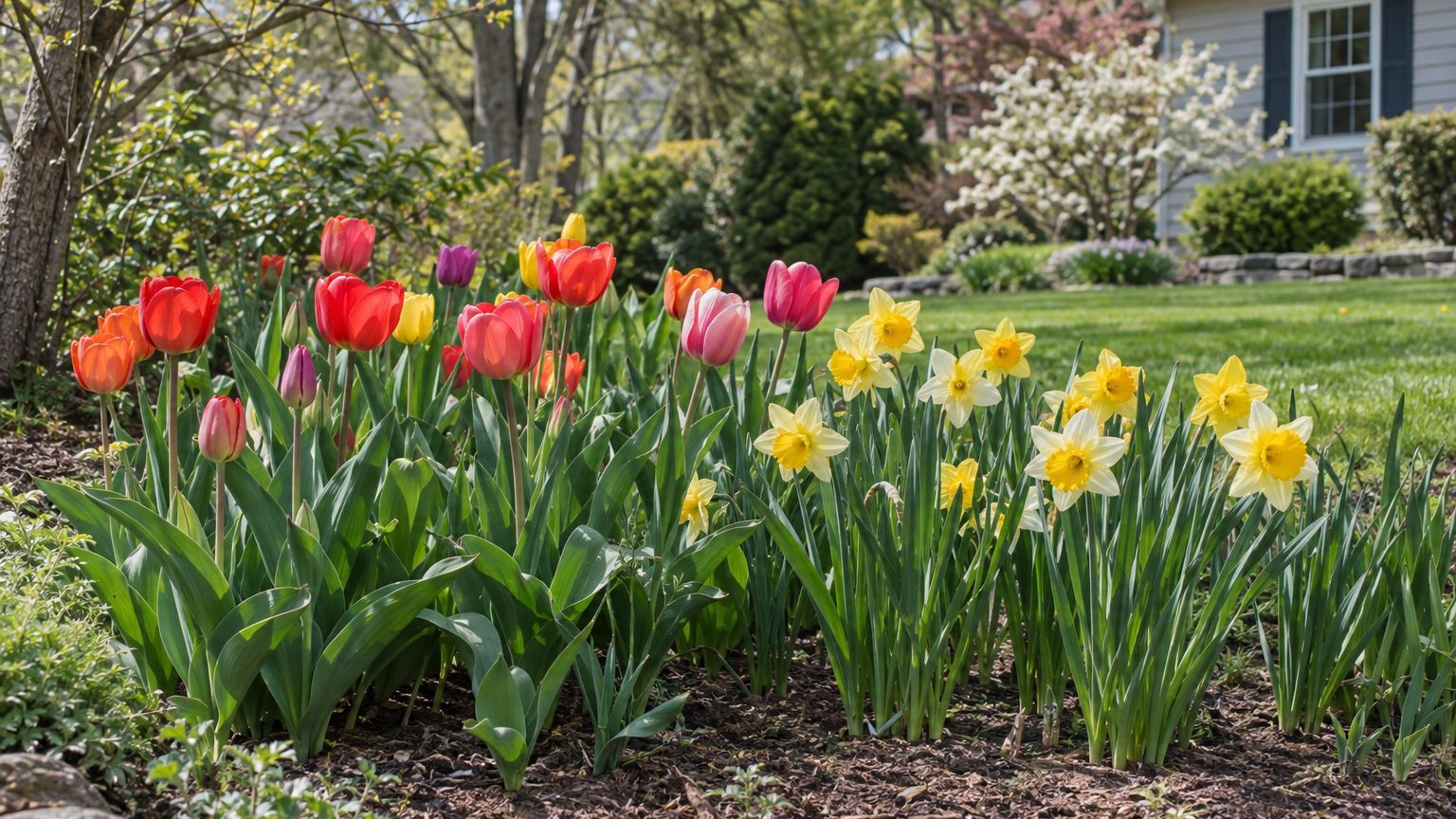
Daffodil tips poking through cold, wet ground are one of the first signs that spring is really on its way in Newfoundland and Labrador. Tulips follow with fat buds that color up on the first mild days.
When Do Tulips and Daffodils Bloom in Newfoundland and Labrador?

Tulips and daffodils bloom in April and May, and the earliest hardy bulbs can start in March. This province has no local extension page on bulb timing, so these months follow the nearest comparable climate. Confirm local timing with a garden centre, a garden society or a provincial gardening group.
| Bulb | When it blooms in Newfoundland and Labrador | What sets the timing |
|---|---|---|
| Earliest hardy bulbs, including some daffodils | March | A mild spell that warms the soil early |
| Later daffodils and tulips | Late April and May | Steady spring warmth after a full winter of cold |
Early tulips, hyacinths and crocus have no month of their own here. Like every bulb, they open when spring warmth reaches them. Alliums come at the tail end of the season, and according to Iowa State University Extension, they need the cold of winter to bloom. Most other spring bulbs need about 12 to 16 weeks of cold to flower, which is why fall planting matters. For hardiness, St. John’s sits in zone 6a on the Canadian system, which is not a USDA zone and does not convert to one.
Newfoundland and Labrador — the year and the numbers
- State
- Newfoundland and Labrador
- Hardiness zones
- 6a
- Last spring frost
- May 30
- First fall frost
- October 17
- Annual rain
- 60 in
- Lawn zone
- cool-season
- Source
- Environment and Climate Change Canada — Canadian Climate Normals 1981-2010, station ST JOHN'S A · St. John's
How to Tell Your Bulbs Are About to Bloom
Bulbs announce themselves in stages, and a cold snap can slow every one of them without harming the plant.
- Pointed green tips breaking the soil mean the roots are active, so leave them alone and let the weather do the work.
- Leaves that widen and stand upright show the bulb is building toward a flower, so a bed with leaves but no bud is worth checking again soon.
- A bud rising between the leaves means bloom is close, and daffodil buds usually sit in a papery sheath until they open.
- Tulip buds that show color while still closed will open on the next mild day, which is the moment to enjoy them before wind and rain arrive.
- Gaps where shoots should be, with soil disturbed around them, point to voles or squirrels, which go after tulips and crocus but leave daffodils alone.
A bulb that sends up leaves and no bud is often a young or crowded one, and it may flower the following spring.
What to Do After Tulips and Daffodils Bloom in Newfoundland and Labrador
Remove only the faded flowers and leave the leaves on the plant. The leaves feed the bulb for next year’s bloom, so they stay until they turn yellow and then brown. Never tie them in knots or cut them back while they are green, even when they look untidy.
Tulips are often short-lived in the garden, so expect fewer flowers as the years pass and plan to add new bulbs in fall. Daffodils last longer and are the more reliable perennial bulb. They also naturalize well in partly shady spots, where they can be left to spread.
Planting new bulbs is a fall job, and October is the usual month so roots form before the ground freezes. If bulbs are still unplanted after that, put them in as long as the ground can be dug. November or December still works if the soil has not frozen.
How Bloom Time Shifts Across Newfoundland and Labrador
A province this large is not one climate, and bloom shifts with where you garden.
- St. John’s: The last spring frost falls on May 30 on average, which is the midpoint of a window and not a safe date. In half of all years, frost arrives later than that.
- Labrador: Spring arrives later in the north, so bulbs here flower toward the back end of the April to May range, or after it.
- Upland districts on the island: Higher, more exposed ground warms more slowly than the coast at St. John’s, so bloom runs behind.
Watching your own beds each year gives a better guide than any regional average.
Where to Get Bulb Advice in Newfoundland and Labrador
Canada has no county extension office, so local advice comes from the province and from people who garden nearby. The provincial Department of Fisheries, Forestry and Agriculture is a starting point for questions about growing conditions.
- Provincial department: Ask about growing conditions and local resources whenever a bulb question comes up.
- Garden centres: Visit in early fall, when bulbs are in stock, and ask what has worked locally for planting in October.
- Garden societies and gardening groups: Join one before spring to compare notes on when neighbors see their first blooms.
Common Questions
When Should You Plant Tulips and Daffodils in Newfoundland and Labrador?
October is the target, once the soil has cooled below about 16°C (60°F). Roots then have time to form before the ground freezes, and the bulbs do not sprout too soon.
Can You Plant Bulbs That Are Still in the Bag?
Yes, and planting late beats storing them. Put them in as long as the ground can be dug. A bulb that is still in the bag is better planted late than stored over the winter.
Which Bulbs Do Animals Leave Alone?
Voles, squirrels, rabbits and deer eat tulips and crocus, but daffodils are left alone. Planting daffodils around tulips can help protect more tempting plants from browsing.