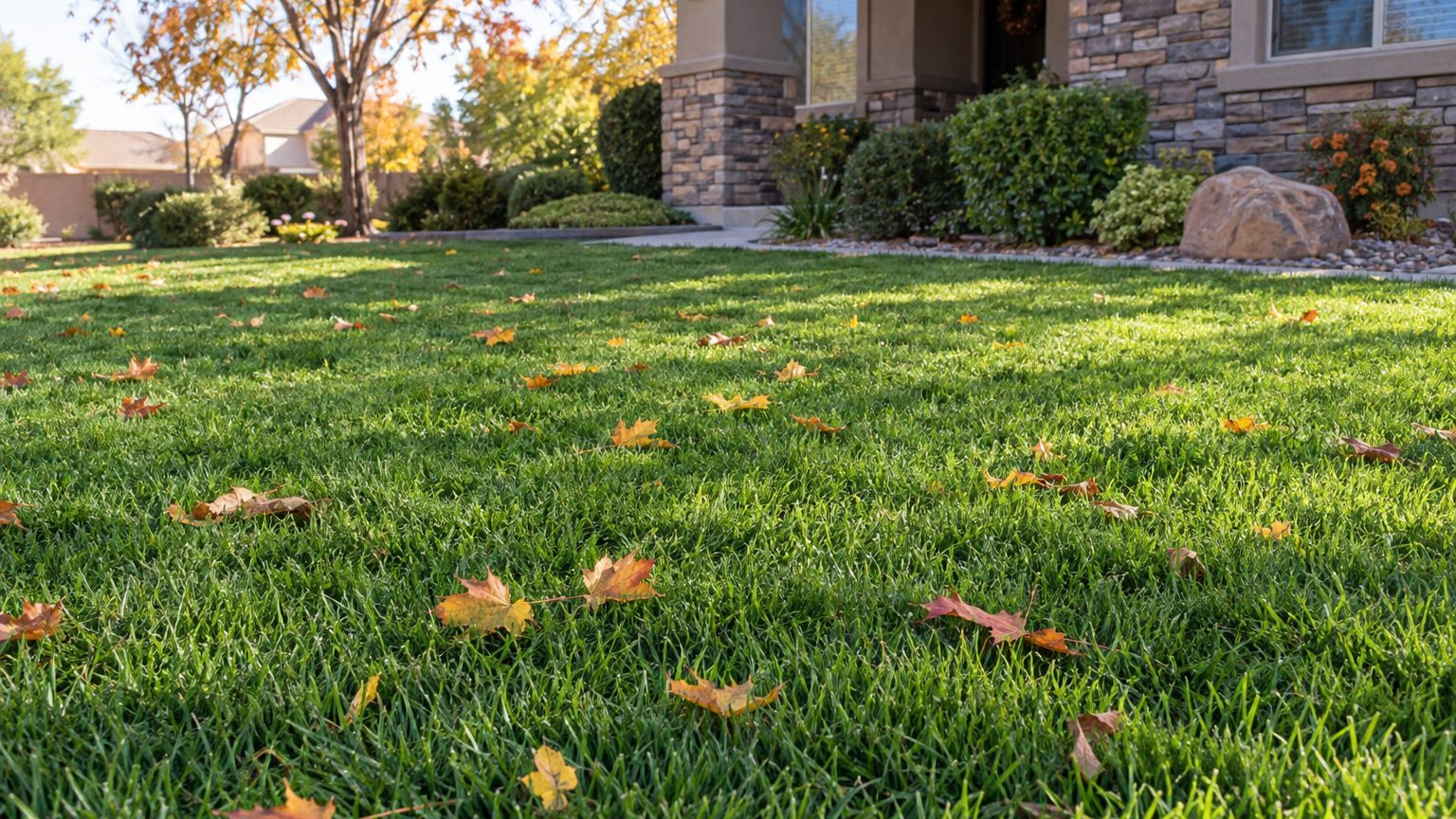
Brown, crunchy turf in July is not always dead turf, and a green carpet in January is not always a healthy one. Arizona lawns follow heat more than cold, so the work lands in different months than in most of the country.
What to Do Each Month in a Arizona Lawn

Phoenix and the low desert set the rhythm here, where warm-season grass grows vigorously in summer and rests in winter. Overseeded winter rye changes the picture, so the notes below address dormant warm-season turf and winter overseeding.
| Month | In the lawn |
|---|---|
| January | Rest. Warm-season grass is dormant, so skip mowing, feeding, and routine watering. |
| February | Rest. Growth has not started, and feeding now would only push weeds. |
| March | Start mowing as the first green shows. Keep the blade up and the cuts light while the grass wakes. |
| April | Seed bare spots and begin regular watering as soil warms. Mow in step with growth. |
| May | Seeding still works, so finish any patching. Fertilize now, and dethatch if the thatch feels spongy underfoot. |
| June | Fertilize and dethatch if you missed May. Water deeply, since heat is rising and roots need depth. |
| July | Mow and water, but hold off on feeding and heavy work. Watch for scorched patches during summer heat. |
| August | Keep mowing and watering through the heat. Look for dry spots and sprinkler gaps rather than starting new projects. |
| September | Fertilize as heat eases, and keep watering and mowing. The grass uses the cooler nights to recover. |
| October | Fertilize if September slipped by. Watering and mowing carry on while growth slows. |
| November | Make the last mowings of the year. Watering tapers off as the grass heads toward dormancy. |
| December | Rest. The grass is dormant, and the main thing to watch is a rare cold snap over young overseeding. |
Dethatching belongs to May and June because the grass is growing fast enough to heal. Doing it in cool months leaves open ground with no growth to fill it.
Arizona — the year and the numbers
- State
- Arizona
- USDA zones
- 4b-10b
- Frost
- none in an average year
- Annual rain
- 7 in
- Lawn type
- warm-season
- Source
- NOAA NCEI 1991-2020 Climate Normals + NOAA RCC ACIS daily records, station USW00023183 — https://www.ncei.noaa.gov/access/services/data/v1?dataset=normals-annualseasonal&stations=USW00023183 · Phoenix
When Does the Lawn Season Start and End in Arizona?
In the low desert, seed when the soil sits at 65 to 70 °F and rising, which usually means spring; the lawn season fades as the soil cools in late fall. Frost has little to do with it. Phoenix sees a freeze only in some years, and a rare cold snap can bring freezing temperatures between late December and mid January.
That freeze matters mostly for young seedlings or fresh overseeding, which are tender. Established warm-season grass simply sleeps through winter.
The real limit in the low desert is summer heat. Grass grows, but it needs steady water and careful mowing to stay in shape through summer and into early fall.
How the Lawn Calendar Shifts Across Arizona
Elevation moves the calendar more than distance does, and lawn climates vary across the state.
- Phoenix and Tucson: The schedule above is written for Phoenix and the low desert. Warm-season grass wakes in spring and rests through a mild winter.
- Yuma and the Colorado River valley: Heat arrives early and lingers, so spring work leans toward the start of the windows and fall feeding toward the end.
- Flagstaff and the high country: Winters freeze hard and the soil warms late, so everything shifts later. Cool-season grasses suit this climate, and growth stops earlier in fall.
Plan by your own elevation, not by the state as a whole.
Lawn Care Timing Mistakes to Avoid in Arizona
Seeding Too Early or Too Late
Seed sown before the soil warms sits idle, and seed sown after May meets summer heat before roots are established. Aim for April and May, when seed sprouts and has time to root.
Fertilizing in Peak Summer
Feeding in July or August pushes soft growth during summer heat and can leave the lawn stressed. Stick to May, June, September and October, when the grass can use the nutrients.
Shallow Watering at the Wrong Hours
Short, frequent sprinkling keeps roots near the surface, where summer heat bakes them. Water deeply and less often from April through October, and keep to the early morning so less is lost to evaporation.
Where to Get Lawn Advice in Arizona
University of Arizona Cooperative Extension offers guidance suited to desert conditions, and your county office knows local soil and water.
- The state extension site has turf guides and grass choices, useful before you pick seed or plan overseeding.
- Your county extension office can answer questions about local water quality and soil, so call before a big renovation.
- Your county extension office can help diagnose problem patches.
Common Questions
Should You Overseed a Bermuda Lawn in Arizona?
Many homeowners overseed with winter rye for green color through the cool months. It is optional, adds water and mowing needs, and the grass beneath rests either way.
Why Does the Lawn Turn Brown in Winter?
Warm-season grass goes dormant when the soil cools. Brown blades together with firm, living roots mean a normal rest, and green returns as spring warms the soil.
Is the High Country Schedule Different?
Yes. Places such as Flagstaff have hard freezes and later spring warming, so the windows move later and the lawn is usually a cool-season mix.