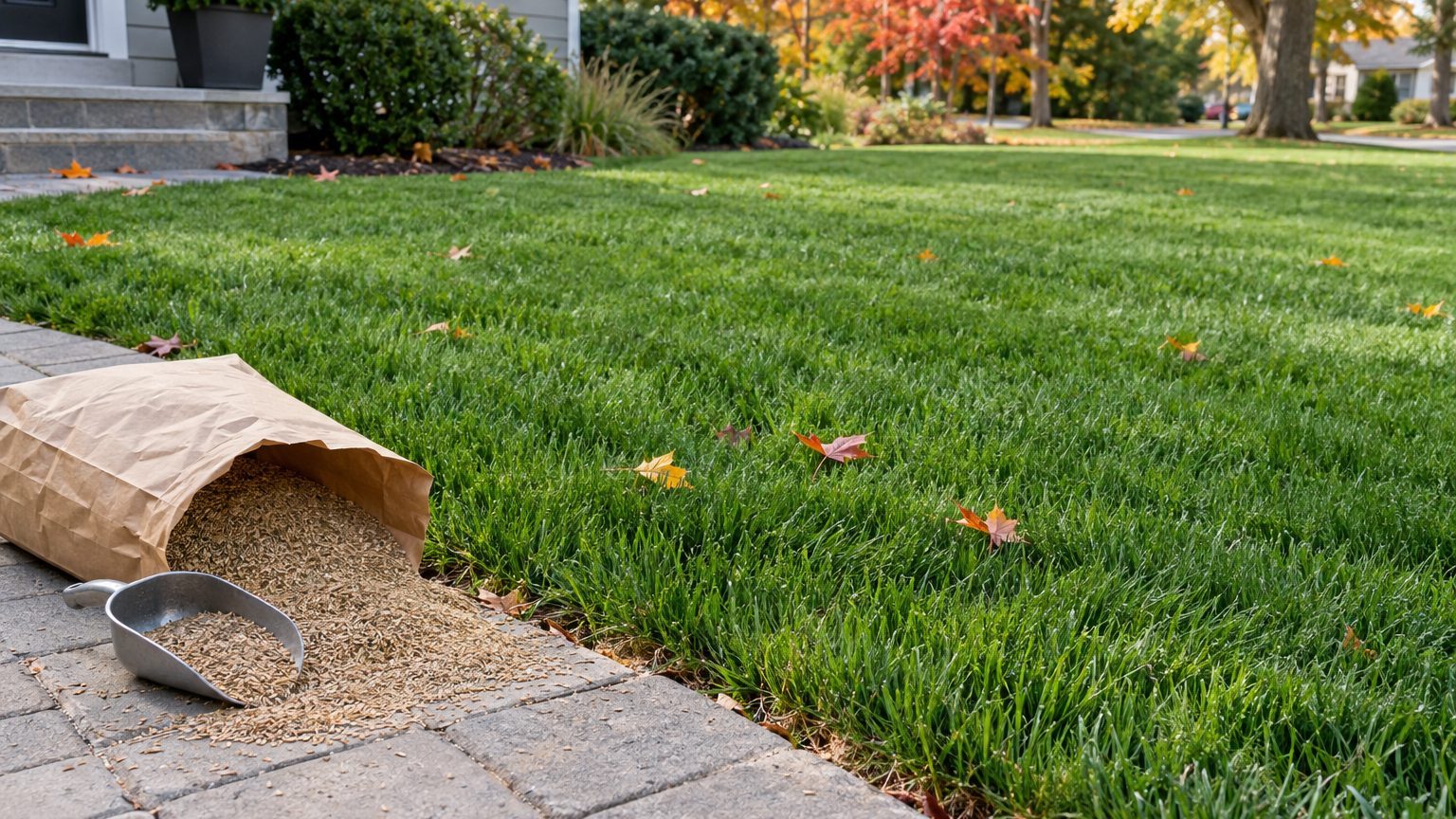
Frost-dusted grass in early spring and a green carpet that holds on well into fall tell you what New Brunswick lawns are made of: cool-season species. Kentucky bluegrass, fine fescues, perennial ryegrass and tall fescue all grow here, and the right seed depends on your sun, your soil and how you use the yard.
Which Grass Grows Best in New Brunswick?
Cool-season grasses suit the province because they grow in spring and fall, then rest through summer heat and sit out winter under snow. Moncton falls in Canadian hardiness zone 5a (a Canadian rating, not a USDA zone), so winter survival matters as much as summer color. Warm-season grasses do not belong here.
Kentucky Bluegrass
Bluegrass handles New Brunswick winters without fuss and spreads by underground stems, so it slowly fills thin spots on its own. It likes full sun and regular mowing. It sprouts slowly from seed, which is why it often travels in a blend with a faster partner.
Fine Fescues
Creeping red, chewings and hard fescue form a soft, fine-bladed lawn that tolerates cold and cool, damp springs. They cope with shade and thin soil better than bluegrass does, and they need less fertilizer. Expect a lawn that looks best left a little taller.
Perennial Ryegrass

Ryegrass sprouts fast, which makes it handy for a quick green cover and for patching worn areas. Its weak point is long, hard winters, especially where snow cover is thin. Treat it as a partner in a blend rather than the whole lawn.
Tall Fescue
Tall fescue is deep-rooted and holds up through dry spells, but winter can thin it in the province’s colder districts. A harsh winter can thin it, and it grows in clumps, so damaged patches fill in slowly. It earns a place in sunny, drier yards in the milder southeast.
New Brunswick — the year and the numbers
- State
- New Brunswick
- Hardiness zones
- 5a
- Last spring frost
- May 23
- First fall frost
- October 2
- Annual rain
- 47 in
- Lawn type
- cool-season
- Source
- Environment and Climate Change Canada — Canadian Climate Normals 1981-2010, station MONCTON · Moncton
How to Choose Grass Seed for a New Brunswick Yard
Start with the hours of sun your yard gets, then think about foot traffic and how much watering you will actually do. A lawn you mow weekly and water in July suits different grass than one you want to leave alone.
Watering matters most in June, July and August, when cool-season grass slows down in the heat. If you will not water then, lean toward species that tolerate dry spells and accept some summer browning.
| Your yard | Grass | Why |
|---|---|---|
| Full sun, regular mowing | Kentucky bluegrass | Dense, hardy and repairs itself over time |
| Shade or poor soil | Fine fescues | Tolerate low light and need little feeding |
| Kids and pets playing | Perennial ryegrass in a blend | Sprouts quickly and recovers from wear |
| Dry, sunny, little watering | Tall fescue | Deep roots ride out dry weather |
| Mowing rarely | Fine fescues | Grow slowly and look good left taller |
Many yards do well with a blend because mixed species cover more conditions than a pure stand. Check the bag for the species names rather than relying on the label’s promises.
Which Grasses Grow Where in New Brunswick
The province is not one climate, and what thrives in one corner can struggle in another, mostly because winters and spring warm-up differ.
- Moncton and the southeast: Spring comes earlier and summers run warm enough that tall fescue and perennial ryegrass can join bluegrass in a blend.
- Bay of Fundy coast: Cool, foggy summers keep cool-season grass growing happily, though spring warms slowly. Fine fescues and bluegrass suit it well.
- Saint John River Valley: Sheltered sites run a little warmer, so bluegrass blends do well and spring work may begin earlier than on the coast.
- Edmundston and the Madawaska region: Winters are colder and spring arrives later, so favor blends led by bluegrass and fine fescues.
Upland yards anywhere in the province behave like the northern ones, so choose hardier species there.
Grass Seed Mistakes to Avoid in New Brunswick
Choosing a Grass Too Tender for Winter
Seed mixes sold in big-box stores are not always tuned for a cold province, and a mix heavy in ryegrass can thin out after a hard winter. Read the species list on the tag. In colder districts, look for bluegrass and fine fescues as the main ingredients.
Seeding at the Wrong Time
August and September give seed warm soil and cooling air, so it roots before winter, and May works if you miss that window. The first fall frost arrives on average October 2 in Moncton, but it can come earlier in any given year, so seed early enough to establish. Crabgrass preventer, best applied in May, also blocks grass seed, so choose one task or the other for that month. If fall slips by, November dormant seeding lets seed sit in cold soil and sprout in spring.
Burying or Overdoing the Seed
Seed needs light and contact with soil. Cover it no deeper than 6 mm (0.25 inch), or it may never reach the surface. Too much seed crowds seedlings into weak, disease-prone stands, and too little leaves gaps for weeds. Follow the rate on the bag and rake lightly.
Where to Get Lawn Advice in New Brunswick
For help choosing seed, turn to the provincial agriculture department, a local gardening group or a garden center. Each knows how your corner of the province behaves.
- Agriculture and Agri-Food Canada has a federal site with national agricultural resources, which is a good place to start, and your provincial agriculture department can point you to local advice.
- A local master gardener group can answer questions about soil, shade and grass choice.
- A garden center near you can show which blends suit nearby yards, so visit before August seeding and ask what grows in your neighborhood.
Common Questions
Should You Dethatch or Aerate Before Seeding in New Brunswick?
Core aeration can help seed reach the soil, while dethatching is useful only when a thick thatch layer blocks it. Dethatching fits August and September, and core aeration fits September, with May as a fallback. Do either shortly before spreading seed so the openings stay fresh.
When Should You Fertilize a New Lawn in New Brunswick?
September suits most lawns, because roots are growing and the grass can store energy for winter. If you miss it, May and October also work. Go lightly on new seedlings and follow the label.
Can You Seed Grass in November in New Brunswick?
Yes, as dormant seeding. Spread seed once the soil is cold enough that it will not sprout until spring. This works as a fallback when fall slipped away, though a fall seeding that took hold earlier usually does better.