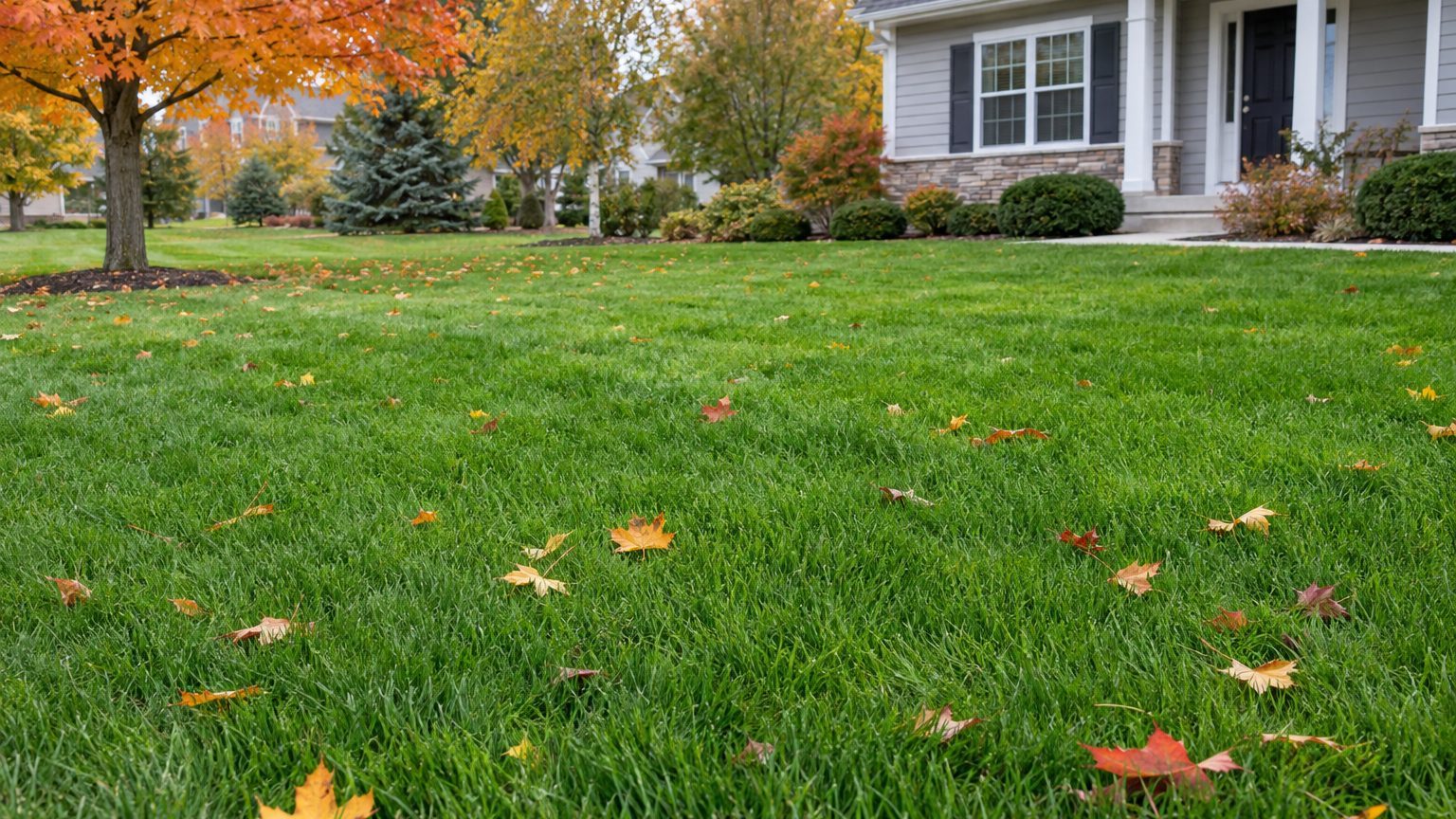
Mowing in Michigan runs from the first green-up in April until the last cut in November, and almost every other job fits into a few windows around that stretch. Core aeration, seeding, dethatching and feeding cluster in late summer and fall, while crabgrass control belongs to spring.
What to Do Each Month in a Michigan Lawn

Cool-season grass does its heaviest lifting when the soil is warm and the air is cool, so the busiest stretch comes in late summer and early fall. The rest of the year is mostly mowing, watching and waiting.
| Month | In the lawn |
|---|---|
| January | Rest. The grass is dormant under snow, so keep foot traffic and plows off it where you can. |
| February | Rest. Dormant turf still needs no work. Watch for matted snow mold spots that you can rake gently once things thaw. |
| March | Wait. The ground is thawing and soggy, and walking on it now compacts the soil. Michigan law bars lawn fertilizer on frozen or waterlogged soil, so hold off on feeding. |
| April | Put down crabgrass preventer before the weeds sprout. This is also a fine time to start mowing, and aeration, dethatching or seeding thin spots all work now if fall got away from you. |
| May | Mow regularly as growth picks up. If you missed April, preventer still works now, and so do seeding, aeration and a light feeding. |
| June | Keep mowing and start watering as the weather dries out, giving the lawn a deep soak instead of a sprinkle. |
| July | Water deeply in heat and mow on schedule. Brown patches in midsummer often mean the grass is resting, not dead. |
| August | Seed and dethatch as the nights cool, and keep watering if rain is thin. New grass has time to root before cold arrives. |
| September | Core aerate, seed, dethatch and feed. This is the month that does the most for next year’s lawn. |
| October | Keep mowing and rake leaves so they do not smother the grass. Frost can arrive this month, so avoid starting new grass this late. |
| November | Make the last cuts and give the lawn its late feeding while the roots are still working. Stop once the soil freezes. |
| December | Rest. The lawn is dormant, so clear fallen branches and leave the grass alone. |
If a fall task slips past you, the following spring still gives a second chance for most of them. Just do not stack seeding and crabgrass preventer on the same patch, since the preventer blocks new grass seed as well as weeds.
Michigan — the year and the numbers
- State
- Michigan
- USDA zones
- 4a-6b
- Last spring frost
- April 30 in the Detroit area; early to mid May across most of the Lower Peninsula
- First fall frost
- October 6 to October 21
- Annual rain
- 34 in
- Lawn type
- cool-season
- Source
- MSU Extension — Frost-Free Dates · Detroit
When Does the Lawn Season Start and End in Michigan?
Grass wakes up when the soil warms, and seed sprouts once the soil sits at 50 to 65 °F. Michigan lawns are mostly cool-season grasses such as Kentucky bluegrass, fescue and ryegrass, which grow hardest in spring and fall and slow down in midsummer heat.
Frost dates matter mostly for young grass. In the Detroit area the last spring frost falls around April 30, while most of the Lower Peninsula sees it in early to mid May. Seedlings that emerge ahead of those dates can get nipped, so spring seeding is a gamble compared with late summer.
In the fall, the first frost in Detroit’s zone 6a comes between October 6 and October 21. Seed sown in August and September has time to root before then. Mowing carries on past the first frost because the grass keeps growing until the soil turns cold.
How the Lawn Calendar Shifts Across Michigan
Michigan spans USDA hardiness zones 4a to 6b, and local conditions can shift the work within the calendar’s listed months.
- Southeast Michigan and Detroit: In the Detroit area, the last spring frost falls around April 30. Crabgrass preventer and first mowing happen on the early side of their windows.
- West Michigan along Lake Michigan: The lake keeps spring a little cooler and delays warm-up, but it also holds off the first fall frost, which gives fall seeding extra time.
- Northern Lower Peninsula: Spring arrives later and fall frost comes sooner, so aim for the early end of the seeding window and the later end of spring jobs.
- Upper Peninsula: Snow lingers well into spring and the season is short, so work follows the thaw rather than the month.
When in doubt, let the soil and the grass tell you whether conditions are ready within the listed months.
Lawn Care Timing Mistakes to Avoid in Michigan
Feeding Too Early in Spring
A big dose of fertilizer on cold, soggy ground washes away and pushes weak, leafy growth. It can also break Michigan’s rules on frozen or waterlogged soil. Wait until May, or better, do most of your feeding in September and November.
Seeding Too Late in the Fall
Seed that goes down after the window closes may sprout and then freeze before the roots take hold. Aim for August and September. If you miss it, spring seeding in April or May still works, though weeds will compete harder.
Applying Preventer at the Wrong Time
Crabgrass preventer works only before the weed seeds germinate. Apply it in April, or in May if you are late. Putting it down after crabgrass germinates will not kill established plants, and it can also stop grass seed from taking.
Where to Get Lawn Advice in Michigan
Local conditions vary, and soil tests settle questions the calendar cannot. MSU Extension is the state’s land-grant resource, and your county office can point you to the right help.
- Check MSU Extension for lawn guidance written for Michigan grasses, and go there before planning fall work.
- Contact your county extension office to arrange a soil test, ideally before you feed or seed, since phosphorus is allowed only for a new lawn in its first season or where testing shows a shortage.
Common Questions
Can You Seed a Michigan Lawn in Spring?
Yes. April and May both work, though young grass faces weeds and summer heat with a shallow root system. Late summer is easier on new seed.
When Do You Stop Mowing in Michigan?
Mowing continues through November, as long as the grass is still growing. Once the soil freezes and growth stops, the mower can go in the garage.
How Much Should You Water a Michigan Lawn in Summer?
Water mostly in June, July and August, and soak the lawn deeply instead of sprinkling lightly. Deep watering encourages roots to reach down, which helps the grass ride out dry spells.