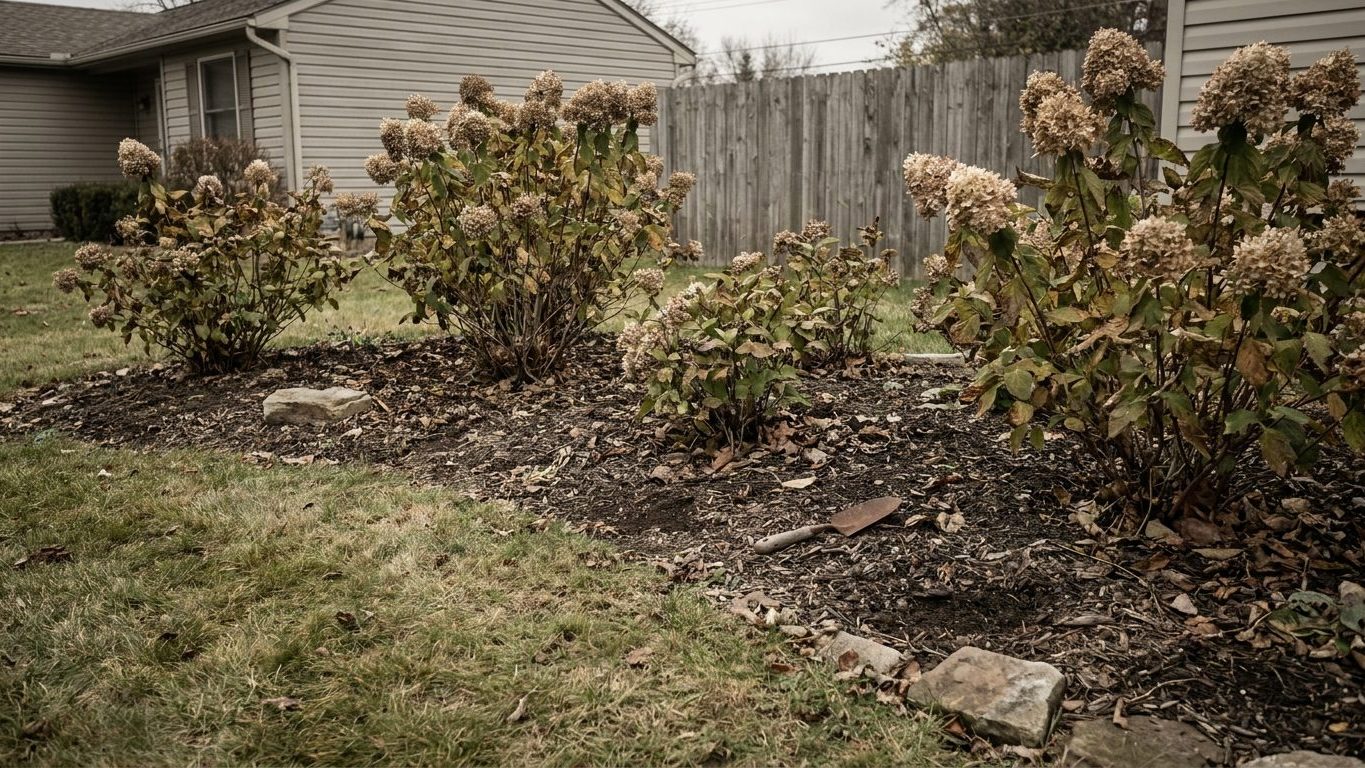
In the Detroit area, hydrangeas go into the ground in spring or late summer, once the frost risk has passed or before fall’s frost returns. Plant from April through September, skipping the hottest stretch of midsummer, and prune bigleaf varieties only in June and July, after the buds reveal whether they survived winter. Get this timing wrong and you lose a season of blooms.
When to plant hydrangeas in Michigan: The Short Answer

The calendar below breaks the growing year into what actually needs doing, month by month, measured against the average frost dates for the Detroit area.
- January: The shrub is dormant and the ground is frozen, so there is nothing to plant or cut. Use the month to plan which spot gets morning sun and afternoon shade.
- February: Still too cold to plant, but nurseries start taking orders for spring stock. Check any burlap wrap from fall and refresh it if wind has torn it loose.
- March: This is the first fertilize month on the Michigan calendar, applied once the soil has thawed enough to work. Hold off on pruning bigleaf types until their buds show green.
- April: MSU Extension puts the last spring frost around April 30 in the Detroit area, with early to mid May typical farther north across the Lower Peninsula. Planting can start this month, but keep frost cloth ready for a cold night.
- May: Both the second fertilize window and a plant month land here, once the frost risk has mostly passed. New shrubs settle in fastest with consistent watering through their first few weeks.
- June: The pruning window for bigleaf hydrangeas opens, once flower buds make clear which wood survived winter. Cut only the dead stems, since live wood still holds this year’s blooms.
- July: Pruning continues alongside the third fertilize application of the season. Water deeply during any dry stretch, since shallow watering encourages weak roots right when heat peaks.
- August: A plant month returns as nighttime temperatures start easing. Container-grown shrubs planted now have roughly two months to establish before the ground cools.
- September: The last plant month on the calendar, timed to give roots a head start before the ground turns cold. Avoid heavy pruning here, since it wastes energy the plant needs for winter.
- October: The first fall frost lands somewhere between October 6 and October 21 in zone 6a. Mulch around the base once leaves drop, but wait until the ground has cooled to avoid trapping heat.
- November: Wrap tender bigleaf varieties in burlap once temperatures settle below freezing overnight. Skip this step for panicle or smooth types, which shrug off Michigan winters without help.
- December: The shrub is fully dormant and needs no attention beyond checking that snow load isn’t bending branches. Brush heavy snow off gently rather than shaking the whole shrub.
Nothing on this list replaces a close look at your own yard, since a sheltered south wall and an open field a mile apart can run two full weeks apart in spring.
Michigan — the year and the numbers
- State
- Michigan
- USDA zones
- 4a-6b
- Last spring frost
- April 30 in the Detroit area; early to mid May across most of the Lower Peninsula
- First fall frost
- October 6 to October 21
- Annual rain
- 34 in
- Lawn zone
- cool-season
- Source
- MSU Extension — Frost-Free Dates · Detroit
How to Work Out the Dates for Your Own Yard
Finding your own dates starts with the same frost window everyone in the region uses, then adjusts for what sits around your specific yard.
- Start from the last spring frost: MSU Extension marks it around late April in the Detroit area, sliding into early to mid May farther north across the Lower Peninsula.
- Subtract two weeks for a head start on foliage, not flowers: planting a container-grown shrub two weeks before that date still works if you can cover it on a cold night, since it’s the roots settling in that matters most.
- Add two weeks after frost for anything grown from a smaller pot: a young shrub with a thin root system handles a late cold snap worse than an older one, so waiting the extra two weeks costs little.
- Check your zone against the state range: USDA Plant Hardiness Zone Map data place Michigan between zone 4a and zone 6b, and a shrub rated only for warmer zones struggles anywhere colder on that scale.
- Watch the fall frost window before the last plant month closes: with the first fall frost landing between October 6 and October 21 in zone 6a, a shrub planted in September has roughly a month to root before cold arrives.
- Pick the variety before the date, not after: a panicle hydrangea tolerates the full swing of a Michigan winter, while a bigleaf type planted late without enough time to establish often loses its buds to the first hard freeze.
None of this replaces watching your own soil, since a low spot that collects cold air can run a full week behind a slope thirty feet away.
Michigan North to South: How the Dates Shift
Michigan’s hydrangea dates don’t move the same amount everywhere, since the Great Lakes push and pull the growing season depending on which shore you’re near.
- The Upper Peninsula: frost lingers longest here, pushing both the plant window and the bigleaf pruning window later than the rest of the state, and favoring panicle or smooth types over bigleaf.
- The Lake Michigan shoreline: the lake holds warmth into fall and slows spring warming, which softens the frost swing and can let planting stretch a little later without much added risk.
- Southeast Michigan, including the Detroit area: this is the reference point for the state’s frost dates, and it runs the mildest window of the three, with the widest cushion for both planting and pruning.
Whichever part of the state applies to you, the state guide lines up the actual weeks against your county rather than the statewide range.
Mistakes Michigan Punishes
Pruning bigleaf hydrangeas in fall

Cutting bigleaf stems back in September or October removes the buds already set for next year, since this variety blooms on old wood. The state calendar keeps pruning to June and July for exactly this reason. Let any fall cleanup wait until spring, once dead wood is obvious.
Planting after the September window closes
A shrub planted in October has barely a month before the first fall frost arrives, leaving roots too shallow to survive winter heaving. September is the last plant month on the calendar for this reason. Move any late-arriving nursery stock into a container for winter instead of rushing it into the ground.
Skipping winter wrap on bigleaf types

Leaving a bigleaf hydrangea bare through a Michigan winter kills the flower buds even when the plant itself survives, since those buds sit above ground and freeze exposed. Panicle and smooth varieties don’t need this step, but bigleaf types do. Wrap the crown in burlap once temperatures settle below freezing at night.
Michigan Extension Offices and County Contacts
The state figures here are a starting point, and the county office fills in what actually applies to your soil and your microclimate.
- MSU Extension: the outreach directory connects to the county office nearest your address.
- Your county extension office: staff there track local frost patterns and can confirm which side of the state’s zone range your yard falls on.
- Michigan State University Plant & Pest Diagnostics: send a photo before the next plant month opens if a shrub shows something the calendar can’t explain.
Common questions
Can I plant hydrangeas in Michigan in fall?
Yes, within limits. August and September are both plant months on the state calendar, giving roots enough time to settle before the first fall frost arrives in October. Planting later than that leaves too little time for roots to establish before the ground cools.
Do hydrangeas survive Michigan winters without protection?
It depends on the type. Panicle and smooth hydrangeas handle the state’s USDA Plant Hardiness Zone range of 4a to 6b without help, while bigleaf varieties often need a burlap wrap to protect flower buds that sit exposed above ground.
When is it too late to prune a bigleaf hydrangea?
Once July ends. The calendar keeps bigleaf pruning to June and July specifically because the shrub sets next year’s buds on old wood soon after, and cutting later removes flowers before they even form.