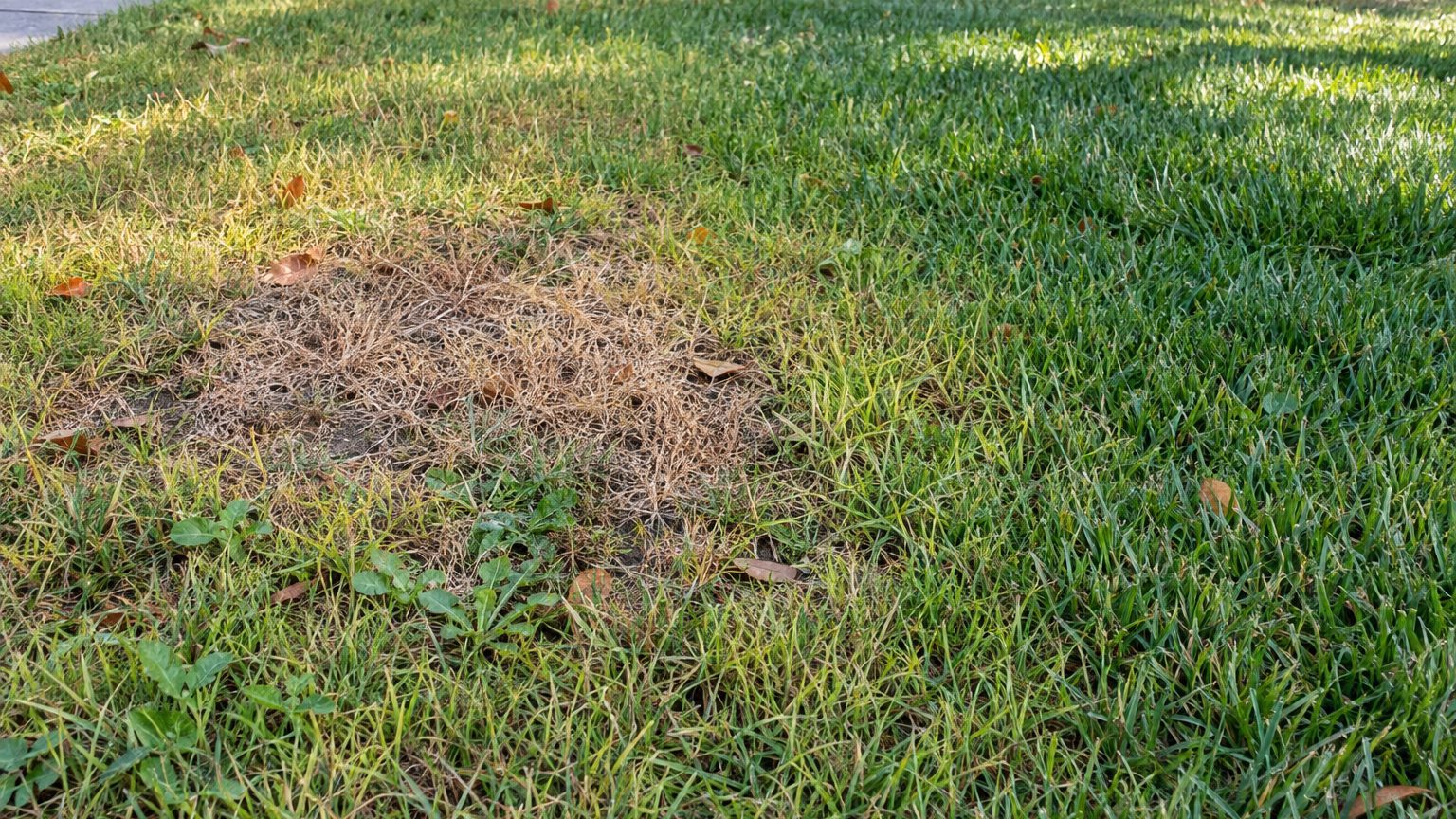
Brown rings in spring, yellow patches along the driveway in summer, ragged blades after muggy weather: Louisiana lawns show trouble in recognizable ways. Heat, humidity and mild winters can keep fungus and insects active across a long season. These problems have recognizable causes, and each one has a practical response.
Lawn Pests and Diseases in Louisiana
Dollarweed
Dollarweed shows up in spring as round, glossy, lily-pad leaves on thin stems, usually in wet, low spots or where sprinklers overlap. It thrives on too much water. Cut back irrigation first, improve drainage where water pools, and the thick turf that follows crowds it out.
Large Patch

Large patch, a fungal disease, makes circular or irregular patches of yellow to orange grass in St. Augustine, mostly in cool, wet weather during spring green-up and again in fall. Blades pull away easily at the base of the patch. Water in the morning, skip heavy nitrogen when the weather is cool and wet, and keep thatch in check.
Gray Leaf Spot
Gray leaf spot appears in the humid, rainy stretch of summer. Look for gray-tan spots with a darker border on the blades, and for thinning turf that looks scorched from a distance. Fast, soft growth from heavy feeding invites it. Fertilize within May through August and keep the rate modest.
Chinch Bugs
Chinch bugs are tiny sap-feeders that turn St. Augustine yellow, then brown, in hot, sunny spots such as strips beside driveways and sidewalks. The patch grows outward and does not green up after watering. Part the grass at the edge of the damage and look for small black insects near the soil. Healthy, deeply watered turf tolerates them better.
Armyworms and Sod Webworms
Armyworms and sod webworms arrive in late summer and fall. Blades look chewed or ragged, and bare patches can spread as the caterpillars feed. Birds pecking at the lawn are a clue. Before treating, ask the parish extension office to confirm which caterpillar is feeding.
Winter Weeds
Winter weeds such as annual bluegrass and clover fill thin turf when warm-season grass slows down. They grow while warm-season turf is dormant or slow, then fade as summer heat builds. Mow regularly from March through November so turf stays dense, and pull small patches by hand before they seed.
Louisiana — the year and the numbers
- State
- Louisiana
- USDA zones
- 8a-10a
- Last spring frost
- January 18 to February 8
- First fall frost
- December 17 to January 8
- Annual rain
- 63 in
- Lawn type
- warm-season
- Source
- NOAA NCEI 1991-2020 Climate Normals, 32F freeze probabilities · New Orleans
How to Tell Which Lawn Problem You Have
Never judge from color alone. Brown grass can mean fungus, insects or drought, so pair what you see with where it is and when it started. Pull gently on grass at the edge of the patch, and check whether the spot is sunny, shaded, wet or dry.
| What you see | Where and when | Likely cause |
|---|---|---|
| Round or irregular patch, blades pull away easily | Cool, wet weather in spring and fall | Large patch |
| Gray-tan spots with a dark border on blades | Humid, rainy summer | Gray leaf spot |
| Yellow patch that spreads and ignores watering | Hot, sunny edges beside pavement | Chinch bugs |
| Chewed blades, birds pecking at the turf | Late summer into fall | Armyworms or webworms |
| Bright round leaves on thin stems | Wet, low or overwatered spots | Dollarweed |
A spongy feel underfoot points to thatch. A layer up to 1/2 inch thick is healthy, and anything above that calls for dethatching or core aeration. Dethatch in May or June, and core aeration also fits in those two months.
Where Lawn Problems Are Worst in Louisiana
Louisiana is warm and humid everywhere, but winter cold and rainfall patterns shift which problems dominate.
- North Louisiana: Winters freeze more reliably around Shreveport and Monroe, which slows insects and fungus for a while. Cold can still set back St. Augustine, so spring recovery matters more than year-round pest pressure.
- Baton Rouge and the Florida Parishes: Heavy rain and humid summers keep leaf spot and large patch common. Shaded lots under tall pines and oaks can stay damp.
- New Orleans and the Gulf Coast: Winters are mild, and New Orleans has roughly one year in seven with no freeze. Chinch bugs, armyworms and winter weeds stay active longer, and salt spray and flooding add stress near the water.
Your own yard still matters more than the region. A shady, poorly drained corner in Shreveport can have the same fungal trouble as a low lot in Slidell.
Lawn Care Mistakes That Invite Problems in Louisiana
Mowing Too Short
Scalped St. Augustine loses the leaf area it needs to shade soil and crowd out weeds, and stressed turf is an easy target for chinch bugs. Raise the deck and keep blades sharp. Mowing runs from March through November here, so the habit has to hold for most of the year.
Watering Little and Often
Frequent shallow watering keeps the surface damp, which feeds dollarweed and fungus while roots stay short. Water deeply and less often, early in the morning so blades dry quickly. Watering matters most from May through September, so adjust sprinklers to match rainfall instead of running a fixed program.
Feeding at the Wrong Time
Heavy nitrogen in cool, wet spring or fall weather feeds large patch instead of grass. Fertilize when turf is actively growing, from May through August, and use a measured rate. Over-feeding also builds thatch and produces the soft, lush growth that gray leaf spot and chinch bugs favor.
Where to Get Lawn Advice in Louisiana
The LSU AgCenter is the state extension service, and it answers lawn questions for homeowners in every parish. A parish extension office can look at a sample or a photo and tell you what is actually happening.
- Search the LSU AgCenter site for turf fact sheets on St. Augustine, centipede, bermuda and zoysia before you buy any treatment.
- Call or visit your parish extension office when a patch keeps spreading, ideally while damage is still fresh.
- Bring a small cut sample of the affected turf with soil attached, taken from the edge where healthy and damaged grass meet.
Common Questions
Can You Plant St. Augustine Grass Seed in Louisiana?
No, St. Augustine has no seed, so you lay sod. May is the strongest month for it, and April, June and July also work. Seed only applies to bermuda, centipede and bahia, best in May, with June as a fallback.
When Should You Aerate a Lawn in Louisiana?
May is the strongest time, since warm-season grass is growing fast and fills the holes quickly. If you miss it, June still works. Skip aeration in winter, when turf is slow to recover.
Does It Freeze Enough in South Louisiana to Kill Lawn Pests?
Not reliably. Roughly one year in seven has no freeze at all in New Orleans, so winter does not provide a dependable pest break there. North Louisiana freezes more dependably, which gives turf there a longer break.