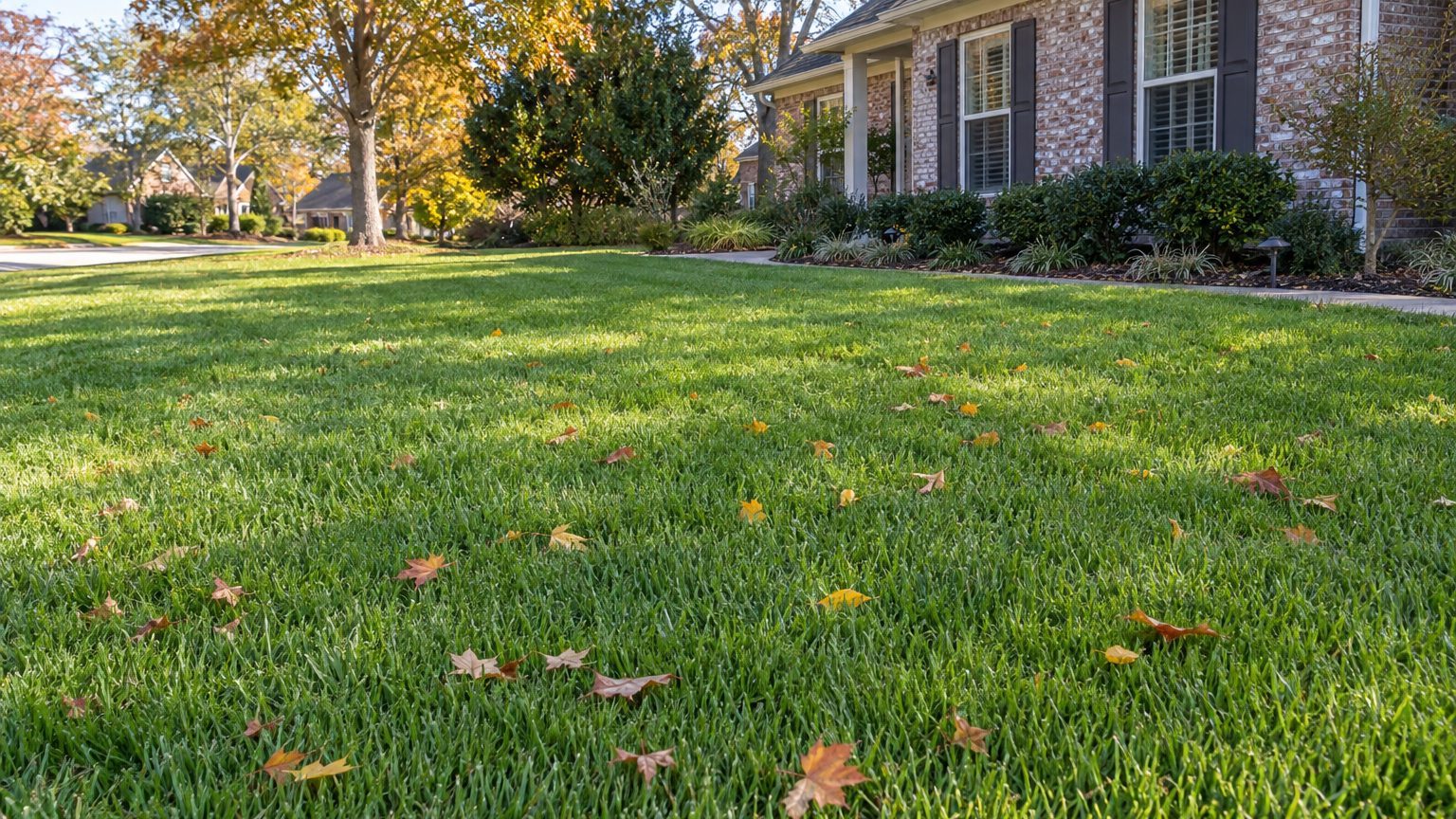
Bermuda and centipede turn from tan to green as a Louisiana yard warms, and by August the same lawn is fighting heat instead of cold. A Louisiana lawn care schedule follows the warmth of the soil, not the frost, so most of the work lands between spring and early fall.
What to Do Each Month in a Louisiana Lawn

Warm-season grasses run this calendar, and the big jobs cluster in late spring when the soil is warm enough to wake them fully. Winter is mostly rest.
| Month | In the lawn |
|---|---|
| January | Rest. The grass is dormant, so keep foot traffic light and watch for standing water after heavy rain. |
| February | Rest. Dormant turf is still tan, and early warm spells are false starts, so hold off on feeding. |
| March | Mowing begins as the grass greens up. Cut regularly and keep the blade sharp so new growth stays clean. |
| April | Keep mowing as growth speeds up. Sod laid now settles in well, and dethatching also works this month if buildup is heavy. |
| May | The busiest month. Aerate, dethatch, seed bermuda, centipede or bahia, lay sod, and start fertilizing and watering while the soil is warm. |
| June | Fertilize, dethatch and water as heat builds. If you missed May, aeration, seeding and sod still work now. |
| July | Fertilize and water through the heat. Sod can still go down, though it needs steady moisture to root. |
| August | Fertilize, water and mow. Heat is the stress now, so watch for dry, curling blades. |
| September | Keep watering and mowing as the heat eases. No feeding, so growth can slow naturally. |
| October | Mow as growth fades. Watering is no longer needed on a regular schedule. |
| November | Last mowings of the year as the grass heads toward dormancy. |
| December | Rest. The grass is dormant, so leave it alone and keep leaves raked off. |
St. Augustine has no seed, so that grass goes in as sod or plugs. Seeding applies only to bermuda, centipede and bahia.
Louisiana — the year and the numbers
- State
- Louisiana
- USDA zones
- 8a-10a
- Last spring frost
- January 18 to February 8
- First fall frost
- December 17 to January 8
- Annual rain
- 63 in
- Lawn type
- warm-season
- Source
- NOAA NCEI 1991-2020 Climate Normals, 32F freeze probabilities · New Orleans
When Does the Lawn Season Start and End in Louisiana?
Growth starts when the soil reaches 65 to 70 °F and keeps rising, which is why warm-season turf greens up in March rather than on a frost date. Seed in May for that reason, because the ground is warm enough to sprout it quickly and the summer ahead gives it time to root.
Frost is not the main limit on the lawn calendar here. In New Orleans, the last spring freeze usually falls between January 18 and February 8, and some years there is no freeze at all. That matters more to a young planting than to the start of the season.
The end of the season follows cooling soil. In New Orleans, the first fall freeze tends to arrive between December 17 and January 8, but the grass slows well ahead of it. North Louisiana freezes more reliably, so dormancy there is firmer and lasts longer.
How the Lawn Calendar Shifts Across Louisiana
Louisiana is flat, so the shifts come from latitude and the Gulf rather than elevation.
- Shreveport and the northern parishes: Winters bite harder, so green-up comes a little later and dormancy sets in more firmly.
- Baton Rouge and the Florida Parishes: This middle belt has a short, mild dormancy.
- New Orleans and the Gulf Coast: Freezes are rare, grass greens up early, and humidity and heat make summer disease and drought stress important worries.
Lawn Care Timing Mistakes to Avoid in Louisiana
Feeding Too Early in Spring
A warm spell in February tempts you to fertilize, but dormant grass cannot use it and rain can carry nutrients away. Wait until May, when feeding runs through August and the grass is truly growing.
Seeding Too Late
Seed that goes down after June must establish during the hardest summer heat. Sow in May, with June as the fallback, so roots are ready when heat peaks.
Watering at the Wrong Time
Overwatering through the cool months invites fungus and does nothing for dormant turf. Save regular irrigation for May through September, when heat and growth are driving water loss.
Where to Get Lawn Advice in Louisiana
Soil, shade and grass type vary from parish to parish, so local advice sharpens the monthly guide above.
- LSU AgCenter offers lawn guidance for each grass type, and it is worth a look before planting or renovating in spring.
- Your parish extension office can help diagnose patches and thin spots, so bring a sample when a problem appears.
Common Questions
Can You Plant Grass in Louisiana in the Fall?
Warm-season lawns do best when started in May. If a planting slips, June, and for sod even July, still gives the grass a warm start.
Why Is My Lawn Brown in Winter?
Tan grass in the cooler months, with green returning in spring, is normal dormancy for bermuda, centipede and St. Augustine. Brown patches in summer, with dry soil, point to heat stress instead.
What Grass Types Does This Schedule Fit?
It suits warm-season lawns such as bermuda, centipede, bahia and St. Augustine. Seeding applies to bermuda, centipede and bahia, while St. Augustine is installed as sod or plugs.