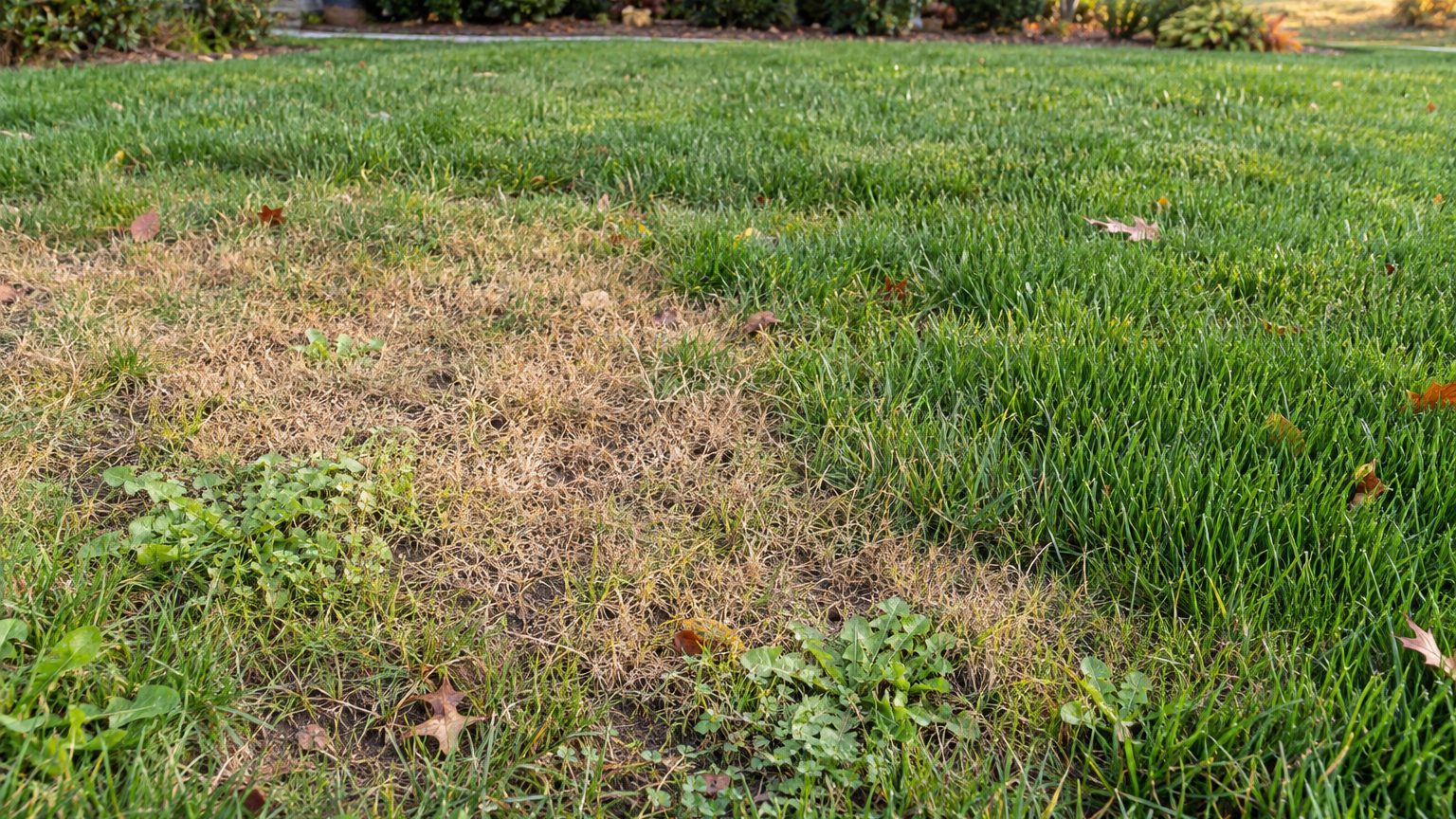
A patch of grass turns tan in the heat, a circle spreads after a wet spell, or a weed shows up where the turf thinned. Warm, humid weather can encourage lawn problems in warm-season grasses such as bermuda, centipede, zoysia and St. Augustine. Each problem has a look, a season and a fix.
Lawn Pests and Diseases in Mississippi
Spring Weeds in Thin Turf

Crabgrass and other weeds sprout as the soil warms and fill any gap the lawn left open over winter. You see pale green clumps spreading flat against the ground. Thick, regularly mowed turf crowds them out, so the better fix is filling thin spots before the weeds do.
Large Patch
Large patch shows up as broad, rounded tan or orange-brown rings in spring and again in fall when nights turn cool and damp. It commonly affects zoysia, centipede and St. Augustine. Water in the morning, skip heavy feeding when the rings are active, and keep thatch in check.
Thatch Buildup
A spongy, bouncy feel underfoot and water that runs off instead of soaking in point to thatch. A layer up to 1/2 inch thick is healthy, but above that, dethatch or core aerate. Dethatching works in May and June, and it also works in April.
Dollarweed in Wet Spots
Dollarweed has round, bright green leaves like tiny lily pads, and it takes over low, soggy corners and areas that get watered too often. Cutting back on irrigation often helps bring it under control. Fixing drainage in a stubborn spot helps it stay gone.
Chinch Bugs in Hot, Sunny Turf
Chinch bugs mostly attack St. Augustine in full sun. Irregular yellow patches turn brown and keep growing, usually along driveways and sidewalks where heat builds. Part the grass at the edge of a patch and look for tiny dark bugs at soil level before treating, since drought looks similar.
White Grubs
Grubs are fat, C-shaped white larvae that chew roots in late summer. The turf feels loose and lifts like a carpet, and birds or armadillos may tear it up while hunting them. Pull back a square of sod and look just below the soil surface to confirm.
Fall Armyworms
Armyworms arrive suddenly in late summer and chew blades down to stubs, leaving ragged brown areas that spread quickly. Soapy water poured on a suspect patch can bring the caterpillars to the surface. Check bermuda lawns often during that stretch, because damage moves fast.
Mississippi — the year and the numbers
- State
- Mississippi
- USDA zones
- 7b-9a
- Last spring frost
- March 6 to March 22
- First fall frost
- November 7 to November 22
- Annual rain
- 57 in
- Lawn type
- warm-season
- Source
- NOAA NCEI 1991-2020 Climate Normals, 32F freeze probabilities · Jackson
How to Tell Which Lawn Problem You Have
One clue rarely settles it. Pair what the patch looks like with where it sits and when it appeared, then do a quick test by tugging the grass or parting the blades.
| What you see | Where and when | Likely cause |
|---|---|---|
| Tan or orange rings that grow outward | Spring or fall, after damp weather | Large patch |
| Yellow to brown irregular patches, tiny dark bugs at the edge | Sunny turf near pavement, midsummer | Chinch bugs |
| Turf that lifts like a carpet | Late summer, with torn-up soil | White grubs |
| Chewed, ragged blades and fast-growing bare areas | Late summer, open sun | Fall armyworms |
| Round, coin-shaped leaves | Wet, low spots in spring and summer | Dollarweed |
| Pale clumps spreading across gaps | Thin turf as spring warms | Crabgrass |
A lawn that feels springy and sheds water may simply have too much thatch, which weakens the grass and can make other problems harder to manage. When nothing matches, take a sample to your county office.
Where Lawn Problems Are Worst in Mississippi
Moisture, soil and winter cold shift from the coast to the northern hills, and problems follow them.
- Gulf Coast: Sandy soil, heavy humidity and St. Augustine lawns make chinch bugs and fungal rings common, and salt spray can add stress near the water.
- Delta: Heavy clay holds water, so dollarweed, large patch and other wet-soil troubles settle in where drainage is slow.
- North Mississippi hills: Cooler winters mean slower green-up in spring, and gardens here often see frost later in spring and earlier in fall than the Jackson area.
Check your own county’s timing rather than relying on a city far from you.
Lawn Care Mistakes That Invite Problems in Mississippi
Mowing Too Short
Scalped grass has little leaf to feed roots, and bare soil invites weeds. Raise the blade and mow regularly from March through November while the grass is actively growing, taking care not to remove too much at once.
Watering Lightly and Late
Short, frequent sprinkles keep roots shallow and leaves wet overnight, which feeds fungus. Soak the lawn deeply in the morning instead. Water from May through September, and let the soil tell you when it needs more.
Feeding at the Wrong Time
Fertilizer put down before warm-season grass wakes up feeds weeds, and a late-season feeding can fuel large patch. Apply from May through August, when bermuda, zoysia, centipede and St. Augustine can use it.
Where to Get Lawn Advice in Mississippi
Mississippi State University Extension publishes lawn guidance written for the state’s soils and grasses, and county offices can look at a sample.
- Browse the extension site first when you want to match a symptom to a grass type.
- Call your county office when a patch keeps spreading, ideally before treating it.
- Ask about a soil test before you buy fertilizer, so you feed only what the lawn lacks.
Common Questions
When Should You Core Aerate a Lawn in Mississippi?
May suits most warm-season lawns, because the grass is growing fast and fills the holes quickly. If you miss it, June also works.
When Should You Seed a Lawn in Mississippi?
May is the time to sow grasses such as bermuda, centipede and bahia, and June also works if you miss it. St. Augustine has no seed, so it goes in as sod or plugs.
When Should You Lay Sod in Mississippi?
May is the prime time, and sod also goes down in April, June and July. Water it regularly after installing so the roots knit into the soil.